Moving out is stressful enough without worrying about losing part of your security deposit over a dirty oven or dusty baseboards. A solid move-out cleaning checklist takes that worry off the table.
In Texas, landlords are legally allowed to deduct cleaning costs from your deposit if the property is not returned in the same condition it was rented. Following a detailed move-out cleaning checklist is your best protection against those deductions.
What this checklist covers at a glance:
- Kitchen: oven, fridge, cabinets, sink, counters
- Bathrooms: tub, toilet, grout, mirrors, vanity
- Living areas: baseboards, blinds, ceiling fans, walls
- Floors: carpet, hardwood, tile
- Extras: garage, patio, closets
Why the move-out cleaning checklist matters more than you think
Most renters underestimate what a thorough move-out inspection involves. Property managers are not just checking if the space looks tidy. They open every cabinet, check inside the oven, inspect grout lines, and look behind appliances.
Cleaning fees are the number one reason for deposit deductions. Going through a complete move-out cleaning checklist before handing over the keys is what separates a full refund from a bill you did not expect.
Move-out cleaning checklist: kitchen
The kitchen is usually the most labor-intensive room on this list. Grease, food residue, and hard water buildup require more time and the right products. Do not rush this area.
Oven and stovetop
- Remove oven racks and soak them in hot, soapy water
- Scrub the oven interior, including the glass door and door seals
- Clean burner grates and drip pans on the stovetop
- Degrease the range hood and replace or clean the filter if needed
Professional cleaners consistently flag the oven as one of the most neglected spots during move-out inspections. Baked-on grease inside the oven is a common reason for deposit deductions, even when everything else looks clean.
Refrigerator and freezer
- Empty and defrost the freezer at least 24 hours before cleaning day
- Remove all shelves and drawers, wash them with dish soap, and dry completely
- Wipe down the interior walls and floor of the fridge
- Clean the rubber door gaskets with a damp cloth
- Pull the fridge out and clean the floor and wall behind it
Sink, faucet, and garbage disposal
Texas hard water leaves limescale on faucets and sink surfaces that regular soap will not remove. Use a citric acid-based cleaner or white vinegar to dissolve buildup before scrubbing.
- Scrub the sink basin and rinse thoroughly
- Remove limescale from the faucet and around the base
- Clean the garbage disposal splash guard with a brush and dish soap
- Run ice cubes and citrus peels through the disposal to neutralize odors
Cabinets and counters
- Empty every cabinet and drawer completely
- Wipe inside shelves, removing crumbs, grease, and residue
- Clean the outside of cabinet doors, paying attention to areas near the stove
- Wipe down all countertop surfaces, including the backsplash
- Clean the top of the cabinets if accessible
Move-out cleaning checklist: bathrooms
Bathrooms are the second area inspectors examine most closely. Soap scum, hard water stains, and mold in grout lines are immediate red flags during a walk-through.
Shower and tub
- Apply a heavy-duty cleaner to shower walls and tub and let it sit for at least 10 minutes before scrubbing
- Scrub grout lines with a stiff brush to remove discoloration
- Rinse glass doors thoroughly and dry to avoid streaks
- Clean the showerhead by soaking it in white vinegar if there is mineral buildup
Toilet
- Clean inside the bowl with a toilet brush and cleaner, including under the rim
- Wipe the outside, paying attention to the base and the area behind the tank
- Disinfect the seat, lid, and handle
- Check that the toilet flushes correctly before leaving
Mirrors, fixtures, and vanity
- Polish mirrors with a glass cleaner and a lint-free cloth to avoid streaks
- Remove water spots from chrome fixtures with white vinegar or a dedicated limescale remover
- Empty vanity drawers and cabinets completely, then wipe them out
- Clean the vanity countertop and remove any product residue
- Check and clean light fixtures above the mirror
Move-out cleaning checklist: living areas and bedrooms
Dust accumulates quickly in Texas homes, especially on surfaces people often overlook: the tops of door frames, ceiling fan blades, and window blinds.
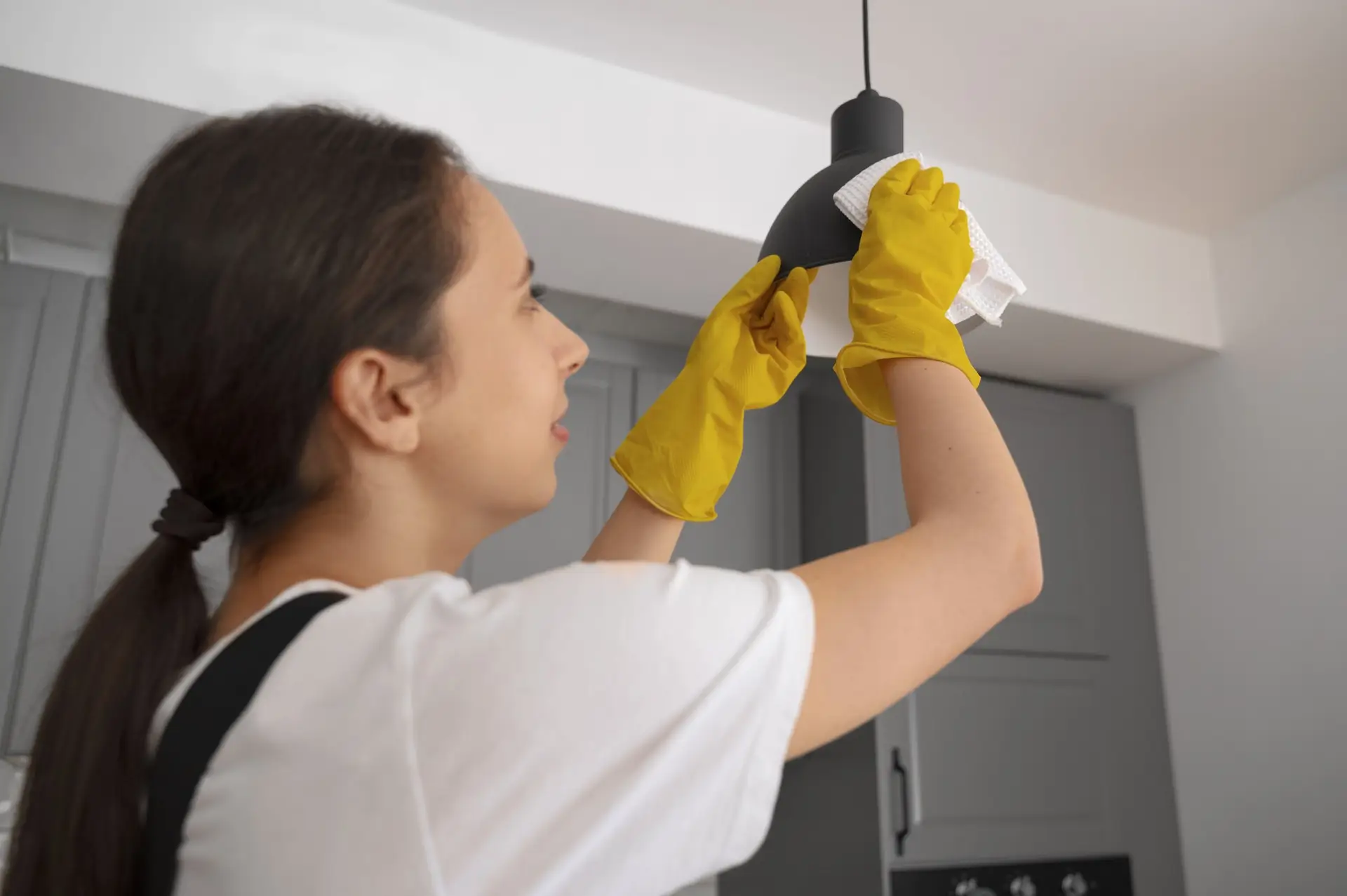
Ceiling fans and light fixtures
- Wipe the top side of each ceiling fan blade with a damp microfiber cloth
- Clean the light fixture covers and replace any burnt-out bulbs
- Dust overhead light fixtures in bedrooms, hallways, and common areas
Baseboards, door frames, and walls
- Wipe down all baseboards with a damp cloth
- Clean door frames and the top edges of doors where dust collects
- Check walls for scuff marks and clean with a magic eraser or mild soap
- Remove any nails or picture hooks and patch small holes with spackling compound
- Touch up paint if you have the original color on hand
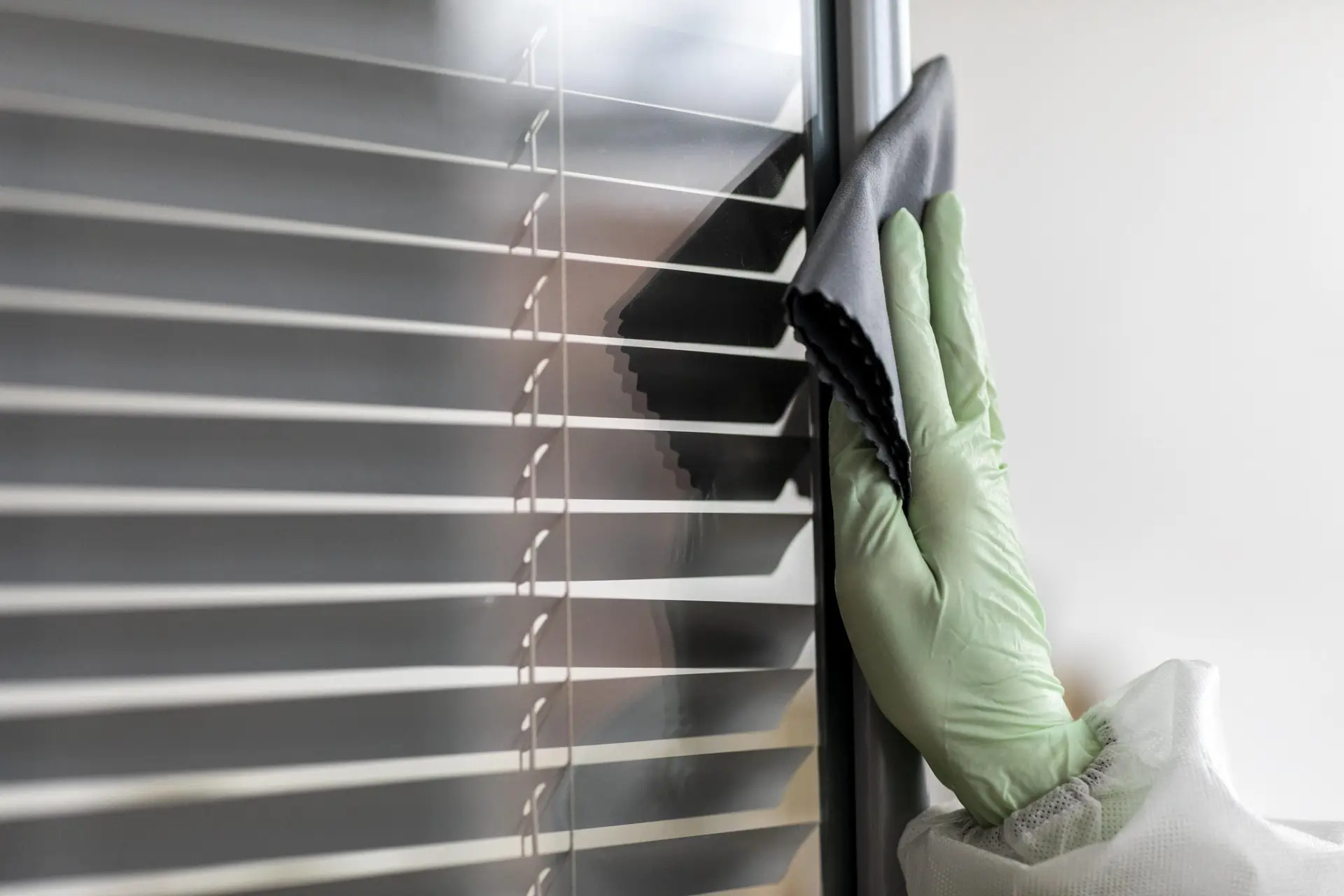
Windows, sills, and blinds
- Clean window glass from the inside with a glass cleaner
- Wipe window sills and tracks, removing any dirt or dead insects
- Dust blinds carefully with a microfiber cloth or vacuum attachment
- Clean the inside of window frames
Closets
- Wipe down shelving and the closet rod
- Sweep or vacuum the floor inside each closet
- Check that no personal items or hangers are left behind
Move-out cleaning checklist: floors
Floors are the last surface to clean, and you should work your way out of each room toward the exit door.
Carpets
- Vacuum thoroughly using the crevice attachment along the edges
- Spot-treat stains with a carpet cleaner appropriate for the stain type
- Check your lease agreement: some landlords require a professional steam cleaning receipt at move-out
According to the EPA’s guidance on indoor air quality, carpets can trap dust, pet dander, and allergens over time. A thorough vacuuming and spot treatment are the minimum expectation at move-out.
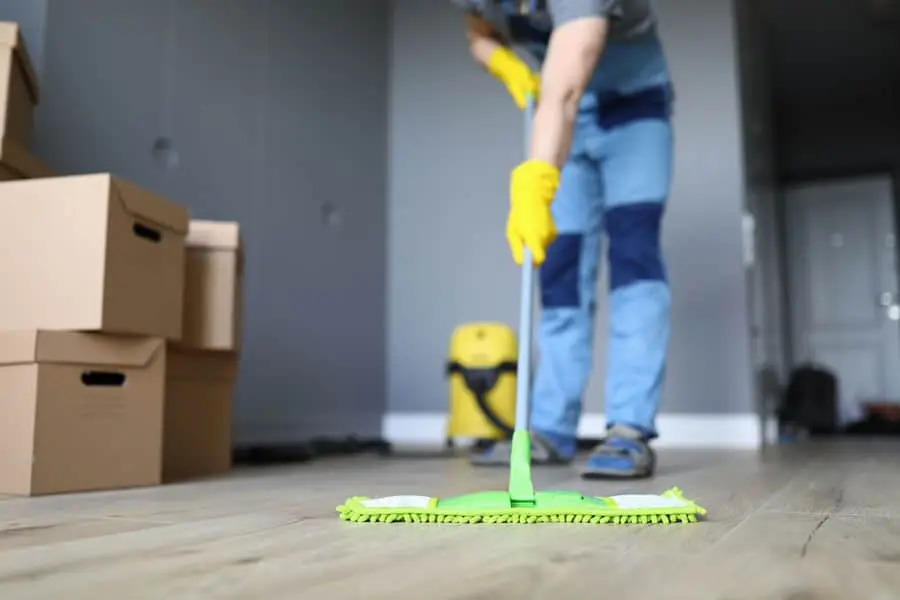
Hardwood and tile floors
- Sweep all hard floors before mopping to avoid spreading debris
- Mop with a product appropriate for the floor type
- Dry the floor to avoid streaks, especially on hardwood
- Check tile grout for staining and scrub if needed
Garage and patio
- Sweep the garage floor and remove any oil stains if present
- Clear all personal items, tools, and boxes from the space
- Sweep the patio or back porch and remove any furniture you are leaving behind
- Dispose of trash bags before the final walk-through
Common mistakes that cost renters their deposit
Even renters who clean carefully often miss a few spots that inspectors check immediately. These are the items that a basic clean skips but a proper move-out cleaning checklist always includes.
- Forgetting the oven: Baked-on grease is visible the moment an inspector opens the door.
- Leaving the top of the fridge dirty: It is dusty, sticky, and inspectors always check it.
- Ignoring window tracks: These collect dust, dead insects, and moisture residue.
- Not cleaning behind appliances: The floor behind the fridge and stove is a frequent deduction point.
- Skipping the inside of closets: Shelves and floors inside closets are part of the inspection.
- Leaving personal items behind: Even small items left in cabinets or drawers create a problem.
DIY vs. professional move-out cleaning
Doing it yourself is a realistic option for smaller spaces or tenants with extra time before the handover. For larger homes, or when you are juggling a move and a new job or family obligations, hiring a professional team makes more sense.
Professional move-out cleaners work from the same standards that property managers use. Many companies, including E&R’s move-in/out cleaning service, offer a satisfaction guarantee: if the inspection does not pass, they return at no extra charge.
The main advantage of hiring professionals is not just the result but the documentation. When you hire a licensed company to handle your move-out cleaning checklist, their receipt serves as evidence if a landlord attempts to make unreasonable deductions.
If you decide to do it yourself, consider pairing your checklist approach with a deep cleaning service for the kitchen and bathrooms, which are typically the most time-consuming areas.
Frequently asked questions
How far in advance should I start my move-out cleaning? Start at least two to three days before your final walk-through. This gives you time to defrost the freezer, let cleaning products work on grease and limescale, and handle any touch-up tasks you find along the way.
Does a move-out cleaning checklist include carpet shampooing? It depends on your lease. Many leases in Texas require tenants to have carpets professionally cleaned at move-out. Check your agreement before assuming a standard vacuuming is enough.
What happens if I skip the move-out cleaning? The landlord can hire a professional cleaning company and deduct the full cost from your security deposit. Skipping the move-out cleaning checklist is one of the most common and costly mistakes renters make. In Texas, landlords have 30 days to return the deposit or provide an itemized list of deductions.
Do I need to clean appliances that were already dirty when I moved in? You are only responsible for damage and dirt that occurred during your tenancy. If an appliance was already in poor condition when you moved in, document it with photos taken at move-in. This protects you during the move-out inspection.
Is it worth hiring a professional cleaner just for the deposit? Usually yes. Professional move-out cleaning costs significantly less than losing part or all of a security deposit. For a two-bedroom apartment in the DFW area, a professional clean typically costs between $150 and $300, while deposit deductions for cleaning can run much higher.
What should I do on the day of the final walk-through? Bring your move-in inspection report or photos from move-in day. Walk through each room with the landlord and refer to your checklist. Having documentation of the work you completed puts you in a stronger position if any dispute arises.
Before you hand over the keys
A move-out cleaning checklist is more than a to-do list. It is proof that you respected the property and followed through on your lease obligations. Working through it room by room, without rushing, is the most reliable way to protect your deposit.
If the timeline is tight or the property needs more work than expected, a professional cleaning team can take over the move-out cleaning checklist for you. Either way, going into your final walk-through with everything completed gives you confidence and a clear record of what was done.
Keep Reading
- Move in Cleaning Prosper Celina TX
- Move Out Cleaning Denton TX
- Move in Cleaning Cost
- The Rooms Movers Forget in Flower Mound
- Listing Clean or Move Out Clean in Mansfield
- When the Move Out Is a Parent Home of Thirty Years
- What to Do When Both Closings Land in the Same Week
- The Clean Your New House Needs After Unpacking
Rather hand the work to a team that does this every day? See our move in and move out cleaning service or call (214) 430-4447 for a free quote.
Want Your Home to Look Like This Without the Work?
Tell us about your place and we will send you a price. No walkthrough required, no obligation.
- Free quote with no obligation
- Non toxic and pet friendly products
- Bonded and insured, serving DFW since 2002
- 24 hour guarantee on our service
Prefer to talk? (214) 430-4447
By completing this form I acknowledge that I will receive informational text messages from E&R Cleaning Services. I can opt out at any time by replying STOP. Standard message rates may apply.