A diy upholstery cleaner that works on one sofa can permanently damage another. The difference is not the cleaning agent itself. It is the fabric code, a one or two letter label sewn onto every piece of upholstered furniture sold in the US that specifies exactly which cleaning methods are safe for that material.
Most people skip the code. They grab what is under the sink and start scrubbing. The result is either a permanent water ring on a dry-clean-only fabric, a color-bled stain from a product too strong for the fiber, or a smear that covers a larger area than the original spot.
This guide starts with the code. Everything else follows from it.
Quick answer: diy upholstery cleaner by fabric code
| Code | What it means | Safe cleaning method |
|---|---|---|
| W | Water-based cleaners safe | Dish soap solution, vinegar solution, hydrogen peroxide |
| S | Solvent-based only | Rubbing alcohol, dry cleaning solvent. No water |
| W/S | Both water and solvent safe | Either approach works |
| X | Vacuum only | No liquids. Dry cleaning or professional only |
Always locate the tag before applying anything to upholstered furniture. The tag is typically on the underside of a removable cushion, attached to the frame, or inside a decorative pillow zipper.
Why the fabric code exists and what happens when you ignore it
The code system was standardized in the upholstery industry to prevent the damage that occurs when people apply the wrong cleaning method to sensitive fabrics. Here is what goes wrong without it:
- Water on S-coded fabrics (silk, some wools, many microfiber blends) causes the fibers to swell and dry unevenly, leaving a permanent ring mark around the cleaned area.
- Alcohol-based solvents on W-coded cotton can pull dyes from the fabric and leave bleached patches.
- Any liquid on X-coded structured or delicate fabrics distorts the weave or backing, causing permanent shape changes.
Professional upholstery cleaners identify the code before touching the fabric. That step is not optional. It takes 30 seconds and prevents outcomes that cannot be fixed at home.
The core technique: blotting, not scrubbing
Before any specific method, one technique principle applies to all upholstery cleaning:
Always blot. Never scrub.
Scrubbing pushes stain material deeper into the fiber structure and spreads it laterally, expanding the affected area. It also damages the fiber surface, causing permanent matting or texture change in the cleaned area.
Blotting draws the stain upward toward the cloth by pressing firmly and lifting straight up. Work from the outer edge of the stain toward the center. Use a clean section of white cloth with each blotting pass to avoid redepositing the material you just lifted.
White cloths matter. Colored cloths can transfer dye to damp upholstery, adding a second problem to the first.
DIY upholstery cleaner recipes by fabric code
For W-coded fabrics: dish soap foam method
This is the standard diy upholstery cleaner for most couches, armchairs, and ottomans with synthetic or cotton upholstery.
What you need:
- 1 teaspoon of clear, unscented dish soap
- 1 cup of warm water
- Clean white microfiber cloths
How to use it:
- Mix the dish soap and water in a bowl.
- Beat with a fork or whisk until a thick foam forms on top.
- Scoop only the foam, not the liquid below it.
- Apply the foam to the stain using a blotting motion.
- Use fresh sections of cloth with each pass.
- Blot with a clean cloth dampened with plain water to remove soap residue.
- Dry with a fan directed at the surface. Do not use a hairdryer.
The foam rather than liquid matters. Applying liquid to upholstery risks saturating the filling material, which causes mold and odor from within the cushion.
For W-coded fabrics: white vinegar solution
Best for food and drink stains and for odor removal on fabric surfaces.
Mix equal parts white vinegar and water in a spray bottle. Mist lightly onto the stain, do not saturate. Blot immediately with a clean white cloth. Repeat until the stain lifts.
The acetic acid in white vinegar breaks down the alkaline compounds in many organic stains. The vinegar smell dissipates completely as the fabric dries, typically within 30 to 60 minutes. This method is most effective on stains less than a few hours old.
For W-coded fabrics: hydrogen peroxide for stubborn stains
For older stains, pet urine, and light-colored fabrics where more lifting power is needed.
Mix 1 tablespoon of 3 percent hydrogen peroxide (standard drugstore concentration) with 1 teaspoon of dish soap. Test on a hidden area first. Hydrogen peroxide can lighten some fabric colors. Apply with a cloth, leave for five minutes, then blot thoroughly with a damp cloth to remove all residue.
Do not use hydrogen peroxide on dark or richly colored upholstery without testing first.
For S-coded fabrics: rubbing alcohol
Microfiber is commonly S-coded. Water causes permanent ring marks on microfiber by displacing the fibers unevenly as it dries.
Apply a small amount of 70 percent isopropyl alcohol to a clean white cloth. Blot the stain from the outer edge inward. The alcohol evaporates quickly without leaving water rings.
After the stain lifts, use a clean dry cloth to gently raise the microfiber pile in the cleaned area by rubbing in small circular motions. This restores the texture that the cleaning process temporarily flattens.
For all codes: baking soda dry deodorizer
This is the only diy upholstery cleaner method safe for X-coded fabrics, because it involves no liquid.
Sprinkle baking soda generously across the cushion or affected area. Leave for at least 30 minutes. For pet odors or long-standing mustiness, leave overnight under a cloth to prevent disturbance. Vacuum completely with the upholstery attachment.
Baking soda absorbs volatile odor compounds from the fabric through a neutralization reaction with acid-based odor molecules. It does not mask the smell. It removes it.
Stain-specific methods
Pet urine: enzymatic cleaner is the only complete solution
A diy upholstery cleaner cannot fully address pet urine. Here is why. As urine dries, uric acid forms crystals within the fiber and the cushion filling. Standard cleaners remove the visible stain but leave the crystals behind. Every time the area is exposed to moisture, including cleaning attempts, the crystals reactivate and release the odor again.
Enzymatic cleaners contain protease enzymes that break down uric acid at the molecular level, eliminating the odor source permanently. Apply generously to saturate the affected area and reach the cushion filling. Cover with a damp cloth and leave for at least 15 minutes. Blot dry and allow to air dry completely.
Do not use any other cleaner on a pet stain before or after the enzymatic treatment. Many products deactivate the enzymes.
Grease and oil stains
Apply cornstarch or baking soda to the stain and press gently. Leave for 15 minutes to absorb surface oil. Vacuum completely. Then apply the dish soap foam method for W-coded fabrics, or a dry cleaning solvent for S-coded fabrics.
Grease stains on upholstery should not be treated with water alone. Water does not dissolve oil. It spreads it.
Ink stains
Apply rubbing alcohol to a clean white cloth. Blot from the outer edge of the stain inward, using small controlled movements. Change to a fresh section of cloth with each pass. Ink disperses easily, so precision matters more than speed here.
Follow with a dish soap solution on W-coded fabrics, or allow to dry and assess on S-coded fabrics.
Common diy upholstery cleaning mistakes
Professional cleaners find these errors repeatedly in homes where upholstery cleaning has made a stain worse:
- Using the wrong method for the fabric code. Water on an S-coded sofa is irreversible. Check the tag first.
- Scrubbing instead of blotting. Scrubbing pushes the stain deeper and spreads it. Blotting lifts it.
- Applying too much liquid. Saturating upholstery drives the stain into the cushion filling and creates conditions for mold.
- Using hot water on protein stains. Blood, egg, dairy, and pet waste contain proteins that coagulate under heat, permanently binding to the fiber. Use cold water for all protein-based stains.
- Stacking multiple products without rinsing between them. Products interact chemically. Apply one, blot clean, assess, then apply the next if needed.
How often should you clean upholstery?
| Task | Frequency |
|---|---|
| Vacuum cushion surfaces and armrests | Weekly |
| Rotate and flip cushions for even wear | Monthly |
| Full baking soda deodorizing treatment | Every 2 to 3 months |
| Full cleaning with the appropriate method | Every 3 to 4 months |
| Spot clean spills | Immediately |
The American Cleaning Institute recommends vacuuming upholstered furniture at least once a week to remove dust, pet hair, and debris before it embeds in the fibers and becomes harder to remove.
Regular vacuuming is not optional maintenance. It is the foundation that makes all other diy upholstery cleaner methods more effective. Fabric that has not been vacuumed regularly has compressed debris in the fibers that interferes with cleaning agent penetration and prevents thorough stain removal.
When home methods are not enough
Some situations go beyond what a diy upholstery cleaner can address:
- Stains that penetrate through the fabric backing into the foam filling
- Long-standing pet urine where the cushion filling is saturated
- Mold or mildew inside the cushion structure
- Stains from multiple previous cleaning attempts with different products
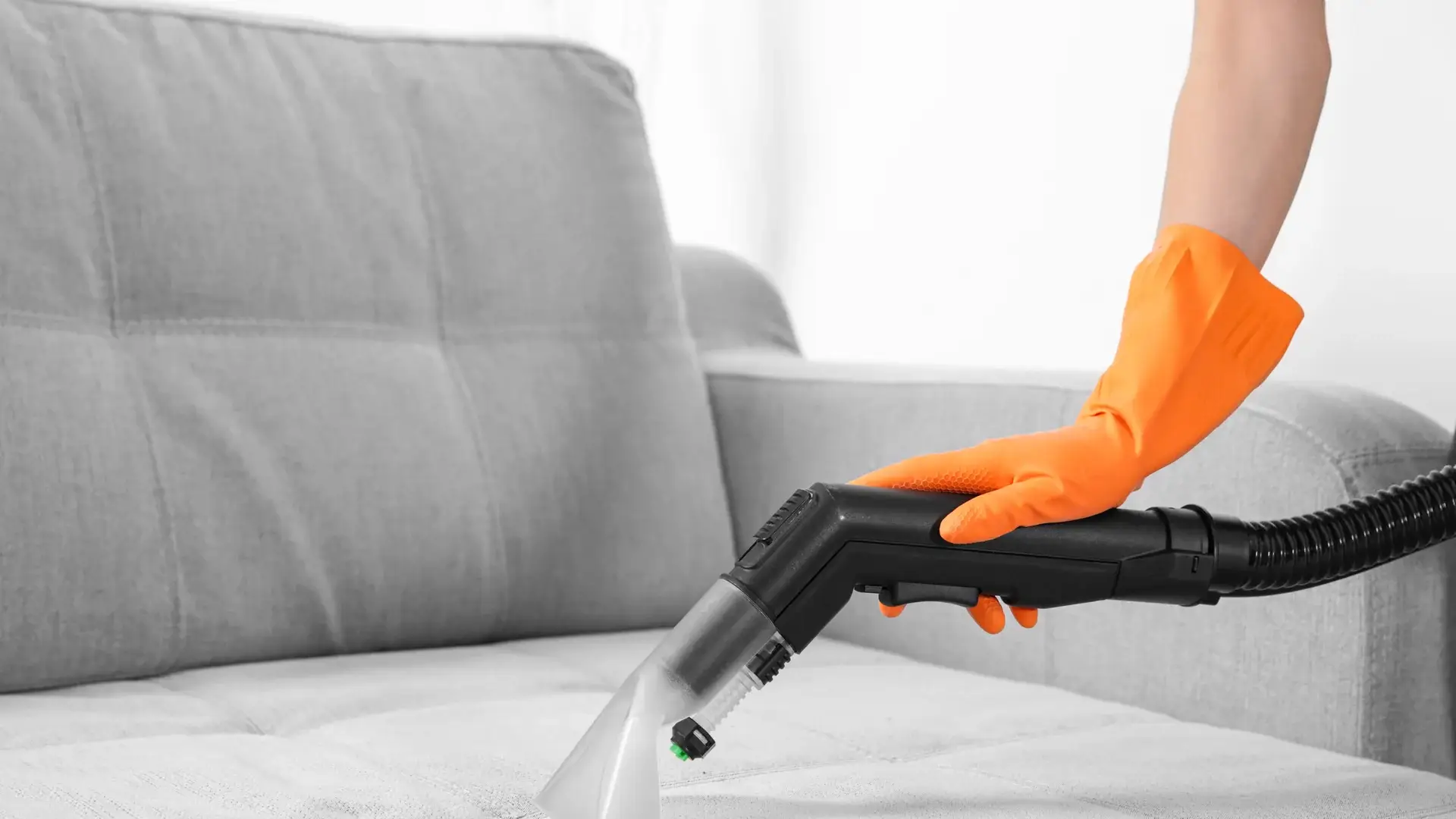
For those situations, professional upholstery extraction cleaning reaches deeper into the fabric structure than surface methods can. The equipment applies solution under pressure and extracts from depth.
For ongoing furniture and whole-home fabric maintenance at a consistent standard, a regular cleaning service includes the kind of consistent attention that prevents heavy buildup and extends the usable condition of furniture over time. When the full home needs a comprehensive reset alongside the upholstery, a deep cleaning service covers every surface in a single session.
Frequently asked questions
Can I use a carpet cleaning machine on my sofa? Some carpet extractors have upholstery attachments that work on W-coded fabrics. Use the lowest moisture setting and test on a hidden area first. Never use a carpet extractor on S-coded or X-coded fabrics.
What is the musty smell in my old sofa from? Musty odor in upholstery typically comes from moisture that penetrated the fabric and dried within the cushion filling, creating conditions for mold. Surface baking soda treatment reduces surface odor. The source inside the cushion may require professional extraction or cushion filling replacement.
Can I use essential oils to deodorize my sofa? Add a few drops to baking soda before sprinkling if fragrance is desired. Do not apply essential oils directly to upholstery. They are oil-based and create stains on most fabric types.
My fabric is W-coded but water always leaves a ring. Why? Ring marks from water on W-coded fabrics usually mean the water was applied in too concentrated a spot or the fabric dried too slowly. Use the foam method rather than liquid, dry thoroughly with a fan, and work from the outer edge inward to avoid creating a defined wet border.
The fabric code is the starting point for everything
A diy upholstery cleaner that works starts with knowing what you are working with. Thirty seconds to find the code prevents hours of trying to reverse damage done with the wrong method.
Check the code. Match the method to the fabric and the stain type. Always blot, always work inward, always use white cloths. Address spills immediately. Vacuum weekly. These practices together keep upholstery in good condition longer than any individual cleaning method can on its own.
Keep Reading
Rather hand the work to a team that does this every day? See our deep cleaning service or call (214) 430-4447 for a free quote.
Want Your Home to Look Like This Without the Work?
Tell us about your place and we will send you a price. No walkthrough required, no obligation.
- Free quote with no obligation
- Non toxic and pet friendly products
- Bonded and insured, serving DFW since 2002
- 24 hour guarantee on our service
Prefer to talk? (214) 430-4447
By completing this form I acknowledge that I will receive informational text messages from E&R Cleaning Services. I can opt out at any time by replying STOP. Standard message rates may apply.