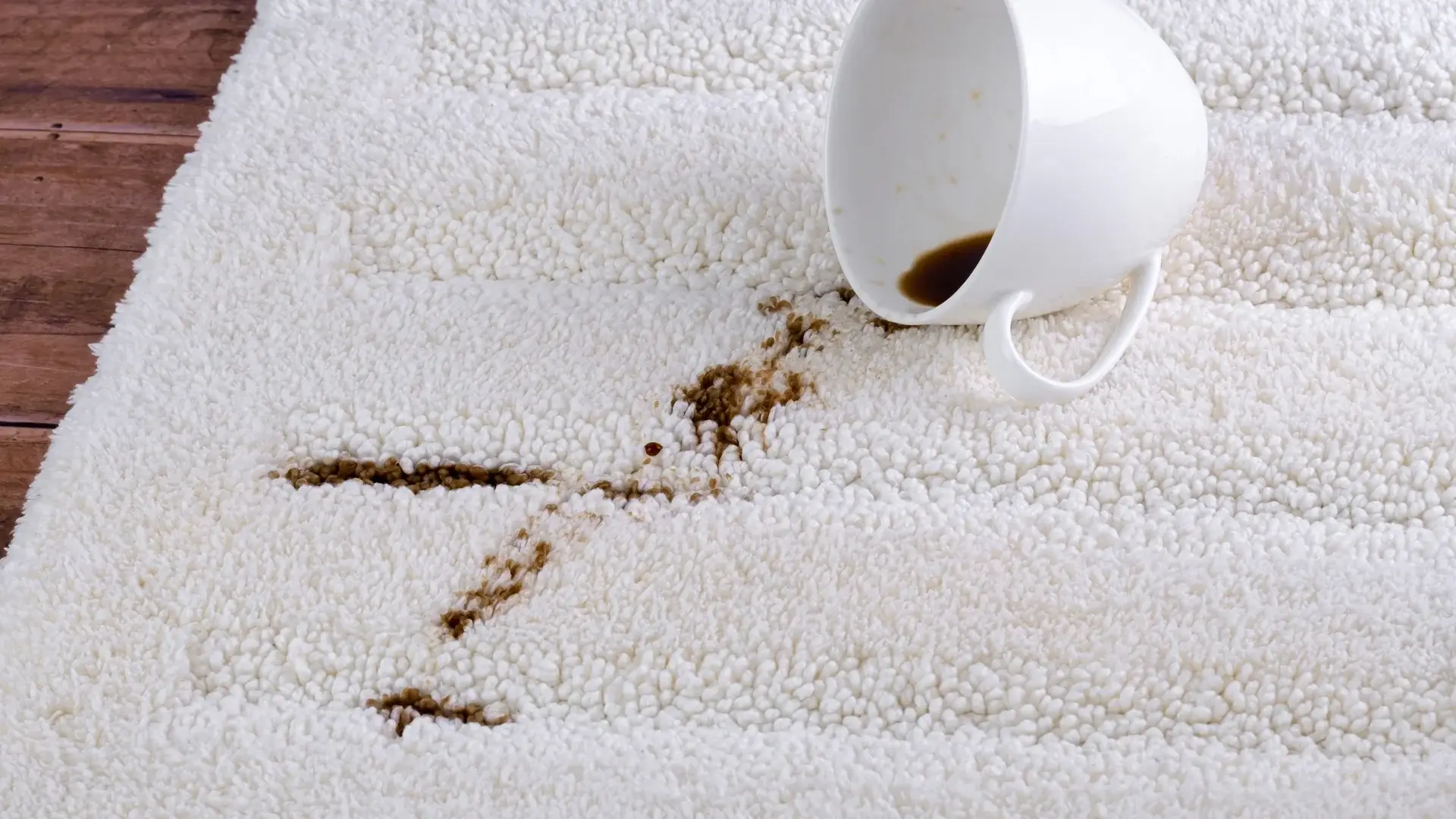
Fresh stains are manageable. Old stains are a different problem. Once a stain dries, the moisture evaporates and leaves concentrated residue bonded to the fiber. Pet urine forms uric acid crystals that reactivate with every cleaning attempt. Red wine oxidizes and deepens its bond with the fiber polymer. Makeup binders cure inside the weave.
Knowing how to get old stains out of carpet requires matching the cleaning agent to the stain chemistry. Most stains that seem permanent respond to the right approach. The ones that do not respond to home methods are good candidates for professional extraction, not for repeated failed attempts with the wrong product.
Quick answer: how to get old stains out of carpet by stain type
| Stain | Temperature | Primary agent | Key rule |
|---|---|---|---|
| Pet urine | Cold | Enzymatic cleaner | Only enzyme breaks down uric acid |
| Red wine | Warm | Dish soap and vinegar | Test hydrogen peroxide first |
| Blood | Cold | Unseasoned meat tenderizer paste | Never use heat |
| Coffee or tea | Warm | Dish soap and vinegar | Multiple passes needed |
| Grease or oil | Room temp | Baking soda overnight, then dish soap | Absorb before treating |
| Ink | Room temp | Rubbing alcohol | Work inward from edge |
| Foundation makeup | Room temp | Rubbing alcohol then dish soap | Address oil and pigment separately |
| Unknown set-in stain | Cold | Dish soap and vinegar first | Test hydrogen peroxide if needed |
Why standard cleaning methods fail on old stains
Two errors cause most set-in stain removal failures.
The first is using hot water on protein-based stains. Proteins in blood, egg, dairy, and pet waste coagulate under heat, binding more tightly to the fiber. Hot water permanently sets protein stains. Cold water is required for all protein-based materials, regardless of how old the stain is.
The second is applying multiple cleaning products without rinsing between them. Products interact chemically in ways that can set the stain, damage the carpet fiber, or neutralize each other’s action. Apply one product, blot thoroughly, assess, and rinse before applying the next.
What to have ready before treating any old stain
Having the right supplies at hand before starting makes the difference between a focused treatment and a rushed attempt. Gathering materials mid-process allows the stain to dry further or causes you to skip steps.
Keep these on hand for stain removal:
- Clean white microfiber cloths (multiple)
- Cold water and warm water in separate containers
- Clear, unscented dish soap
- White vinegar
- 3 percent hydrogen peroxide (standard drugstore strength)
- 70 percent isopropyl rubbing alcohol
- Baking soda or cornstarch
- Unseasoned meat tenderizer (for blood)
- A quality enzymatic pet stain cleaner
- A spray bottle
White cloths only. Colored cloths transfer dye to damp carpet, creating a second stain on top of the first.
The technique that determines results: blotting, not scrubbing
Before any method, one principle applies to every carpet stain:
Always blot. Never scrub.
Scrubbing forces stain material deeper into the fiber structure and spreads it laterally, expanding the affected area. Scrubbing also permanently mats the carpet pile, changing the texture of the cleaned area even after the stain is removed.
Blotting draws material upward by pressing a cloth firmly against the stain and lifting straight up. Work from the outer edge toward the center to prevent the stain from spreading. Use a clean section of white cloth with each pass. Colored cloths can transfer dye to damp carpet.
Methods for the most common old carpet stains
Pet urine: enzymatic cleaner is the only complete solution
Standard cleaners address visible pet urine staining but not the odor. As urine dries, uric acid forms crystals within the carpet fiber and the padding below. Those crystals survive standard cleaning. Every time moisture contacts them, including future cleaning attempts, they reactivate and release the odor again.
Enzymatic cleaners contain protease and urease enzymes that break down uric acid at the molecular level, permanently eliminating the source. Apply generously, saturating the area to reach the padding where crystals have formed. Cover with a damp cloth and leave for at least 15 minutes. For severe or old staining, leave for up to an hour. Blot dry and allow to air dry completely.
Do not apply any other cleaner before or after the enzymatic product. Many products deactivate the enzymes and reduce effectiveness.
The EPA’s safer choice program lists enzymatic and bio-based cleaning products that are effective and safer for indoor use. Look for EPA Safer Choice-certified enzymatic cleaners for use around pets and children.
Red wine: dish soap, vinegar, and hydrogen peroxide
Old red wine stains have oxidized, deepening the bond with the fiber. Mix 1 tablespoon of dish soap, 1 tablespoon of white vinegar, and 2 cups of warm water. Apply and blot repeatedly.
For very old or resistant staining, add 1 teaspoon of 3 percent hydrogen peroxide to the solution. Test on a hidden area first. Hydrogen peroxide can lighten some carpet colors, particularly darker shades. Work from the outer edge inward. Multiple applications with fresh solution between blotting passes are often necessary.
Blood: cold water and meat tenderizer
Cold water only. Any heat on blood causes the proteins to coagulate and bind permanently to the fiber.
Make a paste of unseasoned meat tenderizer and cold water. The active ingredient is papain, a protease enzyme that breaks down blood proteins. Apply to the stain, leave for 30 minutes, and blot away with a cold damp cloth.
For remaining discoloration on lighter carpet after the paste treatment, apply 3 percent hydrogen peroxide and blot after five minutes. Test first.
Coffee and tea: dish soap and vinegar
Tannins in coffee and tea bind to carpet fibers and resist simple water treatment. Mix 1 tablespoon of dish soap, 1 tablespoon of white vinegar, and 2 cups of warm water. Apply and blot repeatedly.
For stains that have been heat-set by previous steam cleaning, dampening the stain first with cold water and blotting before applying the solution may improve results. Multiple treatment sessions are often needed for stains older than a week.
Grease and cooking oil
Old grease has spread beyond the visible stain through the fiber structure. Apply baking soda or cornstarch generously and press gently. Leave overnight. The powder absorbs residual oil that has not yet fully bonded with the fiber.
Vacuum completely. Then apply a dish soap solution (1 teaspoon of dish soap in 2 cups of warm water) and blot repeatedly. Dish soap surfactants surround oil particles and allow them to be lifted from the fiber with water blotting. Do not use water alone on grease. Water does not dissolve oil and will spread it.
Ink: rubbing alcohol
Apply 70 percent isopropyl rubbing alcohol to a clean white cloth. Blot from the outer edge of the stain inward using small, controlled movements. Change to a fresh cloth section with each pass. Ink disperses easily, so precision matters more than speed.
Follow with a dish soap solution to remove the alcohol residue. Blot and allow to dry before assessing results.
Foundation and liquid makeup: rubbing alcohol then dish soap
Foundation contains pigments suspended in oil or silicone. Treating only one component leaves the other behind.
Apply rubbing alcohol to a white cloth and blot the stain inward. The alcohol dissolves pigment binders and oil-based makeup components. Follow with the dish soap solution to remove the alcohol residue and any remaining oil. Blot and allow to air dry.
Stain wicking: why stains come back after drying
Stain wicking is one of the most frustrating outcomes in carpet cleaning. The stain appears to be gone after treatment, then returns as the carpet dries.
Here is why it happens. Cleaning solution drives residue deeper into the carpet and the padding. As the carpet dries, moisture wicks back up through the pile, bringing residue with it. The stain reappears at the surface.
How to prevent wicking: After the final blotting pass, place a thick dry cloth or several layers of paper towel over the damp area. Weigh it down with a heavy object and leave for several hours. This draws the remaining moisture and residue toward the surface, where the cloth absorbs it rather than letting it wick back into the pile.
If wicking has already occurred, re-treat the stain using less liquid this time, and use the weighted cloth method after blotting.
Common mistakes that make old carpet stains worse
Professional cleaners encounter these errors regularly in homes where previous cleaning attempts have expanded the original stain:
- Using hot water on blood, pet urine, or egg. Heat sets protein-based stains permanently.
- Stacking products without rinsing between them. Product interactions can deepen stains or damage fibers.
- Scrubbing instead of blotting. Scrubbing spreads the stain and mats the pile.
- Applying enzymatic cleaner after using other products on pet stains. Many products deactivate enzymes, preventing them from working.
- Working outward from the stain center. Always work inward to prevent the stain from expanding.
Frequently asked questions
How do I know if a stain is fully gone before the carpet dries? Damp carpet appears slightly darker than dry carpet even in areas with no staining. Let the area dry completely before assessing. Place a fan directed at the surface to speed drying time.
My carpet still smells like pet urine after using enzymatic cleaner. What happened? The enzymatic cleaner likely did not reach the padding below the carpet where uric acid crystals have formed. Apply the cleaner again with greater volume, pressing it through the carpet to saturate the backing. In severe cases where the padding is heavily contaminated, professional extraction or padding replacement is the complete solution.
Can I use a steam cleaner on old stains? Steam cleaning is effective for general carpet maintenance, not for treating specific stains. Heat from steam permanently sets protein-based stains. Treat the stain with the appropriate cold or room-temperature method first. Allow to dry completely, then steam clean the full carpet if desired.
When should I call a professional instead of treating a stain at home? When the stain penetrates through the carpet backing into the padding, when previous attempts have spread the stain significantly, or when pet urine has been present across a large area for an extended period. Professional extraction equipment applies solution under pressure and extracts from depth, reaching areas that surface methods cannot.
Clean carpet that stays clean
Understanding how to get old stains out of carpet changes what is possible at home. Matching the agent to the stain chemistry, using cold water for proteins, and blotting rather than scrubbing remove marks that seemed permanent.
For regular maintenance that prevents minor stains from becoming major ones, a regular cleaning service provides consistent care that keeps carpets in good condition between deeper treatments. When carpets need professional-level extraction after significant staining or extended neglect, a deep cleaning service provides the thorough reset that home methods cannot reach.
Keep Reading
Rather hand the work to a team that does this every day? See our deep cleaning service or call (214) 430-4447 for a free quote.