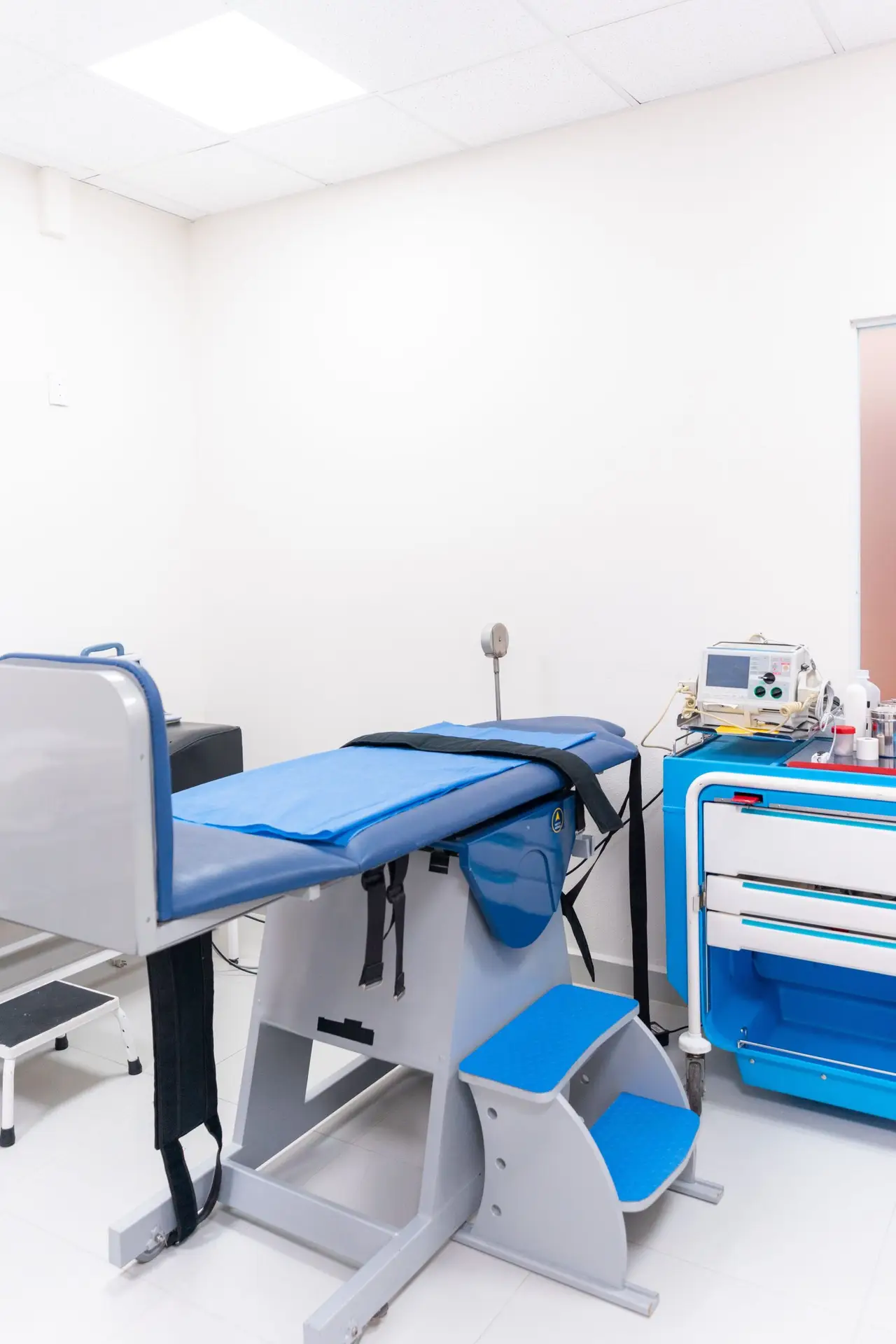
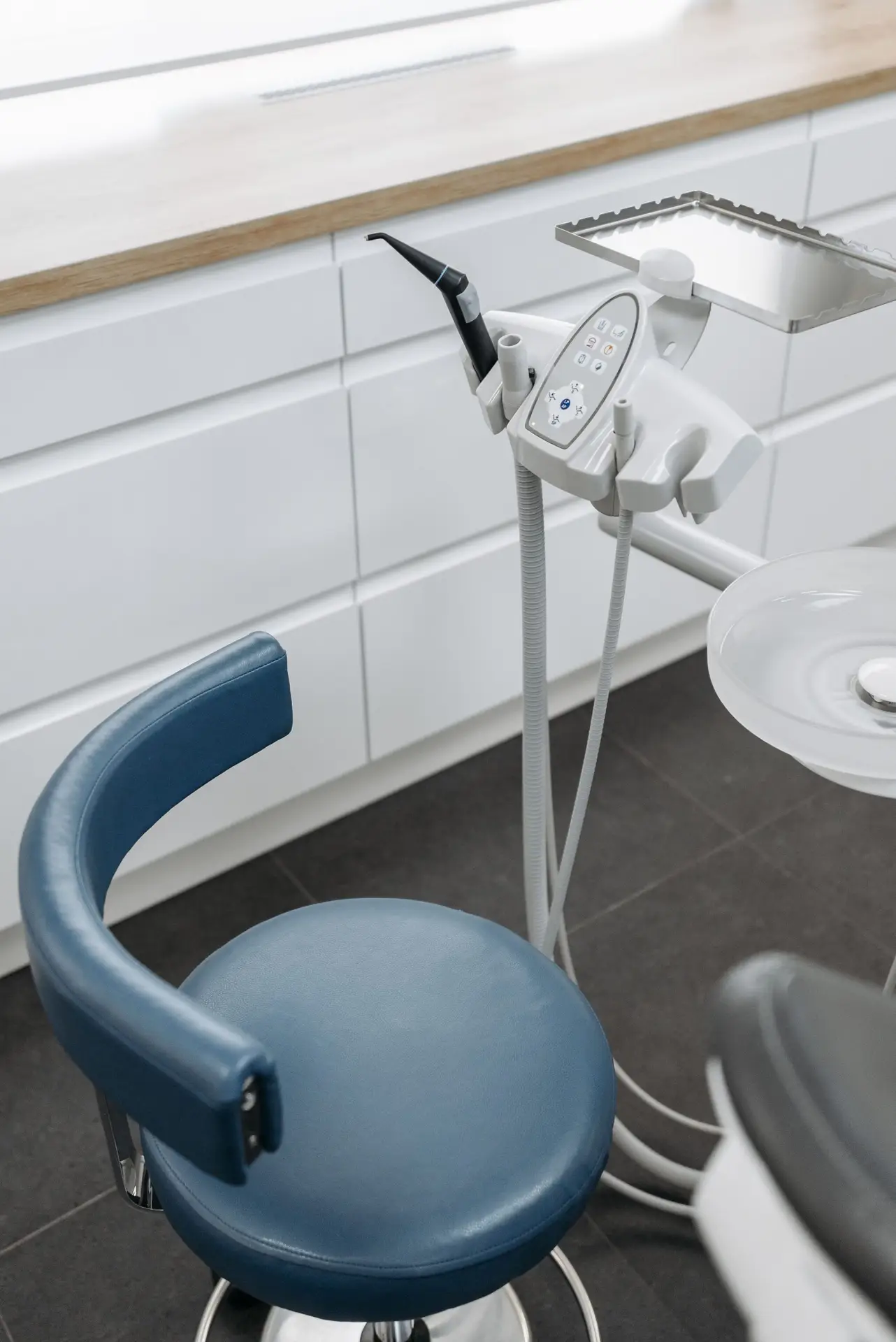
A dental chair costs more than most practices spend on cleaning in several years. The upholstery on it can be ruined by the wrong product in a few months, and the damage shows up gradually enough that nobody connects it to the bottle.
This is the part of dental office cleaning that rarely makes it into a contract, and it is the part that can quietly cost a Prosper practice real money.
The equipment is not one material
What looks like a single unit is actually five or six different surfaces that respond differently to the same chemical.
Upholstery on the chair and the operator stool is usually a vinyl or synthetic leather chosen for durability, but durability against patients is not durability against alcohol. Repeated contact with high alcohol products is a known cause of surface cracking and color loss on that kind of material.
Painted and powder coated metal on arms and bases tolerates most products but not abrasive pads. Plastic housings on the delivery unit and the light handle can craze, which is the fine web of cracks that appears before a part becomes brittle. Glass and acrylic on screens and shields scratch from the wrong cloth long before they fail chemically. Cabinetry fronts, especially laminate and thermofoil, swell at the edges when liquid pools along a seam.
A crew that treats all of that as one surface will eventually damage the most expensive item in the room.
What goes wrong most often
Spraying directly onto equipment
Spray travels. Mist that lands on a control panel or a switch assembly works its way into seams where it does not evaporate, and that is how electronics fail in a room that was only ever being cleaned.
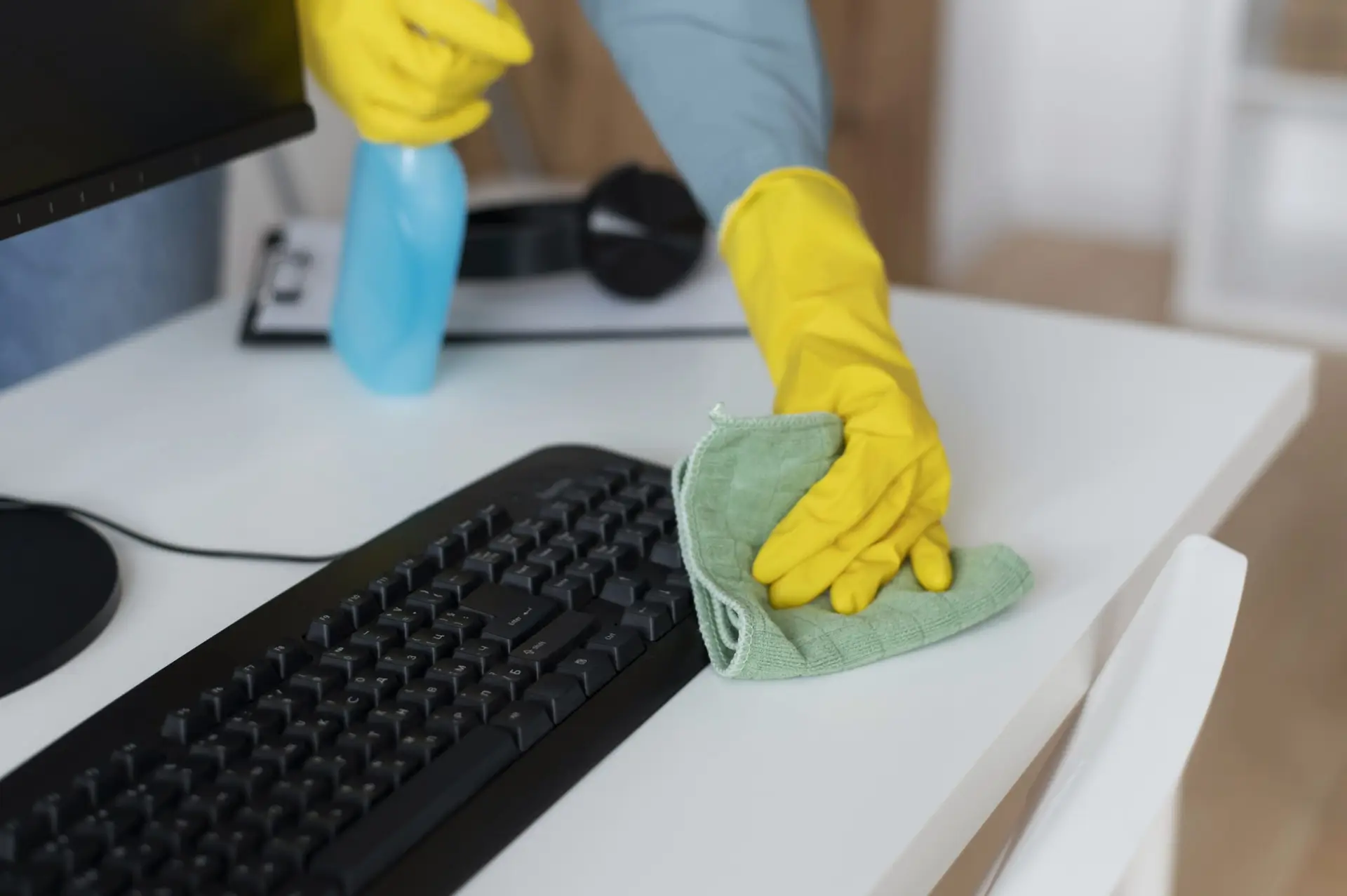
The correct method is to apply product to the cloth, not to the device, for anything with a control surface. Product goes on the cloth, the cloth goes on the equipment.
Confusing clinical decontamination with environmental cleaning
The surfaces a patient touches during treatment are barriered and decontaminated by your clinical staff between appointments, with products the manufacturer approves for that purpose. That is clinical work with clinical judgment attached.
Environmental cleaning is the exterior and the room around it, after hours. When the boundary is not written down, one of two things happens. Either the cleaning crew touches equipment it should not, or everyone assumes someone else handled the chair base and nobody did.
Ignoring the manufacturer instructions
Every chair and delivery unit ships with a cleaning section in its manual naming the product types that are approved and the ones that void the warranty. Almost nobody reads it, including most cleaning companies.
That document, not a general cleaning habit, is what should govern which product touches the equipment.
What a trained crew actually does
In the practices we clean, the routine around equipment is deliberately conservative.
We work from the room outward, not from the equipment inward, so the surfaces most likely to be damaged are approached last and with the least aggressive method that does the job. Cloths are color coded by zone so the cloth that touched a restroom never reaches an operatory. Product goes on the cloth for anything with electronics. Pooling is treated as a failure: liquid that sits on a cabinet seam or runs down a chair base gets dried, not left to find its own way.
And we ask. Before the first visit, we go through the equipment with the practice and write down what is ours, what is clinical, and which product the manufacturer allows on each item. It takes twenty minutes once and it prevents the slow damage that nobody notices until a part fails.
The imaging equipment deserves its own line
Sensors, scanner wands, and the arms they hang from are both delicate and expensive, and they are frequently sitting out when a crew arrives in the evening.
Our default is simple: we do not clean imaging sensors or intraoral devices. Those go to clinical staff with manufacturer approved products, every time, without exception. What we handle is the mount, the arm, the cart and the surfaces around them, with product on the cloth.
A rule that clear is worth more than a careful crew making judgment calls in a dark room at nine in the evening.
If your practice is in Prosper
Prosper has a lot of young practices in newer buildings along Preston Road and First Street, which means a lot of equipment still under warranty. That is exactly the moment when the cleaning method matters most and when nobody is thinking about it.
We will walk your operatories, note what each manufacturer allows, and write the boundary into the scope before the first visit. Call (214) 430-4447 or request a free quote and ask for the dental walkthrough.
Always follow the cleaning instructions from your own equipment manufacturer. Where their guidance differs from general practice, theirs governs.
Keep reading
- Office and commercial cleaning in Prosper, TX
- Medical and dental office cleaning in Frisco, TX
- What commercial cleaning actually changes for a business
Want Your Home to Look Like This Without the Work?
Tell us about your place and we will send you a price. No walkthrough required, no obligation.
- Free quote with no obligation
- Non toxic and pet friendly products
- Bonded and insured, serving DFW since 2002
- 24 hour guarantee on our service
Prefer to talk? (214) 430-4447
By completing this form I acknowledge that I will receive informational text messages from E&R Cleaning Services. I can opt out at any time by replying STOP. Standard message rates may apply.