
The bedroom is where the body recovers. Research consistently links bedroom air quality and cleanliness to sleep quality, respiratory health, and allergy symptom frequency. Yet the bedroom is often cleaned less thoroughly than the kitchen or bathroom, because its problems are largely invisible.
Dust mites, which are microscopic arachnids that feed on shed human skin cells, colonize mattresses, pillows, and soft furnishings in every home. A single mattress can host between 100,000 and 10 million dust mites, according to the American College of Allergy, Asthma and Immunology. Their waste particles are the primary trigger of year-round allergic rhinitis and can significantly worsen asthma symptoms.
A clean bedroom addresses these invisible problems at the source. These 11 steps cover every surface and component that accumulates grime, allergens, or bacteria, and explain why each one matters.
Why a surface tidy is not the same as a clean bedroom
Making the bed and picking up clutter creates the appearance of a clean bedroom without addressing any of the underlying hygiene issues. The dust mites in the mattress remain. The allergens on the curtains and upholstery remain. The dust layer on ceiling fan blades circulates every time the fan runs.
A genuinely clean bedroom requires systematic attention to soft furnishings, hard surfaces, air circulation points, and floor areas that are often untouched for weeks between cleaning sessions.
Before you start: what you need
- Several clean microfiber cloths
- An all-purpose cleaner
- Glass cleaner
- A vacuum with upholstery attachment, crevice tool, and standard floor head
- Laundry bags or baskets
- A trash bag
- Baking soda for mattress treatment
- A mop or damp cloth for hard floors
11 bedroom cleaning steps most people skip and why they matter
Step 1: Declutter before anything else
Cleaning around clutter means every surface that matters gets half-cleaned at best. Remove everything that does not belong in the room: laundry to the hamper, dishes to the kitchen, items that belong in other rooms to their correct places. Take out any trash.
Decluttering before cleaning is not optional. It is the step that determines whether the subsequent steps actually access the surfaces they are meant to clean.
Step 2: Strip all bedding and wash at the right temperature
Remove pillowcases, sheets, duvet covers, and pillow protectors. Wash everything on the hottest cycle the fabric label permits. Temperature matters here because dust mite death requires exposure to at least 54 degrees Celsius (130 degrees Fahrenheit) for a minimum of 30 minutes, according to research cited by the Asthma and Allergy Foundation of America.
Cold or warm washing cycles clean the fabric but do not eliminate dust mites or their allergens. If the fabric requires cold washing, add a laundry sanitizer to the cycle. Wash bedding every one to two weeks. Households with allergies should wash weekly.
Step 3: Deodorize and vacuum the mattress
The mattress is the most biologically active surface in the bedroom and the most rarely cleaned. Sprinkle baking soda generously across the entire top surface, including around the edges. Leave it for a minimum of 30 minutes, or up to two hours for mattresses that have not been treated recently. Baking soda absorbs moisture and neutralizes odors from sweat and skin.
Vacuum the baking soda using the upholstery attachment, working in overlapping strokes to cover the full surface. Then vacuum the sides of the mattress and the area around the bed frame perimeter, where dust accumulates undisturbed.
Rotate the mattress head-to-foot when you replace the clean bedding to distribute wear evenly and expose the underside surface to air. Flip it fully if it is a two-sided mattress.
Step 4: Dust from top to bottom
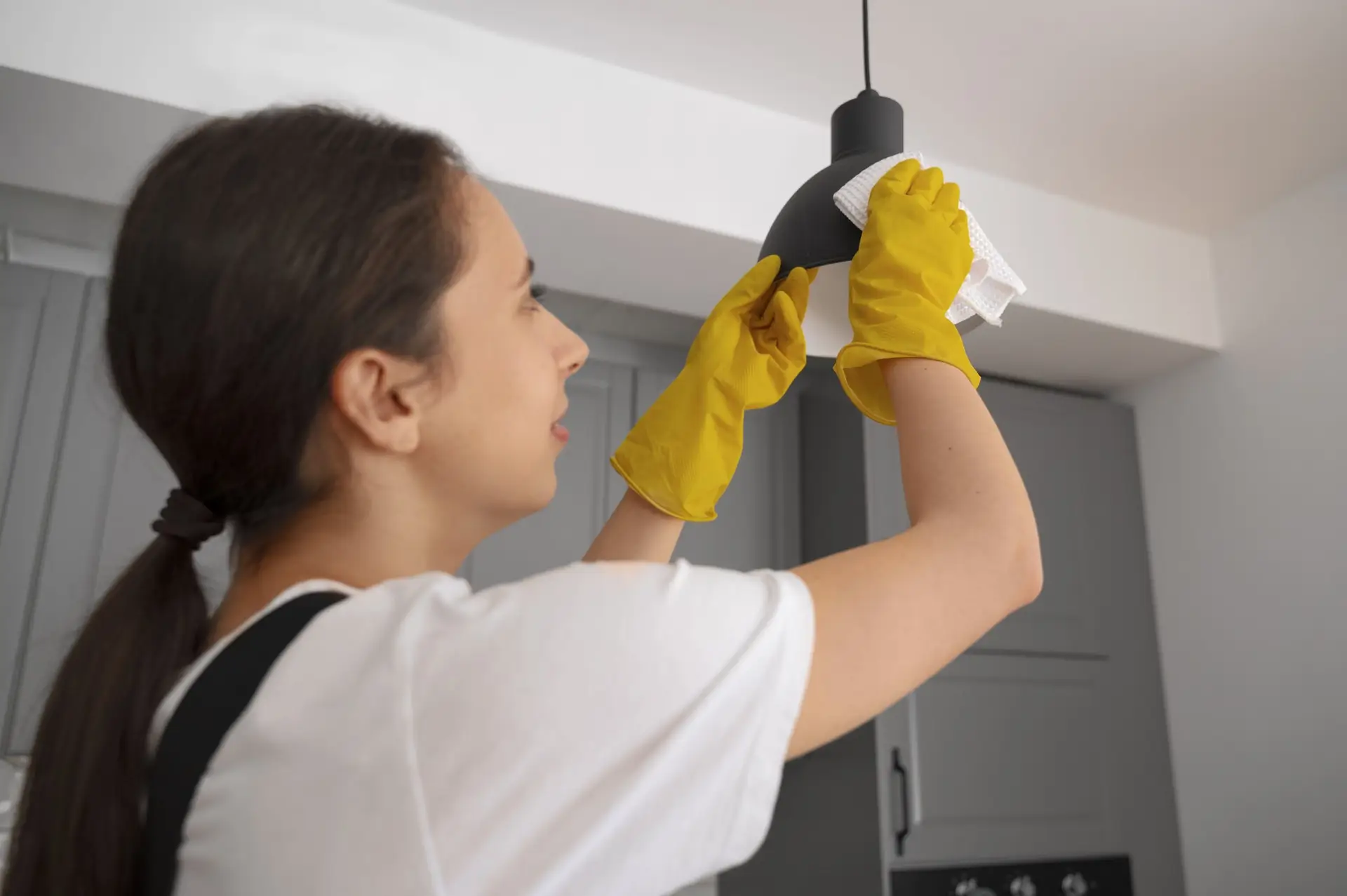
Ceiling fan blades are often ignored until enough visible buildup accumulates to create doubt about whether they have ever been cleaned. Each blade can hold a layer of dust that circulates into the breathing space of the room every time the fan runs.
Use a microfiber cloth or a pillowcase to wipe each blade individually, trapping dust rather than scattering it into the air. Work methodically downward: ceiling fan, light fixtures, tops of wardrobes and shelving, picture frames, headboard surfaces, nightstands, and baseboards.
The top-to-bottom sequence is not arbitrary. Gravity means anything dislodged from a higher surface lands on whatever surface is below it. Cleaning top to bottom means you clean each surface once rather than recleaning lower surfaces after disturbing higher ones.
Step 5: Clean mirrors and glass surfaces
Spray glass cleaner onto a microfiber cloth rather than directly onto glass. This prevents overspray from reaching surrounding surfaces and gives more control over the amount of product applied.
Wipe mirrors and picture frames with the dampened cloth, then follow with a dry cloth pass to eliminate streaks. Clean the window glass on the interior if smudges or dust buildup is present.
Step 6: Wipe all furniture surfaces
Wipe nightstands, dressers, shelves, the headboard, and any other furniture with an all-purpose cleaner on a microfiber cloth. Open drawers and wipe the front edges and handles, which accumulate skin oils with daily contact. Wipe the inside of nightstand drawers if they are used frequently.
Behind and underneath furniture pieces should be addressed quarterly rather than weekly, but noting their condition during the regular clean helps schedule those less frequent tasks.
Step 7: Disinfect high-touch surfaces
Light switches, outlet covers, door handles, and the bedroom remote control are touched repeatedly throughout the day and rarely cleaned. Wipe these with a disinfecting cloth or a cloth dampened with diluted all-purpose cleaner. Light switches in bedrooms are touched at minimum twice daily and often more, making them vectors for skin bacteria that build up over time.
Step 8: Address the interior of the wardrobe
The inside of the wardrobe collects dust on shelves and on the wardrobe floor, and the hanging rod accumulates dust on its surface and on the clothes hangers. When the wardrobe is opened, air movement carries that dust into the room.
Wipe interior shelves and the hanging rod with a damp cloth. Vacuum the wardrobe floor. This step is not needed every single week for most households, but should be incorporated monthly to prevent the wardrobe from functioning as a dust reservoir that counteracts cleaning efforts in the room.
Step 9: Vacuum or launder curtains and blinds
Curtains are large textile surfaces that function as dust and allergen collectors in the bedroom. They accumulate pet dander, pollen brought in on clothing, dust, and household fibers continuously. Vacuum them with the upholstery attachment in downward strokes, or remove and wash them according to the care label on a monthly or bimonthly basis.
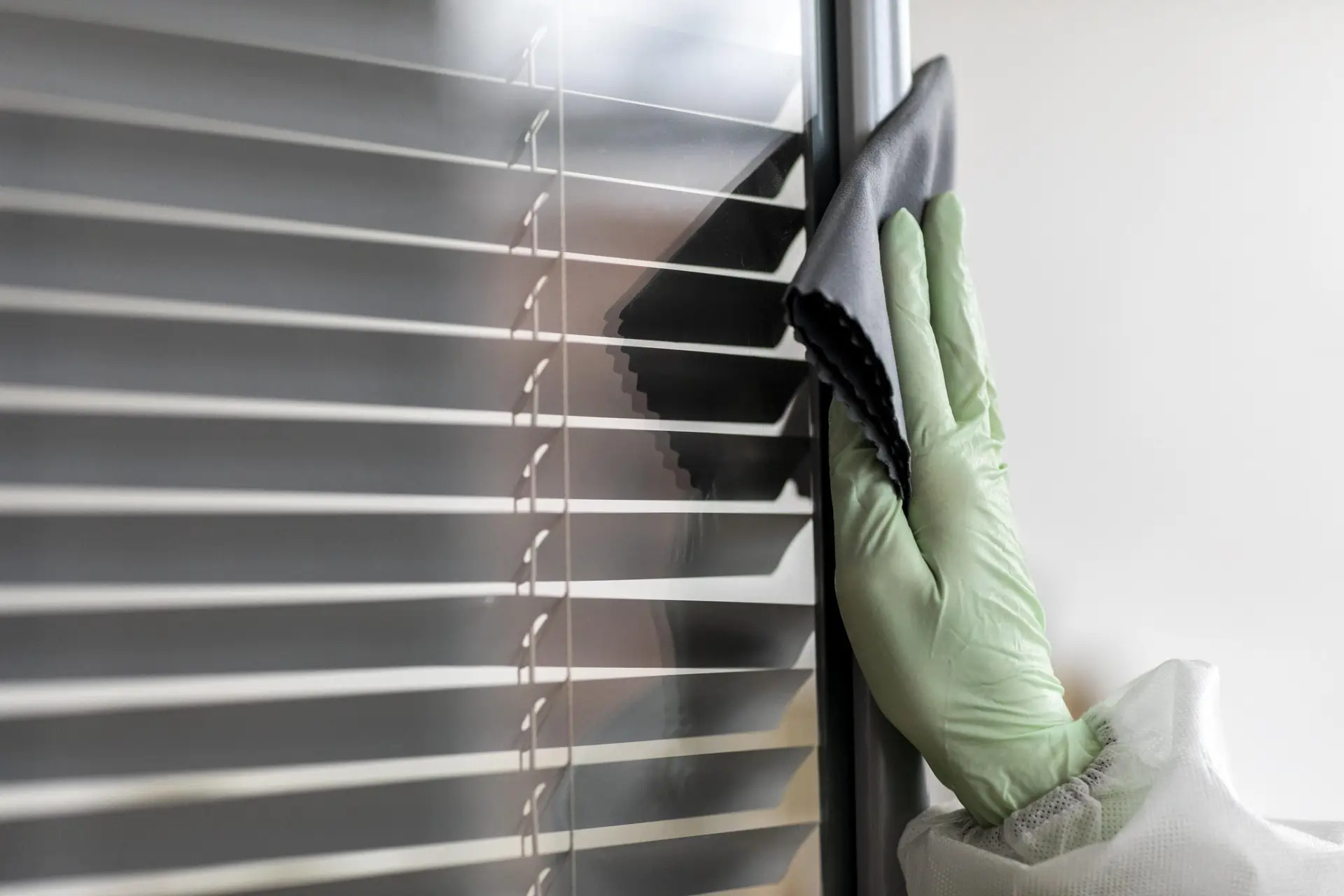
For blinds, wipe each slat with a slightly damp microfiber cloth, working from top to bottom. A pair of tongs with a microfiber cloth on each side cleans both faces of a blind slat simultaneously.
Curtains and blinds are consistently among the most-skipped steps in bedroom cleaning routines. Skipping them means one of the largest allergen-bearing surfaces in the room is never addressed.
Step 10: Vacuum all floors and under furniture
Vacuum the entire floor, working from the far corners of the room toward the door. Use the crevice tool along baseboards where dust settles and compresses over time. Use the upholstery attachment along the gap between the floor and the base of furniture.
Lift or move any furniture that can be safely moved to vacuum underneath. The area under the bed, in particular, accumulates significant dust and debris that circulates into the breathing zone of the room every time someone gets in or out of bed.
For hardwood or tile bedroom floors, follow vacuuming with a slightly damp mop using a product appropriate for the floor type.
Step 11: Replace clean bedding last
Return fresh, clean bedding to the mattress after all other cleaning steps are complete. Doing this last protects the newly washed bedding from any dust or debris disturbed during the cleaning process and ensures the room is finished at its highest point of cleanliness.
Bedroom cleaning frequency guide
| Task | Frequency |
|---|---|
| Make the bed | Daily |
| Remove clutter | Daily |
| Change and wash bedding | Every 1 to 2 weeks |
| Dust all surfaces top to bottom | Weekly |
| Vacuum floor and under furniture | Weekly |
| Mattress baking soda treatment | Monthly |
| Clean ceiling fan, curtains, and wardrobe interior | Monthly |
| Deep address of areas under and behind furniture | Quarterly |
Frequently asked questions
How do I know if dust mites are affecting my sleep quality? Symptoms include waking with nasal congestion, itchy or watering eyes, or a scratchy throat that clears after you leave the bedroom. These symptoms, when they occur primarily at night or upon waking, are consistent with dust mite allergen exposure during sleep. Mattress encasements rated for allergen protection and consistent bedding washing at high temperatures are the most direct interventions.
Should I vacuum the mattress with every bedding change? The baking soda treatment is most effective monthly. At every bedding change (weekly or biweekly), vacuuming the mattress surface without baking soda still removes surface dust and debris and is worth doing if the extra step is feasible.
Can I clean a memory foam mattress the same way? Yes, with one modification: avoid saturating memory foam with any liquid. Use baking soda dry treatment only. Do not use steam cleaners on memory foam.
What causes that musty smell in some bedrooms? The combination of dust accumulation, rarely washed pillows or mattress surfaces, and poor air circulation. The musty smell is typically volatile compounds produced by dust mite waste or early-stage mold. Addressing the mattress, pillows, and ventilation simultaneously resolves most cases.
A cleaner bedroom when regular steps are not enough
When a bedroom has not had a thorough clean in an extended period, or when allergen levels have become significant, the steps above in a single comprehensive session address the backlog. After that, the weekly routine maintains the standard with far less effort.
For households where time constraints make thorough bedroom cleaning difficult to sustain, a professional deep cleaning service provides the comprehensive reset that brings every surface, fixture, and floor to a high starting point.
Maintaining that baseline with a scheduled regular cleaning service means your own daily and weekly habits remain light, and the bedroom stays at a consistently clean standard throughout the year.
A bedroom environment that supports genuine rest
Following these 11 steps produces a bedroom that is genuinely clean, not just visually tidy. The allergen sources, the bacterial surfaces, and the accumulated dust that affect air quality and sleep are addressed directly rather than cleaned around.
Start at the ceiling fan and work systematically to the floor. The investment in a thorough bedroom clean, done monthly with lighter weekly maintenance, delivers meaningful improvement in sleep quality and respiratory health for everyone in the household.
Keep Reading
Rather hand the work to a team that does this every day? See our deep cleaning service or call (214) 430-4447 for a free quote.
Want Your Home to Look Like This Without the Work?
Tell us about your place and we will send you a price. No walkthrough required, no obligation.
- Free quote with no obligation
- Non toxic and pet friendly products
- Bonded and insured, serving DFW since 2002
- 24 hour guarantee on our service
Prefer to talk? (214) 430-4447
By completing this form I acknowledge that I will receive informational text messages from E&R Cleaning Services. I can opt out at any time by replying STOP. Standard message rates may apply.