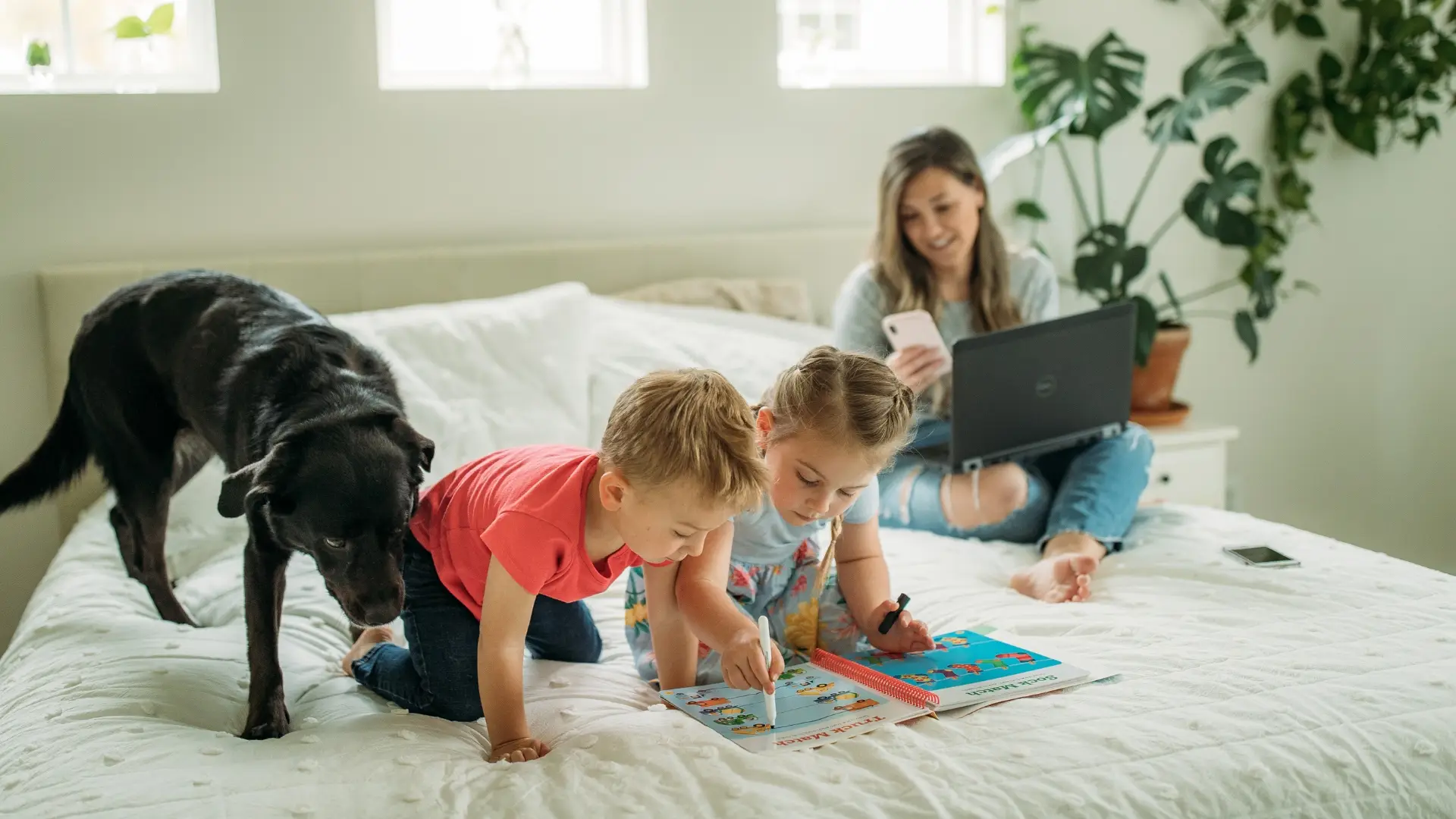
A household with young children and animals is not a dirtier house. It is a house where the floor is a living surface, because both populations spend their time on it and both put their hands or their mouths on it afterward.
That changes what matters. Most cleaning advice is written for adults who interact with a room at standing height. Here is the version written for a room used from the ground up.
The Floor Is the Whole Question
Whatever you use on floors ends up on hands, on knees, on paws, and then in mouths. That single fact should decide your product more than anything else.
Practically it means a neutral floor cleaner at the correct dilution rather than by eye, since excess product is what leaves a film that gets picked up. It means rinsing where a product tells you to. And it means keeping everyone off the surface until it is genuinely dry rather than looking dry.
It also means vacuuming matters more here than anywhere else, and with genuine HEPA filtration, because a vacuum without it takes fine dust, dander and whatever came in on shoes and puts it back into the air at exactly the height a crawling child breathes.
Products That Do Not Belong in This House
Some specifics rather than a general warning.
Pine and phenol based cleaners are particularly hazardous to cats. Concentrated essential oils, tea tree especially, are toxic to both cats and dogs, and they are in a great many products marketed as natural. Bleach residue left on a floor is ingested by anything that walks on it and then grooms.
Laundry pods and dishwasher pods deserve their own mention. They are brightly colored, soft, and a leading cause of poisoning calls involving small children and dogs. They belong in a latched cabinet above waist height, not under the sink.
And the words natural, green and non toxic on a label are unregulated and guarantee nothing. What means something is third party certification such as EPA Safer Choice or Green Seal.
Never Mix, and Keep the Air Moving
Never combine anything containing bleach with anything containing ammonia. That reaction produces a dangerous gas, and a small bathroom with the door closed is exactly where it becomes serious.
Ventilate while you clean and afterward, and keep children and animals out of the room while you work rather than cleaning around them. Aerosols in particular put product straight into the breathing zone, so wipe rather than spray wherever possible.
Toys, Honestly
Hard plastic toys go in the dishwasher on the top rack or get washed in hot soapy water. Plush toys go in the washing machine inside a pillowcase and, importantly, get dried completely, because a plush toy that is still damp inside grows exactly what you were trying to remove.
Battery and electronic toys get wiped with a barely damp cloth rather than submerged.
The realistic frequency is a rotation rather than everything at once. Do the toys currently in use weekly and the rest when they come back around.
Pet toys need the same treatment and almost never get it. Rope and plush toys go in the wash, rubber toys in hot soapy water, and food and water bowls should be washed daily like any other dish, because they develop a biofilm that is genuinely unpleasant.
The Surfaces at Their Height
Standard cleaning routines cover counters and skip everything between the floor and three feet, which is the entire world of a toddler and a dog.
That band includes the lower half of walls, the bottom of doors, baseboards, cabinet fronts at knee height, the underside of the dining table, chair legs, the rail of a stair gate and the sofa edge. Those get handprints, food, drool and paw marks, and they get cleaned once a year in most houses.
Add them to a rotation and the house both looks and smells noticeably better without any change to the rest of the routine.
Defend the Door and Halve the Work
Almost everything on your floors came through one doorway on shoes or paws. A scraper mat outside, a large absorbent mat inside, a towel for paws kept right there, and shoes stopping at the door removes more than any product can.
Keeping the fur between paw pads trimmed matters too, since that is what holds mud and grass seed.
Accidents Need Enzymes, Not Soap
For anything organic, meaning pet accidents, potty training, milk and food, an enzyme cleaner is the only category that resolves it, because enzymes break the compounds down rather than diluting them. Soap and vinegar move the visible mark and leave the source behind, which is why a spot returns on a humid day months later.
A Realistic Rhythm
Daily: floors in the main living area, bowls, a pass on the surfaces at child height. Weekly: pet bedding and current toys, upholstery. Monthly: the reservoirs above eye level. And a deep clean two to four times a year, which is what keeps a house with kids and animals from smelling like one.
Call (214) 430-4447 or request a free quote online. Tell us the ages of the children, how many animals, and whether anyone has allergies or asthma. We use low fragrance products by default and will use certified options throughout on request.
Keep Reading
- Living With Pets Without the Smell
- Cleaning Safely Around Babies and Pets
- What Eco Friendly Labels Actually Mean
- How to Get Rid of Pet Stains on Carpet
- The Bedroom First Allergen Protocol
Want Your Home to Look Like This Without the Work?
Tell us about your place and we will send you a price. No walkthrough required, no obligation.
- Free quote with no obligation
- Non toxic and pet friendly products
- Bonded and insured, serving DFW since 2002
- 24 hour guarantee on our service
Prefer to talk? (214) 430-4447
By completing this form I acknowledge that I will receive informational text messages from E&R Cleaning Services. I can opt out at any time by replying STOP. Standard message rates may apply.