Pet accidents happen. Whether you have a puppy in training, a senior dog, or a cat with a habit of missing the litter box, knowing how to get rid of pet stains on carpet quickly is essential. The longer a stain sits, the harder it becomes to remove completely.
The challenge with pet stains is that they’re more than a surface problem. Urine, in particular, soaks through carpet fibers into the backing and sometimes into the padding underneath. That’s where the odor hides, and that’s why surface cleaning alone often fails. This guide gives you 9 proven methods and explains exactly when a professional is the right call.
Why pet stains are harder to remove than other stains
Pet urine contains uric acid crystals that bond to carpet fibers as they dry. Regular cleaning products break down the surface components but often leave the uric acid behind. Over time, especially in humid conditions, those crystals reactivate and release the odor again.
Additionally, if a pet has had an accident in the same spot before, they are likely to return to it. Animals use scent to locate previous bathroom spots. Eliminating the odor completely is therefore not just an aesthetic goal. It’s a behavioral prevention strategy.
The golden rule: act fast
Speed is the most important factor in successful stain removal. The faster you respond, the more of the stain you can lift before it sets.
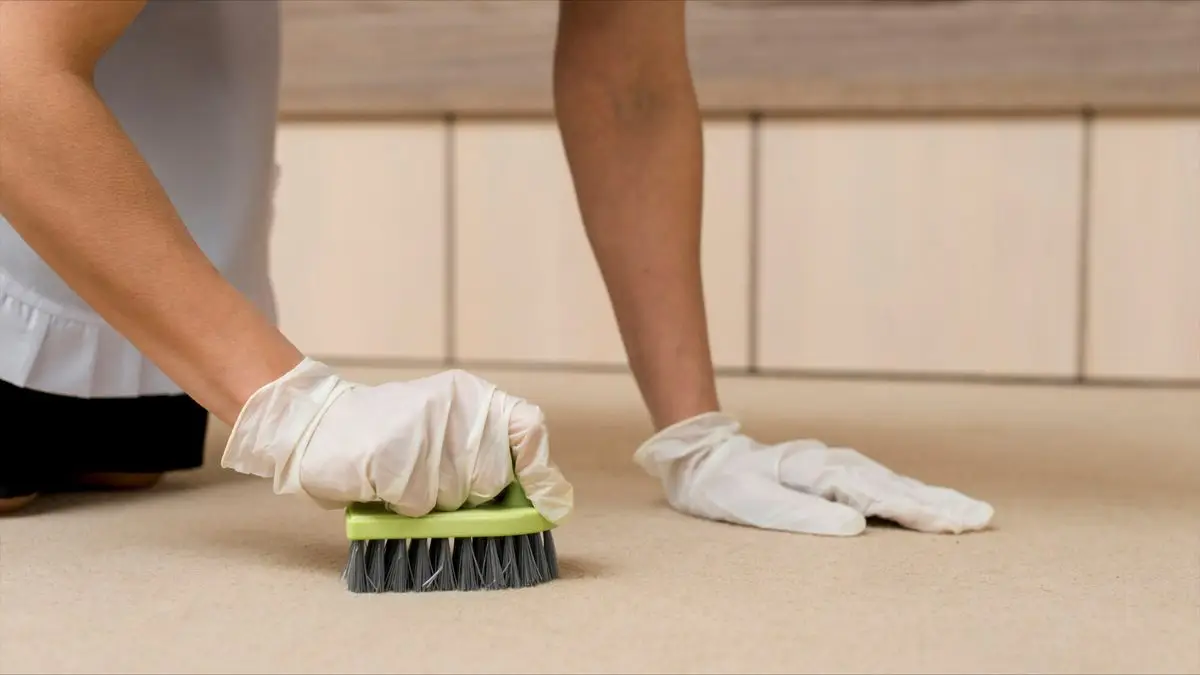
Blot, never rub. Rubbing spreads the stain outward and pushes it deeper into the fibers. Use a clean white cloth or paper towels. Press firmly, work from the outside of the stain toward the center, and use fresh sections of the cloth with each press.
9 pet stain removal tips that actually work
1. absorb as much as possible before cleaning
Before applying any solution, absorb the liquid. Layer several paper towels over the wet area and stand on them for 30 to 60 seconds. Repeat with fresh towels until no more moisture transfers. For solid waste, use a plastic bag to remove it completely before treating the stain.
2. use an enzyme-based cleaner
Enzyme cleaners are the most effective products for breaking down uric acid crystals in pet urine. Unlike general carpet cleaners, enzyme formulas contain biological compounds that chemically break down the urine molecules rather than just masking them.
Saturate the stained area with the enzyme cleaner, following the product’s dwell time instructions (usually 10 to 15 minutes). Blot up the excess, then allow it to air dry completely. Enzyme cleaners require moisture to activate, so don’t rush the drying process.
3. try a DIY solution for fresh stains
If you don’t have an enzyme cleaner on hand, a homemade solution can work well on fresh stains. Mix one cup of cold water, one cup of white vinegar, and two teaspoons of baking soda in a spray bottle. Apply generously and let it sit for five minutes before blotting.
The vinegar neutralizes the ammonia in urine, and the baking soda absorbs odor. However, this solution is less effective on older, dried stains, where an enzyme cleaner is a better choice.
4. use cold water, never hot
Hot water sets protein-based stains, including pet urine, into carpet fibers. Always use cold or lukewarm water when rinsing or treating pet stains. This applies to both fresh and dried stains.
5. locate hidden stains with a UV blacklight
One of the most useful tools for pet owners is an inexpensive UV blacklight flashlight. Urine stains glow under UV light even when completely dry and invisible in normal lighting. Turn off the lights, scan the carpet, and mark any glowing areas with tape or sticky notes before treating them.
This is especially helpful if you’ve noticed an odor but can’t identify the source. Multiple old stains treated with an enzyme cleaner can dramatically improve air quality in a room.
6. address the carpet padding for old stains
If a stain has been there for days, weeks, or longer, the urine has likely soaked through to the carpet padding. Surface treatment alone won’t eliminate the odor because the source is below the carpet.
For these cases, you may need to saturate the carpet enough for the enzyme cleaner to reach the padding. Some very old or repeated stains require pulling back the carpet to treat or replace the padding directly. This is a significant step, but it’s sometimes the only way to permanently eliminate the odor.
7. baking soda for lingering odor
After cleaning and allowing the area to dry completely, sprinkle a generous layer of baking soda over the treated spot. Leave it for several hours or overnight, then vacuum thoroughly. Baking soda absorbs residual odors from the carpet fibers.
This step works best after the initial enzyme treatment, not as a replacement for it. It’s a finishing step, not a primary stain remover.
8. use a wet/dry vacuum for deep extraction
If you have access to a wet/dry vacuum or a carpet extractor, use it after applying and allowing your cleaning solution to dwell. Extraction removes far more of the soiled liquid than blotting alone, including the cleaning solution itself.
Leaving too much cleaning solution in the carpet can attract more dirt over time and leave the area looking dingier than before. Extraction prevents this problem.
9. treat the area after cleaning to discourage re-marking
Once the stain and odor are fully eliminated, consider applying a pet deterrent spray to the area. These products use scents that animals find unpleasant, which discourages them from returning to the same spot.
This step is particularly helpful during the early stages of house training or if a pet has developed a preference for a specific area.
The best products to get rid of pet stains on carpet
Choosing the right product is critical when you want to get rid of pet stains on carpet permanently. Enzyme-based cleaners are the gold standard. They break down uric acid crystals at a molecular level, which eliminates both the stain and the odor signal that draws pets back to the same spot. Avoid ammonia-based cleaners entirely.
Common mistakes that make pet stains worse
Using steam cleaning on fresh stains. Steam heat sets the stain permanently. Never steam clean a pet stain before treating it with an enzyme cleaner and allowing it to fully dry.
Applying too much water. Over-wetting the carpet spreads the stain and drives it deeper into the backing and padding. Apply solutions in controlled amounts and blot rather than pouring.
Using ammonia-based cleaners. Pet urine already contains ammonia. Using an ammonia cleaner on a pet stain actually reinforces the odor signal to your pet and can encourage re-marking. Stick to enzyme cleaners or vinegar-based solutions.
Scrubbing the stain. Scrubbing damages carpet fibers and spreads the stain outward. Always blot with a pressing motion.
How to get rid of pet stains on carpet that keep coming back
Some pet stains seem to disappear after cleaning, then reappear when the carpet gets warm or humid. This happens because the uric acid crystals were not fully broken down during the first treatment.
To permanently get rid of pet stains on carpet that reappear, re-treat the area with a fresh application of enzyme cleaner. Saturate more deeply than the first time, covering an area slightly larger than the visible stain to account for the way urine spreads beneath the surface. Allow the enzyme cleaner to work for the full dwell time before blotting.
In cases where the stain has soaked into the carpet padding, surface treatment alone will not eliminate the odor permanently. The padding may need to be treated or replaced.
When to call a professional
Some pet stain situations genuinely require professional intervention. If any of the following applies to your situation, a professional cleaning service will achieve better results than DIY methods:
- Multiple old stains that have been present for months or years
- Stains that extend through the carpet into the padding or subfloor
- Persistent odor after multiple cleaning attempts
- Large affected areas, such as an entire room
- Delicate or expensive carpet materials where risk of damage is high
Professional carpet cleaning uses extraction equipment and professional-grade enzyme treatments that penetrate deeper than consumer products. It can often save carpet that seems beyond recovery.
Clean carpet, fresh home, happy pets
Getting rid of pet stains on carpet is absolutely achievable with the right approach. Act fast, use enzyme-based cleaners for complete odor elimination, and address the padding when older stains are involved. The 9 methods in this guide cover everything from fresh accidents to long-standing odor problems.
The goal isn’t just clean-looking carpet. It’s carpet that smells genuinely clean, which protects your home and discourages your pet from repeating the behavior.
Keep Reading
- Summer Floor Protection McKinney TX
- Sweep the Floor
- Get Old Stains Out of Carpet
- Keeping a Clean Home With Kids and Pets
Rather hand the work to a team that does this every day? See our deep cleaning service or call (214) 430-4447 for a free quote.
Want Your Home to Look Like This Without the Work?
Tell us about your place and we will send you a price. No walkthrough required, no obligation.
- Free quote with no obligation
- Non toxic and pet friendly products
- Bonded and insured, serving DFW since 2002
- 24 hour guarantee on our service
Prefer to talk? (214) 430-4447
By completing this form I acknowledge that I will receive informational text messages from E&R Cleaning Services. I can opt out at any time by replying STOP. Standard message rates may apply.