The nursery is one of the rooms where cleaning standards matter most and where most parents feel the least confident about what to use. Babies spend more time on the floor and in close contact with surfaces than any other family member. They also have immune systems that are still developing, which makes chemical exposure a more significant concern in the nursery than anywhere else in the house.
These nursery cleaning tips focus on what actually keeps the space safe, which products are appropriate for a baby environment, and how often each task needs to happen.
What new parents usually get wrong first
Most new parents either over-clean with products that are too harsh for a baby’s environment, or under-clean because they are not sure what is safe. Both approaches create problems.
Harsh disinfectants, bleach-based sprays, and heavily fragranced products leave chemical residue on surfaces babies touch and mouth directly. Undercleaning lets dust, mold spores, and allergens accumulate in a space where a baby breathes, sleeps, and spends most of their time.
The right approach sits in between: consistent nursery cleaning with products specifically chosen for a baby environment.
How the nursery differs from other rooms in the house
Standard home cleaning routines are not designed with babies in mind. The products most households use in kitchens and bathrooms are often too concentrated or too fragrant for a room where a child spends sixteen or more hours a day.
Nursery cleaning tips that work start by treating the room as a different category entirely. Lower chemical concentration, higher cleaning frequency, and more attention to air quality than any other room in the house. That shift in approach, rather than a specific product brand, is what makes a nursery genuinely safe.
Nursery cleaning tips by surface and frequency
Crib and mattress
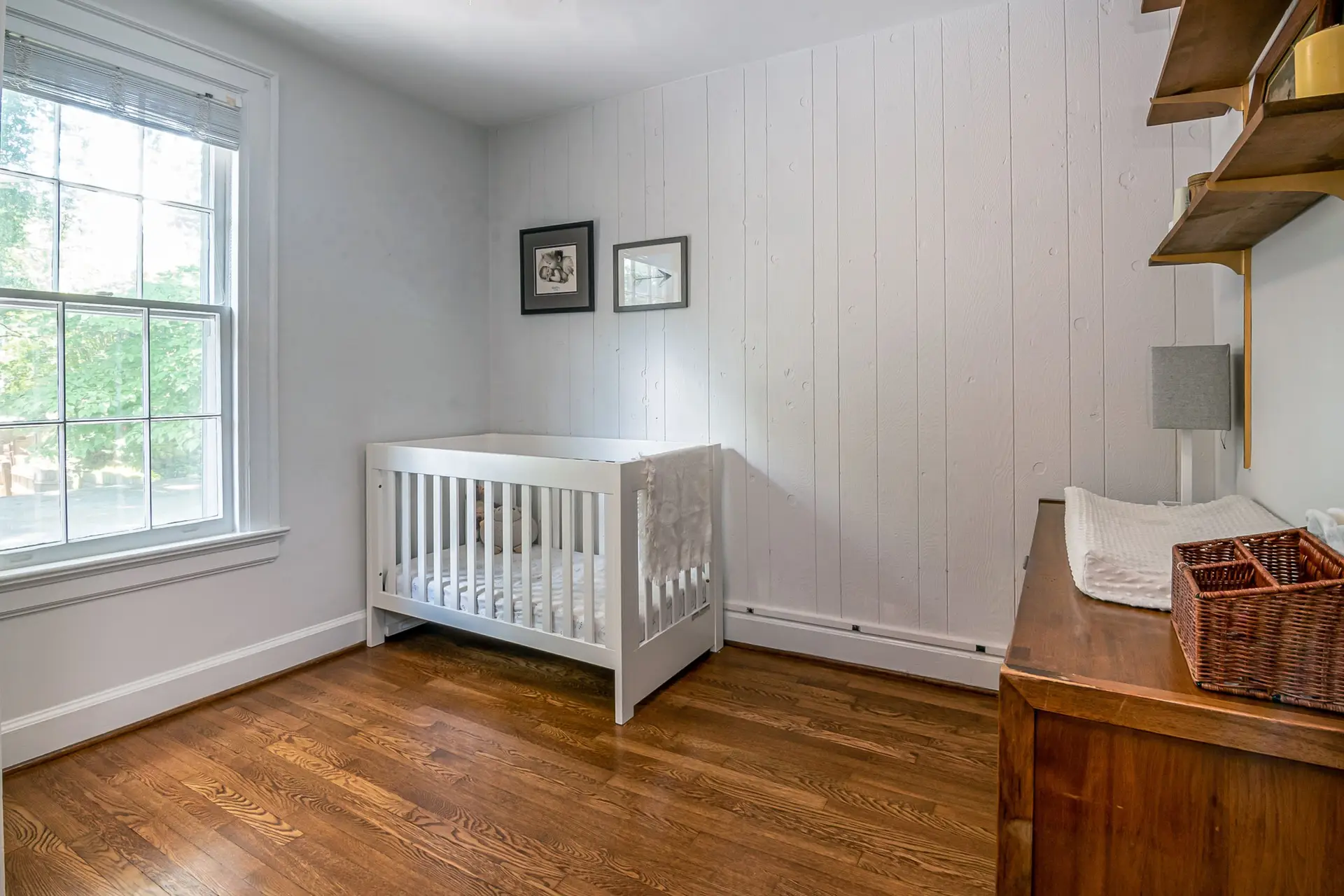
The crib is the highest-priority surface in any nursery. Babies sleep twelve to sixteen hours a day, with their face close to the mattress and crib rails.
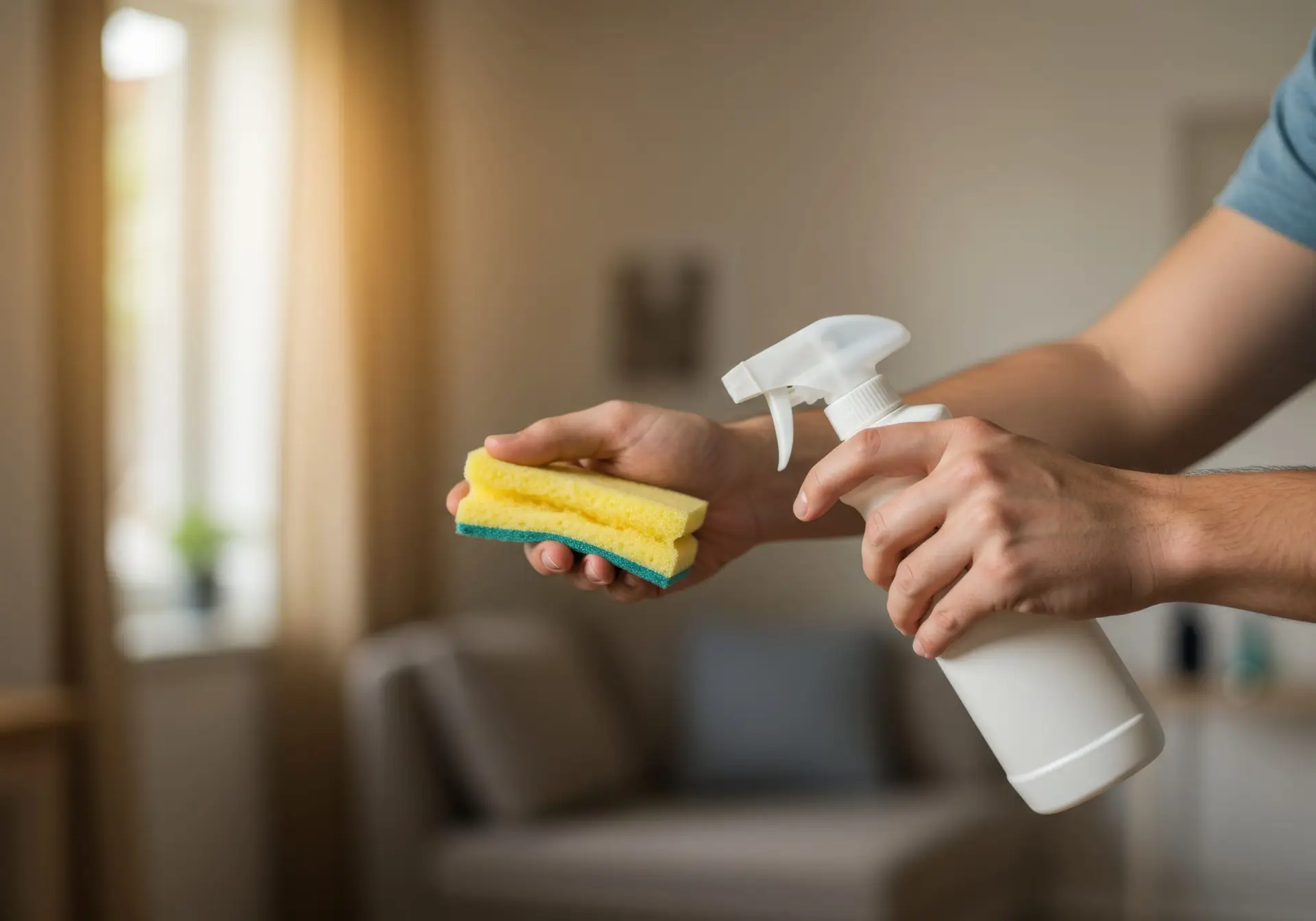
Wipe crib rails with a damp cloth and a gentle, fragrance-free cleaner weekly. Avoid spray cleaners directly on crib surfaces since overspray leaves residue in gaps and on the mattress. Apply cleaner to a cloth first, then wipe.
Mattresses need a deeper clean monthly. Remove the mattress cover and wash it on a hot cycle. Wipe the mattress surface with a diluted white vinegar solution, which neutralizes odors and has mild antimicrobial properties without leaving chemical residue. Let it air dry fully before replacing the cover.
Floor
Babies spend significant time on the floor from around four months onward. Hard floors should be swept or vacuumed daily and mopped twice a week with a non-toxic floor cleaner. Avoid steam mop settings that deposit moisture in gaps, which promotes mold growth.
Rugs need vacuuming at least twice a week. Nursery rugs accumulate dust, pet dander if applicable, and shed fibers from blankets and clothing faster than rugs in other rooms. The reason is simple: the baby interacts with the floor directly.
Changing table and surrounding surfaces
The changing table is the most contaminated surface in the nursery. It handles waste directly, multiple times a day. Clean it after every use with a fragrance-free wipe or a cloth dampened with a diluted cleaning solution. Once a day, wipe the entire surface and legs with a gentle disinfectant appropriate for baby environments.
Store wipes, creams, and supplies in a way that keeps them off the changing surface itself. Clutter on the changing table surface means more areas that accumulate bacteria between cleanings.
Soft furnishings and stuffed animals
Soft furnishings, including nursing chairs, crib bumpers if used, and stuffed toys, collect dust and allergens rapidly. Vacuum upholstered surfaces weekly. Wash stuffed animals monthly on a gentle cycle, or more frequently if the baby mouths them directly.
Crib bumpers and any soft items inside the crib are not recommended by the American Academy of Pediatrics for safety reasons. If used despite this guidance, they need washing weekly.
Air quality and ventilation
Nursery air quality matters as much as surface cleaning. Dust mite allergens are a documented trigger for early respiratory sensitivity. A few consistent habits make a significant difference.
- Use a HEPA-filter air purifier in the nursery, particularly if the room is carpeted
- Change the HVAC filter serving the nursery on a regular schedule
- Avoid candles, plug-in air fresheners, and heavily scented diffuser blends, which contribute to indoor air pollution in a room where a baby breathes continuously
- Wash crib sheets and sleep sacks weekly on a hot cycle, since these accumulate the highest concentration of dust mite allergens of any nursery item
Choosing safe cleaning products for the nursery
Not all cleaning products labeled “natural” or “baby-safe” are free of problematic ingredients. Reading labels is the only reliable method for choosing safe cleaning products for the nursery.
Look for:
- Fragrance-free formulas, since “fragrance” on a label can include dozens of undisclosed synthetic compounds
- EPA Safer Choice certified products, which have been reviewed for lower human health risk
- Simple ingredient lists with plant-based surfactants rather than synthetic blends
- Products free of formaldehyde-releasing preservatives, quaternary ammonium compounds, and phthalates
Avoid:
- Products with ammonia or bleach for routine cleaning of baby-contact surfaces
- Air fresheners and scented sprays of any kind in the nursery
- Multi-purpose cleaning wipes not formulated for baby environments, since these often contain fragrances and preservatives that are too harsh for sensitive skin
A gentle castile soap diluted in water handles most nursery surface cleaning effectively. Reserve a registered, baby-appropriate disinfectant for the changing table only, where bacterial contamination is highest.
Non-toxic cleaning for the baby room: a full checklist
Daily:
- Wipe changing table after every use
- Sweep or vacuum hard floors
- Wipe any visible spills or spit-up from surfaces immediately
Twice a week:
- Mop hard floors with a non-toxic cleaner
- Vacuum rugs and upholstered surfaces
- Wipe crib rails and surrounding furniture with a damp, fragrance-free cloth
Weekly:
- Wash crib sheets and sleep sacks on a hot cycle
- Wipe mattress cover exterior
- Wipe down all reachable shelving and furniture surfaces
- Empty and wipe the diaper bin interior, not just replace the liner
Monthly:
- Remove mattress cover and wash; wipe mattress surface
- Wash stuffed animals and soft toys
- Clean air purifier filter or replace as recommended
- Wipe walls near the floor level, which babies touch when crawling and pulling up
Eco-friendly nursery cleaning and what it actually means
Eco-friendly nursery cleaning is not just about environmental impact. In the nursery, “eco-friendly” choices tend to overlap directly with lower chemical exposure for the baby. Plant-based surfactants, minimal fragrance, and simple formulas are both better for the environment and safer for a developing child.
According to the EPA’s Safer Choice program, products that meet their safety standards for human health are evaluated for ingredients that are safer for children and sensitive populations. Looking for that certification on a nursery cleaning product removes much of the guesswork from label reading.
Common mistakes in nursery cleaning
- Using the same all-purpose spray for the nursery that is used in the kitchen or bathroom, without checking whether the ingredients are appropriate for baby contact surfaces
- Cleaning the crib or mattress and returning the bedding before surfaces are fully dry, which traps moisture
- Assuming a product marketed to babies is automatically safer, when marketing and ingredient safety are not the same thing
- Neglecting the floor because it looks clean, when invisible allergens accumulate there faster than on elevated surfaces
Real scenario: the nursery that kept causing congestion
A family with a four-month-old noticed their baby had persistent nasal congestion that cleared up whenever they spent time in other rooms. A cleaning review found three contributing factors. First, a plug-in air freshener in the nursery. Second, a carpet vacuumed only weekly. Third, an HVAC filter that had not been replaced in over six months. Removing the air freshener, vacuuming daily, and replacing the filter resolved the congestion without any medical intervention.
The nursery environment affects a baby’s respiratory health more directly than almost any other factor a parent can control.
Nursery cleaning tips for the first three months
The newborn period deserves its own attention. In the first three months, a baby’s immune system is at its most vulnerable. Nursery cleaning tips for this stage lean toward more frequent cleaning and stricter product choices.
- Wipe the crib rails daily rather than weekly during this period
- Wash hands before entering the nursery and before handling any surfaces the baby contacts
- Limit visitors to the nursery, since each person introduces new bacteria and allergens to the space
- Avoid bringing shoes into the nursery, which track in outdoor contaminants onto a floor the baby will eventually be on
As the baby grows past three months and their immune system develops further, these precautions can be gradually relaxed. The twice-weekly and weekly schedule described in the checklist above becomes the appropriate standard from around four months onward.
When to schedule a deeper nursery clean
The checklist above covers routine maintenance. A few specific moments call for a more thorough clean.
- Before bringing a newborn home for the first time, the nursery warrants a full wipe-down of every surface, a mattress clean, and a floor wash
- After any illness in the household, high-touch surfaces in the nursery need disinfection even if the baby did not appear sick
- Seasonally, twice a year, move furniture and clean behind and beneath it, wash curtains if present, and clean light fixtures and ceiling fans that accumulate nursery dust
For those deeper cleans, a professional nursery deep clean that uses non-toxic, family-safe products removes the effort while ensuring nothing gets missed.
FAQ
Can I use vinegar to clean the nursery? Diluted white vinegar is safe for hard surfaces like floors and mattress exteriors. It is not a registered disinfectant, so use it for general cleaning rather than for areas with direct waste contact like the changing table.
How often should nursery bedding be washed? Crib sheets and sleep sacks should be washed weekly on a hot cycle. This frequency is the standard recommendation for reducing dust mite allergen levels in a baby’s sleep environment.
Is it safe to diffuse essential oils in a nursery? Most essential oils are not recommended for use around infants under three months, and many remain a concern for older babies depending on the oil. Avoiding diffusers entirely in the nursery is the safest approach until a pediatrician advises otherwise.
What is the most important nursery cleaning tip for new parents? Prioritize air quality alongside surface cleaning. Parents who focus only on visible cleanliness often miss the invisible allergens in soft furnishings, carpeting, and HVAC systems that affect a baby’s breathing far more than a dusty shelf.
A nursery that protects as well as it comforts
These nursery cleaning tips do not require expensive products or hours of effort each week. They require the right products, consistent frequency for the highest-risk surfaces, and attention to air quality alongside the visible cleaning tasks.
The changing table, the floor, and the crib mattress are the three surfaces that matter most. Keep them clean with appropriate products, follow a consistent schedule, and the nursery becomes a genuinely safe space rather than just a clean-looking one.
Keep Reading
- Essential Oil That Disinfects
- How to Do Dishes Fast
- Restroom Cleaning
- Keeping a Clean Home With Kids and Pets
Rather hand the work to a team that does this every day? See our deep cleaning service or call (214) 430-4447 for a free quote.