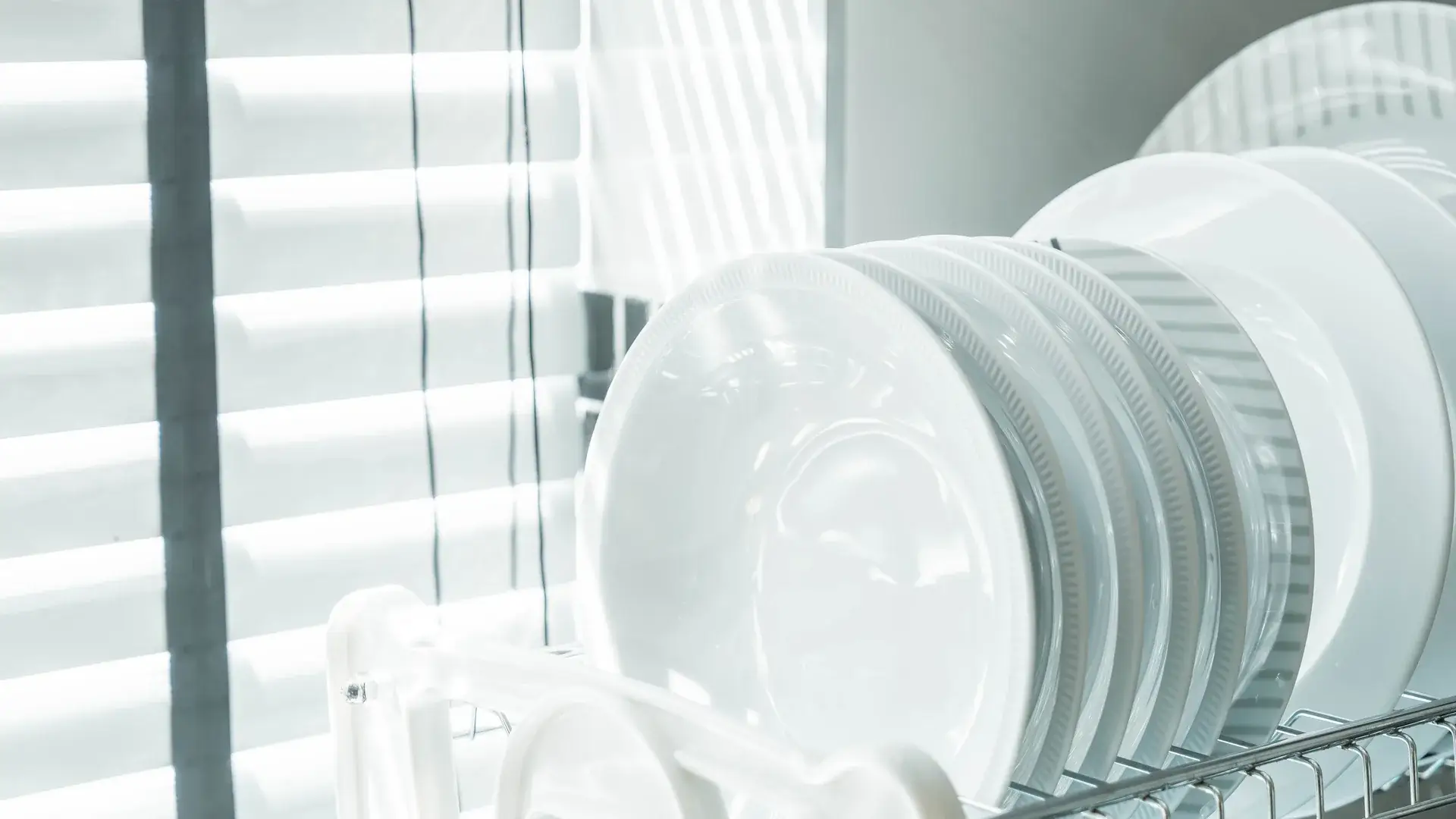
Dishes have a way of piling up faster than anyone plans for, especially after a busy weeknight dinner. Most people learning how to do dishes fast assume the trick is just scrubbing harder or faster, but speed actually comes from sequence, not effort.
This guide walks through the system professional cleaners use to move through a sink full of dishes quickly, plus a few habits that prevent the pile from forming in the first place. By the end, you will have a repeatable way to do dishes fast every single time, not just on the days you happen to feel motivated.
The fastest way to wash dishes is to sort by type, soak anything with stuck-on food while washing everything else, and work from least to most greasy. This order prevents cross-contamination of grease onto clean items and avoids the time lost to re-scrubbing items that needed soaking.
Why most people wash dishes slower than necessary
The biggest time-waster in dishwashing is washing items in random order, then realizing halfway through that a pot needed to soak. That forces a stop-and-restart cycle that adds minutes to every session.
Professional cleaners who handle kitchens regularly notice the same pattern in homes: people start with whatever is on top of the pile instead of organizing first. A 30-second sort at the start saves several minutes by the end.
How to do dishes fast: a step-by-step process
- Fill the sink or a basin with hot, soapy water before starting.
- Sort dishes into three groups: glasses and light items, plates and bowls, and pots or pans with stuck-on food.
- Submerge the stuck-on items in hot water to soak while washing everything else.
- Wash glasses first, since they pick up grease and odors from other dishes if washed last.
- Move to plates and bowls next.
- Finish with the soaked pots and pans, which should now wipe clean with minimal scrubbing.
- Rinse everything in a second basin or under running water to avoid redepositing soap film.
- Air dry in a rack or dry with a clean towel if counter space is limited.
Following this order means the hardest items get a head start soaking while the easy items get done, instead of tackling the hardest pan first and letting everything else wait.
Why glasses go first
Glasses pick up grease film from a dirty sponge faster than people expect. Washing them after greasy pots, even with a quick sponge rinse in between, often leaves a faint residue that shows up once the glass dries.
Tools that genuinely save time
Not every dish gadget on the market actually speeds things up, but a few tools make a real difference.
- A dish brush with a built-in soap reservoir, which cuts down on stopping to re-apply soap
- A dedicated soaking basin separate from the main sink, so soaking does not block the rest of the workflow
- A drying rack with enough capacity to avoid restacking wet dishes mid-session
- A scraper or spatula for pre-scraping food into the trash or compost before washing
A scrubbing sponge alone is rarely the bottleneck. The bottleneck is almost always sequence and setup.
Common mistakes that slow down dishwashing
- Washing pots and pans first, before the water has had time to loosen the rest of the pile
- Letting the sink fill with dirty dishes throughout the day instead of doing a quick pass after each meal
- Using cold water, which does not break down grease nearly as fast as hot water
- Stacking wet, soapy dishes in the rack without rinsing, which leaves a soap film that needs a second wash later
Cutting any one of these mistakes shortens overall cleanup time noticeably, even without changing anything else about the process.
How often to wash dishes to avoid a backlog
The fastest dishwashing routine is the one that never lets a backlog form. A quick pass after each meal, rather than one large session at the end of the day, keeps food from drying onto plates and pans. Dried food residue takes significantly longer to remove than fresh residue, which is one of the main reasons end-of-day dish sessions feel so much slower.
For households juggling a full schedule, a consistent kitchen cleaning routine that includes daily upkeep can help keep counters and sinks reset between deeper at-home dishwashing sessions.
Real scenario: the dinner party reset
A family hosting a weekend dinner for eight people often ends up with double the usual dish load by the end of the night. Professional cleaners handling post-event kitchen resets use the same sorting system described above, just scaled up: serving platters and large pots soak first while smaller glassware and flatware move through quickly. That approach typically clears a dinner party’s worth of dishes in under twenty minutes once guests have left, compared to much longer when items are washed in random order.
Setting up your sink for maximum speed
A cluttered sink area slows down even the best sorting system. Before starting a dishwashing session, clear extra space around the sink so dirty items have somewhere to land and clean items have somewhere to dry.
- Keep a drying rack within arm’s reach so washed items do not pile up on the counter, waiting to be moved.
- Place the trash or compost bin close enough to scrape plates without walking across the kitchen.
- Stock a second basin or use one side of a double sink exclusively for rinsing, so soapy water and rinse water never mix.
This small setup step takes under a minute but removes most of the friction that makes dishwashing feel slower than it actually is.
How to handle dishwasher-safe items at the same time
Many households end up hand-washing items that could go straight into a dishwasher, simply out of habit or because the dishwasher is already running. Sorting dishwasher-safe items into their own pile during the initial sort, separate from hand-wash-only items, saves time twice: once during the dish session and again later when unloading.
- Glass and ceramic items are almost always dishwasher-safe unless hand-painted or antique.
- Non-stick pans, wooden utensils, and most knives should stay out of the dishwasher to protect their finish or edge.
- Plastic containers vary widely. Checking for a dishwasher-safe symbol on the bottom avoids warping from heat.
Splitting the load this way means hand-washing time goes only toward items that genuinely need it, rather than everything in the sink by default.
Teaching kids or roommates the same system
A fast dishwashing routine only stays fast if everyone in the household follows the same order. Teaching the sort, soak, wash sequence to kids or roommates, rather than letting everyone develop their own habits, keeps the kitchen moving at the same pace no matter who is at the sink that night.
A simple way to make the system stick is posting the order, sort, soak, wash light to heavy, rinse, dry, somewhere visible near the sink until it becomes automatic. Most people pick up the pattern within a week of consistent reminders.
FAQ
Is soaking dishes actually faster than scrubbing right away? Yes, for anything with dried or stuck-on food. Soaking loosens residue with no active effort required, which means less scrubbing time later in the process.
Should dishes be washed in hot or cold water? Hot water breaks down grease and food residue far more effectively than cold water, which makes the entire process faster from start to finish.
Does a dishwasher make hand-washing techniques irrelevant? No. Pots, pans, and items too large for a dishwasher still need hand-washing, and the same sorting and soaking principles apply to pre-rinsing dishwasher loads as well.
What is the single fastest change to make for quicker dishwashing? Washing items in the right order, soaking the hardest items first while handling everything else, saves more time than any single tool or product.
Does the type of sponge or brush matter for speed? It matters less than sequence, but a brush with stiff bristles cuts through stuck-on food faster than a soft sponge, which can shave a few extra minutes off the hardest items in the pile.
Is it faster to wash dishes by hand or rinse and load a dishwasher? For a full load, loading a dishwasher is usually faster overall, but pots, pans, and delicate items still need hand-washing. Combining both, dishwasher for what it can hold and hand-washing for the rest using this same system, is typically the fastest approach for a mixed kitchen load.
A faster system, not just faster scrubbing
Learning how to do dishes fast comes down to sequence: sort first, soak the hardest items early, and work from light to heavy. According to research from the American Cleaning Institute on kitchen hygiene, hot water and proper drying also play a meaningful role in reducing bacteria on dishware, which makes this system both faster and more hygienic than washing items in random order.
If kitchen upkeep keeps slipping between busy weeks, a regular cleaning service from E&R Cleaning Services can help keep the rest of the kitchen reset so dishwashing is the only thing left on your list. For a deeper seasonal reset that tackles grease buildup on cabinets and appliances, a deep cleaning service covers what daily dishwashing never reaches. Once the counters, stove, and floors are already handled, the only thing standing between you and a clean kitchen is knowing how to do dishes fast, which this system makes second nature within a week or two of consistent practice. Schedule a cleaning to see how it fits your routine.
Putting the system into practice tonight
The easiest way to learn how to do dishes fast is to try the full sequence on the very next sink full of dishes, rather than waiting for a slower night to experiment. Fill the sink, sort into the three groups, start the soak, and work through glasses, plates, and pans in that order.
Most people notice the difference immediately, not after weeks of practice. The time saved comes almost entirely from skipping the stop-and-restart moments that happen when a pot needed soaking but nobody noticed until halfway through scrubbing it. Once that one habit changes, dishwashing stops feeling like a chore that drags on and starts feeling like a quick, predictable part of the evening, the same way folding laundry or wiping down counters becomes automatic once the order makes sense.
Keep Reading
Rather hand the work to a team that does this every day? See our deep cleaning service or call (214) 430-4447 for a free quote.
Want Your Home to Look Like This Without the Work?
Tell us about your place and we will send you a price. No walkthrough required, no obligation.
- Free quote with no obligation
- Non toxic and pet friendly products
- Bonded and insured, serving DFW since 2002
- 24 hour guarantee on our service
Prefer to talk? (214) 430-4447
By completing this form I acknowledge that I will receive informational text messages from E&R Cleaning Services. I can opt out at any time by replying STOP. Standard message rates may apply.