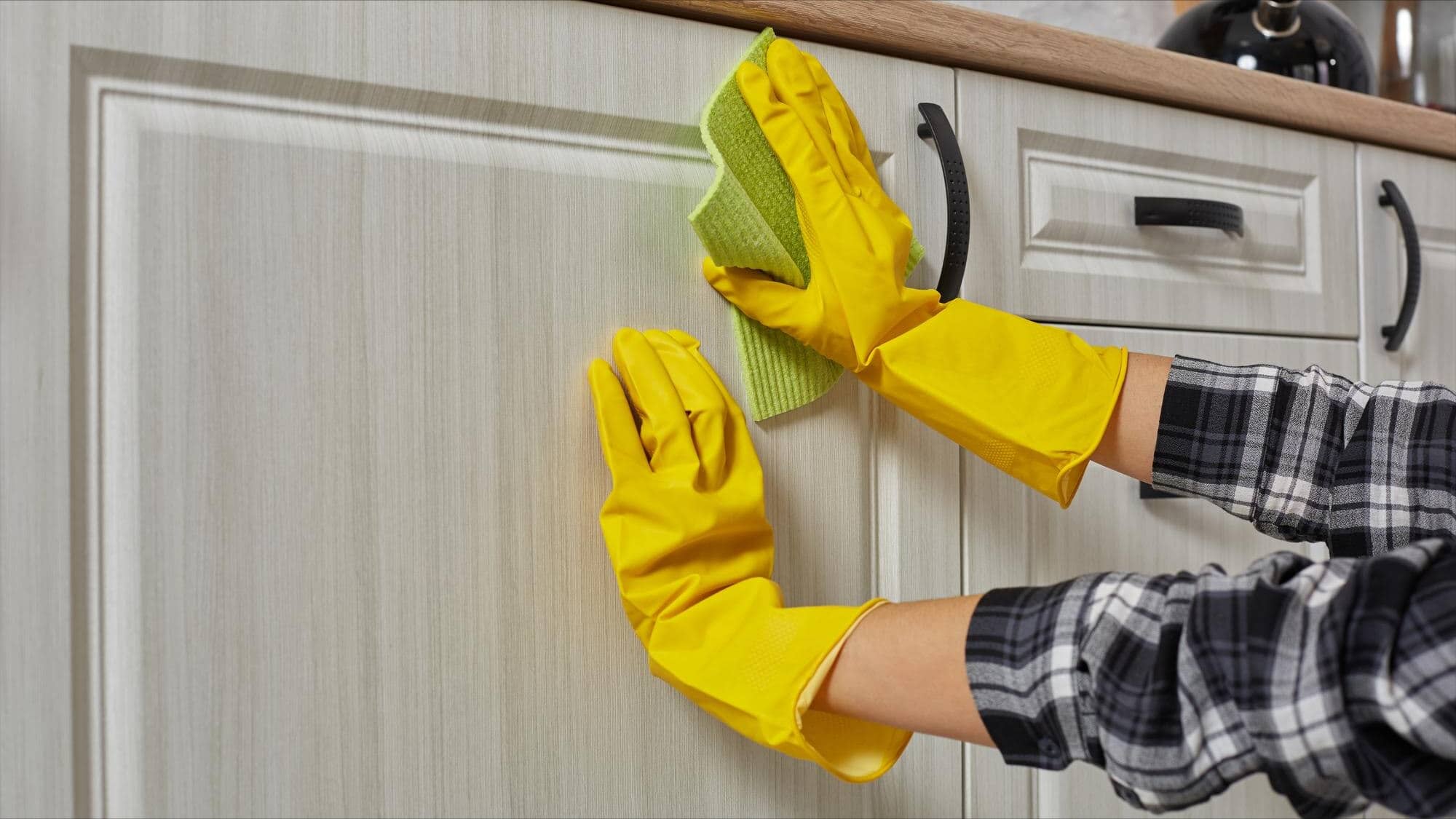
You’ve just finished cleaning your kitchen cabinets, expecting them to be spotless, only to find they feel sticky or tacky to the touch. This common frustration can happen for a few reasons, leaving you wondering if the cleaning was a waste of time. The good news is that this problem is fixable, and it’s often caused by simple issues with your cleaning method or products.
Common Causes of Sticky Cabinets
Understanding the source of the stickiness is the first step to fixing it.
Grease and Cooking Residue
Over time, grease from cooking, steam, and food particles can build up on your cabinet surfaces. While a quick wipe-down might seem to clean it, it can often just spread the residue around, leaving a tacky film. This is especially common on cabinets above or next to the stove.
Using the Wrong Cleaner
Some household cleaners, particularly those with a high-soap or oil content, can leave a sticky residue behind. Cleaners with added oils for shine or those that promise to “moisturize” wood are common culprits. This residue attracts dust and dirt, making the cabinets even stickier over time.
Residual Soap Film
If you’re using a soap-based cleaner, a lack of a proper rinsing step can leave a thin, sticky soap film on the surface. This film doesn’t look like much, but it’s a magnet for dust, creating a sticky mess that’s hard to wipe off.
How to Fix Sticky Cabinets
The solution is to use a cleaning agent that is designed to cut through grease and residue without leaving a film behind.
Degreasing Solutions
For cabinets that are sticky from cooking residue, a degreaser is the best option. You can buy a commercial degreaser or make a simple and effective one at home. Mix one part distilled white vinegar with one part warm water in a spray bottle.
Vinegar and Warm Water
For a gentler, all-purpose solution, a simple mixture of vinegar and warm water is highly effective. The acidity in the vinegar helps to dissolve sticky residues. Spray the solution on the cabinets, let it sit for a minute, and then wipe it off with a clean, damp cloth. Follow up by drying the surface with a separate, clean cloth.
Baking Soda Paste
For stubborn, thick residue, a baking soda paste works wonders. Mix a small amount of baking soda with water to create a thick paste. Apply the paste directly to the sticky spots, let it sit for a few minutes, then gently scrub with a soft cloth or a non-abrasive sponge. Rinse the area thoroughly with a clean, damp cloth and dry completely.
Preventing Sticky Residue
A little preventive maintenance can save you from a lot of scrubbing down the road.
Choosing the Right Cleaners
Opt for cleaners specifically designed for kitchen cabinets. Avoid products that contain oil or wax, and make sure to read the instructions to see if a rinsing step is necessary.
Regular Cabinet Maintenance
Wipe down your kitchen cabinets regularly, especially those near the stove. A quick daily wipe with a clean, damp cloth can prevent grease buildup from hardening and becoming sticky over time.
When to Call Professionals
If your cabinets have a heavy buildup of grease that you can’t remove on your own, or if you’re looking to have your cabinets professionally refinished or repainted, it’s time to call in the experts.
At E&R Cleaning Services, we specialize in deep cleaning services that can restore your kitchen to its best. Contact us today for a free quote on our professional kitchen cleaning services!