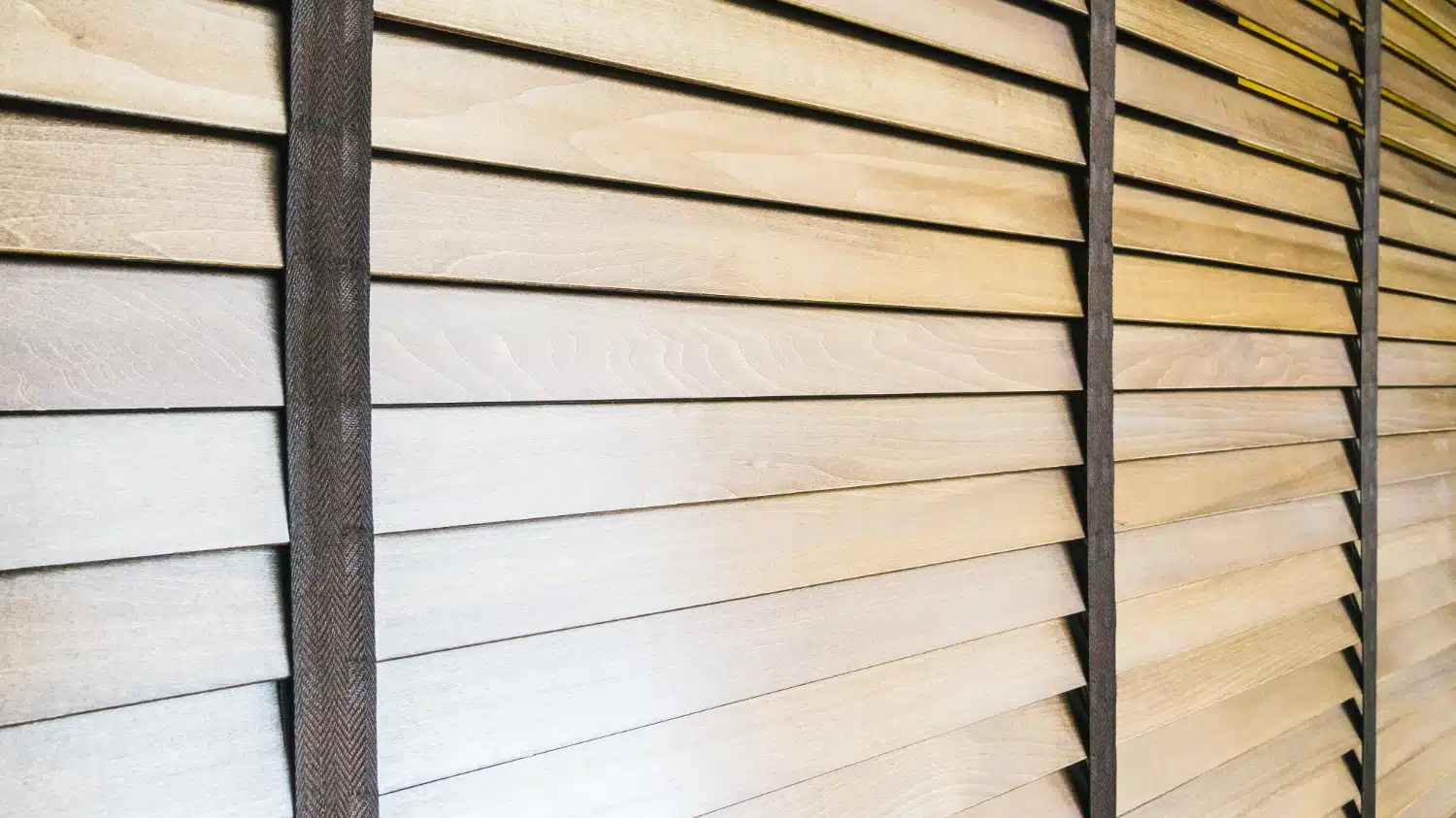
Wooden blinds add warmth and texture to any room, but they’re also one of the more challenging window treatments to clean. Unlike fabric or vinyl blinds, wood requires gentle handling. Too much water warps the slats, and rough handling bends them permanently.
Knowing how to clean wooden blinds correctly means understanding the material’s limits and using methods that remove dust and grime without causing damage. This guide covers five proven approaches, from quick dust maintenance to deeper cleaning, and explains how to avoid the most common mistakes.
Why wooden blinds need special care
Real wood and faux wood blinds look similar, but they respond very differently to cleaning. Real wood is porous and absorbs moisture, which can cause warping, splitting, or finish damage. Faux wood (vinyl composite) is more water-resistant but still requires careful handling to prevent bending.
Both types are vulnerable to pressure applied at the wrong angle. The slats are held by a ladder cord system, and forcing a cloth against a slat sideways rather than along its length can twist the cord and permanently misalign the blind. Technique matters as much as the cleaning product.
What you need
- Microfiber cloths or microfiber duster gloves
- A soft-bristle brush or paintbrush (for crevices)
- Vacuum with a brush attachment
- Mild dish soap
- Distilled water (for real wood, to avoid mineral deposits)
- Wood conditioner or furniture polish (optional, for real wood)
- Clean dry cloths for drying
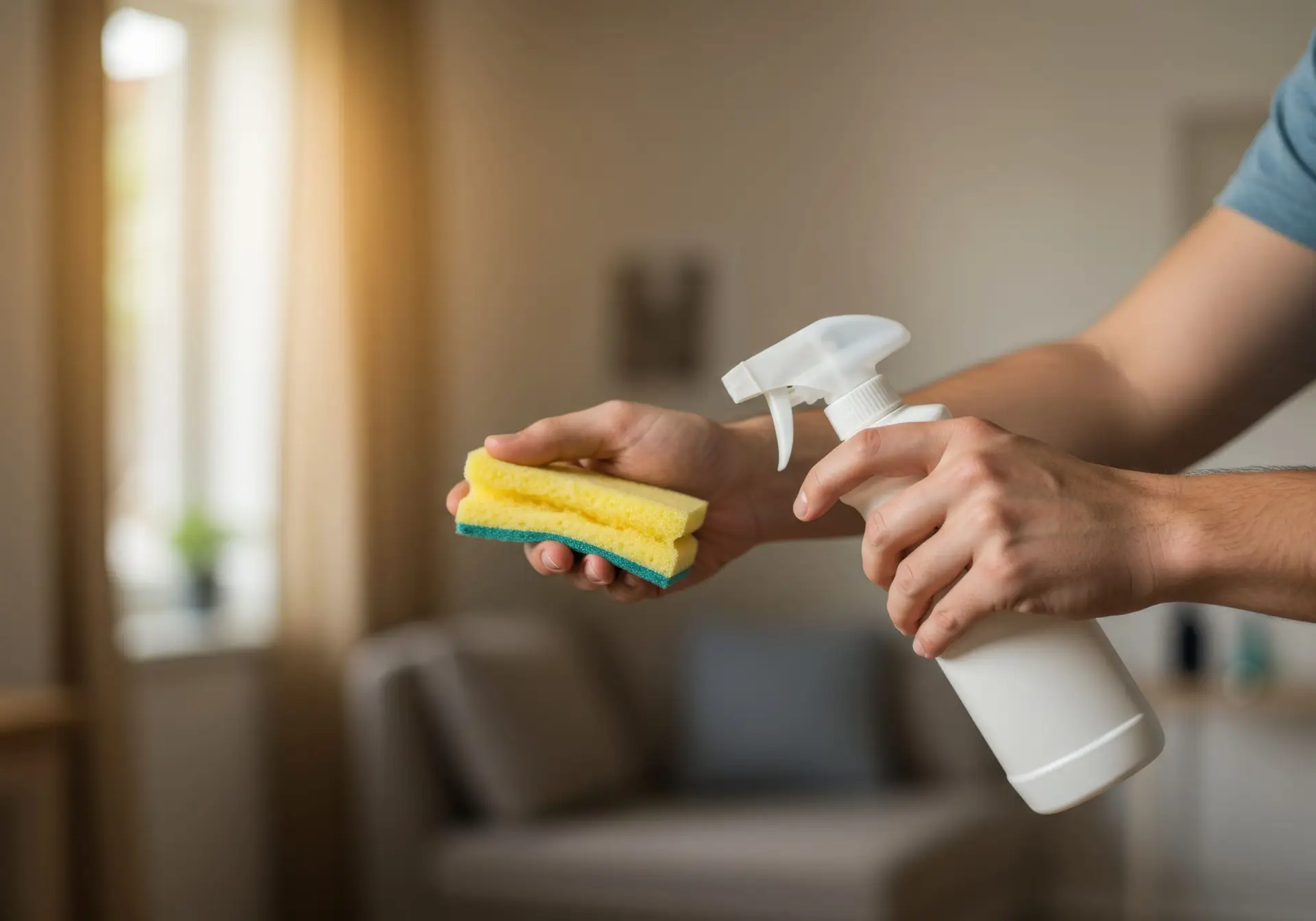
Avoid soaking cloths, sponges, or spray bottles used at full saturation on real wood. The goal is always minimal moisture.
5 ways to clean wooden blinds without bending the slats
Method 1: the microfiber duster glove technique (weekly maintenance)
This is the fastest and safest method for regular dust removal. Microfiber gloves allow you to clean both sides of each slat simultaneously, which significantly speeds up the process and keeps slats aligned.
Close the blinds flat (slats parallel to the floor, horizontal position). Slide your gloved hand along each slat from left to right, working down from the top. Apply only gentle forward-backward pressure, never sideways force that would twist the slat.
After finishing one side, tilt the blinds in the opposite direction to expose the other side and repeat. Shake out the gloves or rinse them between cleaning sessions. This method takes only five to ten minutes and is sufficient for weekly upkeep.
Method 2: vacuum with brush attachment (monthly or after construction/renovation)
For heavier dust accumulation, a vacuum with a soft brush attachment removes debris more thoroughly than a cloth. Set the vacuum to its lowest suction setting to avoid pulling on the slats.
Hold each slat lightly with one hand while vacuuming with the other. Move the brush along the length of the slat, not across it. Work from top to bottom. Pay extra attention to the top rail and the ladder cords, which collect significant dust.
This method is particularly effective after seasonal changes, when pollen and dust levels spike, or following any renovation work in the home.
Method 3: damp wipe for light grime (every 2 to 3 months)
For slats with light grime, cooking residue, or fingerprints, a barely damp microfiber cloth removes buildup without saturating the wood.
Mix a small drop of mild dish soap in a cup of distilled water. Wring the cloth until it feels almost dry. Open the blinds to their closed position and wipe each slat along its length from one end to the other. Use a separate dry cloth immediately after each slat to remove any residual moisture.
Never allow water to sit on wooden slats. Work quickly and dry as you go. For real wood, consider applying a thin coat of wood conditioner after cleaning and drying, to restore any moisture the cleaning may have drawn out of the finish.
Method 4: spot treatment for stubborn stains
For sticky residue, grease spots, or stains concentrated in one area, targeted spot treatment is more effective than wiping the whole blind.
Dampen a small area of a microfiber cloth with a mixture of equal parts white vinegar and distilled water. Press gently on the stained area without rubbing hard. Allow it to sit for 30 seconds, then wipe along the grain of the wood in a single direction. Dry immediately with a clean cloth.
For grease stains near kitchen windows, a small amount of dish soap on the cloth can cut through the residue more effectively. Always test any solution on an inconspicuous slat before applying it to visible areas.
Method 5: full removal and gentle cleaning (once or twice per year)
For blinds in high-use areas, kitchens, or any room that has experienced significant buildup, removing the blinds for a more thorough cleaning is the most effective approach.
Take down the blinds carefully, following the manufacturer’s instructions. For faux wood blinds, you can wipe each slat with a damp cloth more liberally, since faux wood handles moisture better. For real wood, continue using a barely damp cloth and dry each slat individually.
Never submerge real wooden blinds in water or leave them flat on a wet surface. Lay them across a clean towel on a table to clean them, and rehang them as soon as they’re dry. Leaving wood blinds in a horizontal position while damp can cause them to warp or lose their shape.
Common mistakes that damage wooden blinds
Using too much water. The single most damaging mistake for real wood blinds. Even a moderately wet cloth left on a slat for a few minutes can leave a water mark or cause swelling.
Wiping across the slat instead of along it. Wiping perpendicular to the slat length applies sideways pressure on the ladder cords and bends the slat out of alignment. Always wipe in the direction the slat runs.
Using harsh chemical sprays. All-purpose cleaners, bleach, and ammonia-based products damage the finish on wooden blinds. Stick to mild dish soap or diluted vinegar.
Cleaning without closing the blinds first. Trying to clean open, tilted slats makes it harder to clean each surface evenly and increases the chance of bending. Close the blinds flat before cleaning.
Skipping the drying step. On real wood, leaving any moisture behind causes problems over time. Always dry with a clean cloth immediately after each damp wipe.
How to clean wooden blinds in a kitchen without warping them
Kitchen wooden blinds present an extra challenge. Cooking vapors create a greasy film that bonds with dust and produces a stickier residue than ordinary household dust. The key is to increase cleaning frequency and use a very light damp cloth with a drop of dish soap, drying each slat immediately.
For kitchen wooden blinds, a monthly damp wipe is more realistic than the every-three-month schedule appropriate for other rooms. The grease film, if left too long, becomes significantly harder to remove and requires more moisture, which increases the risk of warping.
How often should you clean wooden blinds?
For most households, a light dust with a microfiber glove or cloth once a week or every two weeks prevents heavy buildup. A damp wipe every two to three months addresses the grime that dusting doesn’t remove. A full deep clean, either in place or after removal, once or twice a year keeps the blinds in excellent condition.
In kitchens, the schedule should be more frequent because cooking vapors create a greasy film that accumulates faster than ordinary dust.
How to clean wooden blinds that have warped or discolored
If your wooden blinds have already experienced some warping or discoloration from previous moisture exposure, targeted restoration is possible in mild cases. Lightly warped slats can sometimes be pressed flat by laying them on a clean, dry flat surface under a heavy book for 24 to 48 hours.
For discoloration from water marks, a very light application of mineral oil on a clean cloth, rubbed along the grain direction, can restore some of the wood’s original appearance. Apply sparingly, allow to absorb for a few minutes, then buff away any excess. This works best on real wood slats, not faux wood.
Heavily damaged slats are typically more cost-effective to replace than to restore. Most blind manufacturers sell replacement slats individually.
Professional cleaning for whole-home window treatments
If your home has extensive window treatments across multiple rooms, or if the blinds are overdue for attention and the task feels daunting, professional cleaning is a practical option. A thorough whole-home deep clean addresses window treatments, sills, frames, and glass as part of a comprehensive service.
Beautiful blinds, season after season
Knowing how to clean wooden blinds properly preserves both their appearance and their function. The five methods in this guide cover every level of cleaning from a quick weekly dust to an annual deep clean, all without bending or warping the slats.
The most important principles are simple: keep moisture minimal, always wipe along the length of the slat, and dry immediately. Follow these rules consistently, and your wooden blinds will look great for years to come.
Keep Reading
Rather hand the work to a team that does this every day? See our deep cleaning service or call (214) 430-4447 for a free quote.