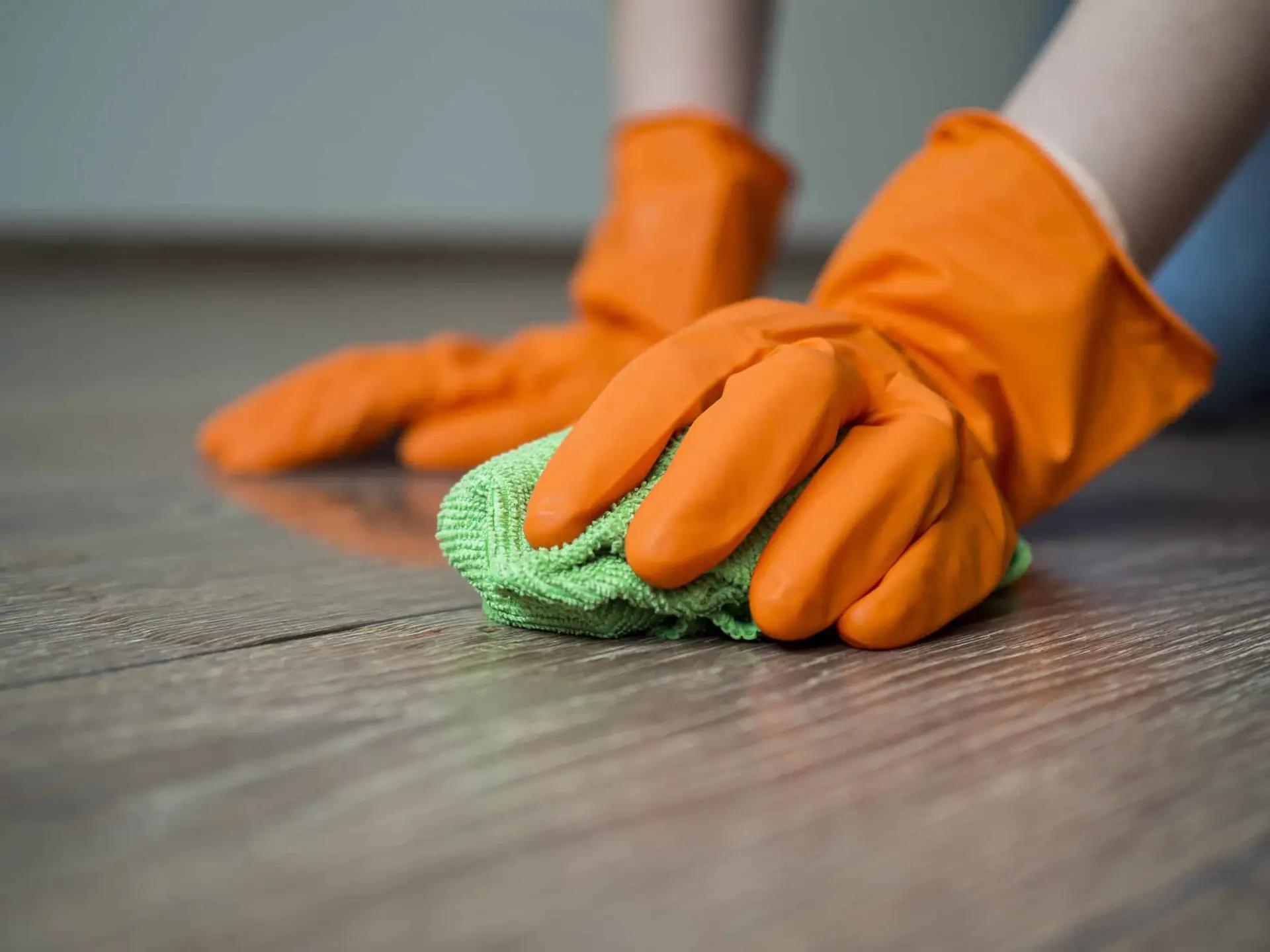
Laminate is the flooring most commonly ruined by cleaning, and the reason is a misunderstanding about what it is. Laminate is not wood and it is not vinyl. It is a photographic layer under a wear layer, bonded to a core that is essentially compressed fiberboard.
That core is the whole story. Water reaching it causes swelling that does not reverse, and the swelling shows up at the seams and the edges as a raised lip that no amount of drying corrects. Once a plank swells, it gets replaced.
The Rules That Keep It Alive
Never wet mop. Never use a steam mop, which is the fastest way to destroy a laminate floor and which many manufacturers explicitly warn against, voiding warranties. Never let a spill sit, particularly at a seam. And never use anything abrasive, which scratches the wear layer.
The correct amount of moisture is barely damp. If you can see a wet sheen behind your mop, there is too much water on the floor.
The Method
Dry work first, always. Vacuum with a hard floor setting and the beater bar off, or use a dry microfiber flat mop. This step is not optional, because grit is abrasive and dragging it across the wear layer under a damp mop is what dulls a laminate floor over a couple of years.
Then damp mop with a microfiber flat mop that has been wrung out thoroughly. Work in sections, and if the floor is not dry within a minute or so, you used too much.
For the cleaner, a product made for laminate is the safest choice. If you prefer to mix your own, a small amount of white vinegar in a large amount of warm water is commonly used and works, with the caveat that it is mildly acidic and should not be a daily habit on any floor.
What to Keep Off It
No oil soaps and no wax. Laminate cannot absorb them, so they sit on the surface as a film that turns cloudy, attracts dirt, and eventually has to be stripped.
No polish or shine restorer marketed for wood floors, for the same reason.
No bleach and no ammonia based products, which damage the wear layer over time.
And no abrasive pads or powders.
Specific Problems
Streaks are almost always too much product rather than not enough cleaning. Rinse the mop head, go over the area with plain water on a well wrung mop, and use less next time.
A cloudy film is buildup from a product that should not have been used, usually an oil soap or a polish. It comes off with repeated passes using a well wrung mop and plain warm water, sometimes with a splash of vinegar, and it takes several passes.
Scuff marks from shoes usually lift with a clean tennis ball or a soft eraser rubbed gently, no product needed.
Sticky spots respond to a barely damp cloth and patience rather than scraping.
Scratches in the wear layer cannot be sanded out, because there is no wood to sand. Repair markers and filler pencils in a matching tone hide them, and deep damage means replacing the plank.
The Difference From Luxury Vinyl Plank
Worth knowing, because the two look similar and get confused constantly, and a lot of North Texas homes have one and think they have the other.
Luxury vinyl plank is fully waterproof through its thickness, so it tolerates a damp mop more comfortably, though it still dislikes standing water at the seams and it shows streaks from anything oily.
Laminate is not waterproof, and the difference in tolerance is significant. If you are not certain which you have, treat it as laminate and you will not damage either.
Protect It and It Lasts
Mats at every exterior door, inside and out, since grit is the main cause of wear. Felt pads under all furniture legs, checked occasionally because they fall off and the loose one is what leaves the scratch. Shoes off, especially anything with a hard heel.
And in this climate, keep humidity reasonably stable, because the swing between sealed summer air conditioning and winter heat is what opens gaps between planks over years.
If the Floors Are Already Dull
A dull laminate floor is usually one of two things: buildup from the wrong product, which comes off, or wear in the surface layer from grit, which does not. We can tell the difference quickly and we will tell you honestly which one you have rather than selling you a service that cannot work.
Call (214) 430-4447 or request a free quote online. Tell us what your floors actually are and how they have been cleaned, and we will match the method to the surface rather than using one mop for the whole house.
Keep Reading
Rather hand the work to a team that does this every day? See our deep cleaning service or call (214) 430-4447 for a free quote.
Want Your Home to Look Like This Without the Work?
Tell us about your place and we will send you a price. No walkthrough required, no obligation.
- Free quote with no obligation
- Non toxic and pet friendly products
- Bonded and insured, serving DFW since 2002
- 24 hour guarantee on our service
Prefer to talk? (214) 430-4447
By completing this form I acknowledge that I will receive informational text messages from E&R Cleaning Services. I can opt out at any time by replying STOP. Standard message rates may apply.