Grease buildup is the silent enemy of the modern kitchen. Even if you consider yourself a clean cook, the microscopic particles of oil that vaporize during high-heat cooking don’t just vanish—they settle on every available surface, forming a sticky, dust-attracting film. Over time, this residue hardens, turning a simple wipe-down into a heavy-duty scrubbing project.
The key to a cleaner kitchen isn’t harder work; it’s smarter maintenance and understanding exactly where that grease likes to hide.
Where Grease Builds Up Most Often
Grease is remarkably mobile. While the stovetop is the ground zero for splatter, vaporized oil travels through the air, settling on surfaces you might not expect:
- The “Splatter Zone”: This includes your stovetop, the backsplash immediately behind it, and the range hood.
- Cabinetry: Specifically the fronts of cabinets directly above or adjacent to the stove.
- High-Touch Points: Microwave exteriors, oven doors, and the handles/knobs you touch while cooking are magnets for grease, which then becomes a base for dirt and fingerprints.
- Structural Surfaces: Nearby walls, countertop edges, and even light fixtures can eventually feel tacky if oil-heavy cooking is a daily habit.
Daily Habits That Reduce Grease
The difference between a kitchen that stays clean and one that feels grimy is the timing of your cleaning. Grease is easy to remove when it is fresh; it is a nightmare once it oxidizes and hardens.
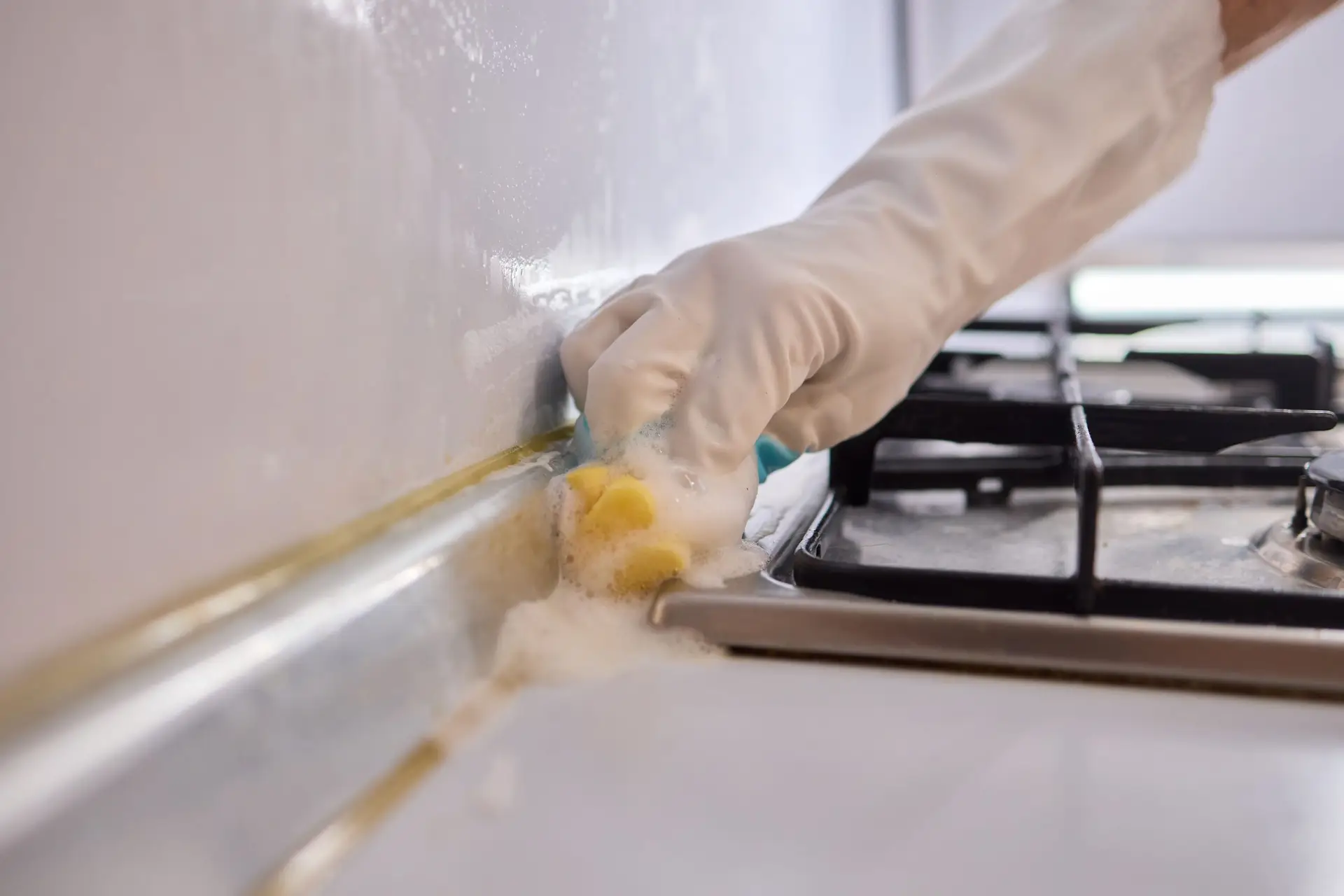
- Wipe Immediately: Make it a habit to wipe down your stovetop and immediate backsplash while the surfaces are still warm—not hot—after cooking. This prevents the oil from “setting.”
- The Power of Ventilation: Always run your range hood fan before you start cooking to create airflow and pull grease-laden steam out of the house.
- Contain the Mess: Use splatter guards (mesh screens) when frying or sautéing. These simple tools can cut your grease cleanup time in half by keeping the oil in the pan rather than on your cabinets.
- The Nightly Reset: Incorporate a quick “degreasing wipe” into your post-dinner routine. A cloth with a mild degreaser or warm soapy water on handles and knob edges ensures that grease never accumulates.
The Nightly Kitchen Reset Checklist:
- Wipe down the cooktop and backsplash.
- Quick-clean microwave and oven handle.
- Wipe the front of the cabinet directly above the stove.
- Ensure the kitchen sink is rinsed and dried.
Best Cleaning Methods for Greasy Surfaces
Not all grease-fighting methods are safe for all surfaces. Using the wrong product can leave you with a clean cabinet but a ruined finish.
- For Stainless Steel: Use a dedicated stainless steel cleaner or a mix of warm water and a tiny bit of dish soap. Always wipe with the grain.
- For Painted Wood/Cabinets: Use a pH-neutral cleaner. Avoid harsh degreasers that can strip paint or varnish. If you are unsure, stick to diluted dish soap and a soft microfiber cloth.
- Range Hood Filters: These are the grease traps of your home. Soak them in hot, soapy water with a little baking soda every month. If they are dishwasher safe, run them through a heavy-duty cycle regularly.
- The Degreaser Rule: If you use a commercial degreaser, always spray the cloth, not the surface, to prevent overspray from damaging nearby areas.
When to Schedule Deep Kitchen Cleaning
There comes a point when the grease has hardened into a thick, yellowish layer that no longer responds to a simple wipe-down. If you see drip marks on your cabinets that feel sticky to the touch or if your range hood is dripping residue, you have moved past “maintenance” and into “deep cleaning” territory.
At E&R Cleaning Services, we specialize in tackling the persistent grease buildup that homeowners dread. Our recurring cleaning services target these hidden oil reservoirs, using professional techniques that restore your kitchen surfaces without damaging them. By letting us handle the deep-cleaning maintenance, you keep your kitchen looking brand new and ensure that grease never gets the upper hand.
Ready to stop battling grease and start enjoying your kitchen? Contact E&R Cleaning Services today to book your consultation!
Frequently Asked Questions
What removes kitchen grease best? For daily maintenance, warm water mixed with a grease-cutting dish soap (like Dawn) is remarkably effective. For harder, stubborn grease, a mixture of baking soda and water creates a gentle paste that lifts oil without scratching surfaces.
How do I prevent grease on cabinets? Use your range hood fan consistently, keep a lid on pots whenever possible, and wipe the cabinet fronts immediately if you notice a splash. Regular maintenance is the only way to prevent the sticky buildup from forming in the first place.
How often should a kitchen be deep cleaned? While you should wipe high-traffic surfaces daily, a professional deep clean—which includes cleaning inside the range hood, under appliances, and deep-degreasing cabinet fronts—is recommended every 3 to 6 months, depending on how often you cook with oils.
Want Your Home to Look Like This Without the Work?
Tell us about your place and we will send you a price. No walkthrough required, no obligation.
- Free quote with no obligation
- Non toxic and pet friendly products
- Bonded and insured, serving DFW since 2002
- 24 hour guarantee on our service
Prefer to talk? (214) 430-4447
By completing this form I acknowledge that I will receive informational text messages from E&R Cleaning Services. I can opt out at any time by replying STOP. Standard message rates may apply.