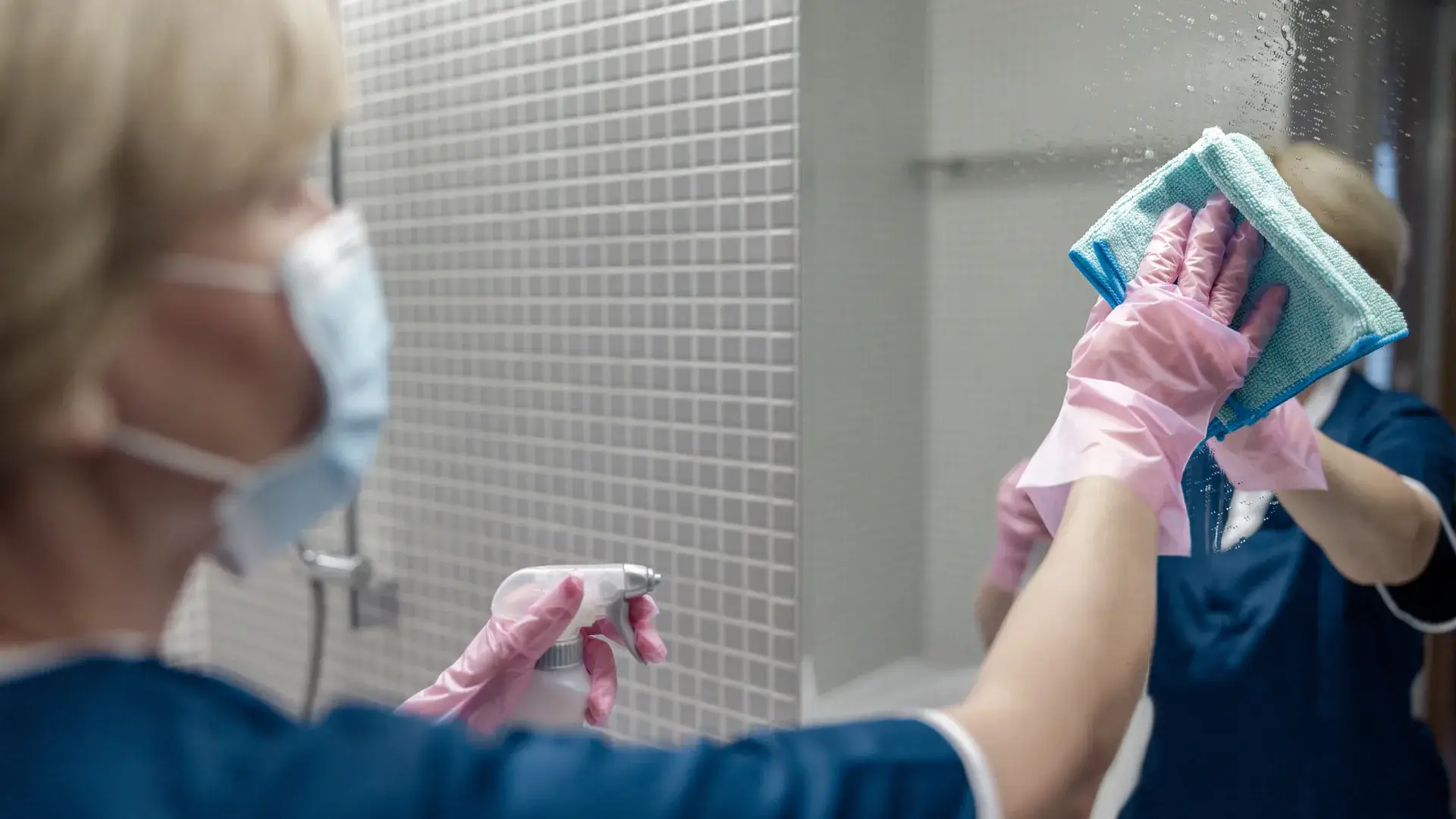
A shared office restroom sees more daily traffic than almost any other space in a building. That traffic makes it one of the fastest places for germs to spread if restroom cleaning and sanitizing falls behind schedule. Most office managers know restrooms need attention, but few have a documented standard that staff or vendors actually follow.
This guide lays out the cleaning and sanitizing standards that commercial cleaning professionals use in office restrooms, why each one matters, and how to spot when your current routine is falling short.
Restroom cleaning and sanitizing in an office setting should happen at least once daily, with high-touch surfaces disinfected, not just wiped, every time. A documented checklist that separates cleaning from disinfecting is what most informal routines are missing.
Why cleaning and disinfecting are not the same task
Many janitorial routines treat wiping down a surface as the finish line. Cleaning removes visible dirt and some germs. Disinfecting kills the remaining germs that cleaning leaves behind, but only if the disinfectant stays wet on the surface for the manufacturer’s required contact time.
Skipping contact time is one of the most common mistakes in office restroom sanitizing. A surface that gets sprayed and wiped immediately looks clean but has not actually been disinfected.
The two-step process, in order
- Clean the surface first to remove visible soil, soap residue, and organic matter.
- Apply disinfectant and let it sit for the full contact time listed on the product label before wiping or rinsing.
Skipping step one and going straight to disinfectant is also a mistake, since organic buildup can reduce how well a disinfectant works.
High-touch surfaces that need daily attention
Office restroom sanitizing should prioritize the surfaces hands touch most often, not just the obvious ones like toilets.
- Door handles and push plates
- Faucet handles
- Soap and paper towel dispenser buttons
- Light switches
- Stall locks and handles
- Toilet flush handles
These surfaces accumulate bacteria faster than floors or walls, yet they are frequently the most rushed part of a quick clean. A thorough commercial restroom cleaning standard treats this list as non-negotiable, every single day.
A daily restroom disinfection office checklist
For offices managing their own cleaning staff, a written checklist removes the guesswork and keeps standards consistent across shifts or vendors.
Daily tasks
- Empty trash and replace liners
- Restock soap, paper towels, and toilet paper
- Clean and disinfect all toilets, urinals, and sinks
- Wipe and disinfect high-touch surfaces listed above
- Mop floors with a disinfecting solution
- Check for and report any leaks, clogs, or maintenance issues
Weekly tasks
- Deep scrub grout lines and tile
- Clean inside trash receptacles, not just the liners
- Wipe down walls near hand-drying areas
- Descale faucets and showerheads if present
Posting this checklist inside a supply closet, rather than relying on memory, is one of the simplest ways professionals keep restroom cleaning and sanitizing consistent across a rotating cleaning staff.
Common signs your current restroom routine is falling short
Office managers often do not notice a sanitizing gap until it becomes visible or someone complains. Watch for these warning signs.
- Lingering odor that returns within hours of cleaning, which usually points to incomplete disinfection rather than a one-time miss
- Soap scum or mineral buildup around faucets, a sign that weekly deep tasks are being skipped
- Employees bringing their own sanitizing wipes to the restroom, a clear signal of low trust in the current standard
- Visible streaks or residue on mirrors and chrome fixtures from rushed cleaning
A professional cleaning team that rotates through multiple office accounts often notices that restrooms with sanitizing gaps share the same root cause: cleaning is happening on a fixed schedule regardless of actual traffic, instead of scaling up during high-occupancy days.
How often restroom sanitizing should really happen
Once-daily cleaning is the baseline, but offices with higher foot traffic, shared facilities across multiple tenants, or flu season conditions benefit from a second touch-point midday, focused only on high-touch surfaces and visible messes rather than a full reclean.
According to the CDC, frequently touched surfaces in shared spaces should be cleaned and disinfected at least once a day, with more frequent attention during periods of higher illness transmission. That guidance applies directly to office restrooms, which combine high traffic with shared, frequently touched fixtures.
Choosing the right products for restroom disinfection
Not every disinfectant is appropriate for every restroom surface, and using the wrong one can damage fixtures or simply fail to disinfect properly. A solid commercial restroom cleaning standard accounts for surface type, not just germ-killing claims on the label.
- Use an EPA-registered disinfectant rated for the specific pathogens of concern in a shared restroom, such as norovirus or common cold and flu viruses.
- Avoid mixing bleach-based products with ammonia-based cleaners, which creates dangerous fumes and is a common mistake when staff combine leftover supplies.
- Choose a non-abrasive cleaner for chrome fixtures to avoid dulling the finish over time.
- Keep a separate color-coded cloth or mop system for restrooms versus other office areas, which prevents cross-contamination between spaces.
Stocking the right products is only half the equation. Staff also need clear instruction on contact time and proper dilution ratios, since over-diluting a disinfectant to stretch supply is a quiet way that sanitizing standards quietly slip.
Staffing and accountability for restroom cleaning and sanitizing
Even a well-written checklist fails if no one is accountable for checking that it gets followed. Offices that maintain consistent restroom cleaning and sanitizing standards usually have one of two systems in place.
- A sign-off sheet posted inside the restroom or supply closet, where cleaning staff initial and timestamp each completed task.
- A facilities manager who does random spot checks, rather than relying solely on staff self-reporting.
Both systems work because they create a paper trail. Without one, it becomes difficult to tell whether a missed task was a one-time slip or a pattern, especially in offices that rotate cleaning staff or use a third-party vendor.
Real scenarios that show why standards matter
A small accounting firm with twelve employees once handled restroom cleaning informally, with whoever finished work early wiping down counters at the end of the day. Within a few months, employees started reporting recurring colds that seemed to circulate through the office every few weeks. Switching to a documented daily checklist with proper disinfectant contact time, paired with a professional office cleaning service, reduced the complaints noticeably within the first month.
In another case, a shared coworking space discovered that their nightly cleaning crew was cleaning restrooms but skipping disinfectant contact time to save time on a tight schedule. The fix was simple: building contact time into the cleaning checklist as its own line item, rather than treating it as implied.
FAQ
How often should office restrooms be sanitized? At least once daily for general use, with additional spot disinfection of high-touch surfaces during busier periods or flu season.
What is the difference between cleaning and disinfecting a restroom? Cleaning removes visible dirt and some germs. Disinfecting kills remaining germs but only works if the disinfectant stays wet on the surface for its full contact time.
Do hand dryers reduce the need for restroom sanitizing? No. Hand dryers reduce paper waste but do not change how often surfaces need cleaning and disinfecting, since germs spread through touch, not through drying method.
Can scented sprays replace proper disinfection? No. A pleasant smell does not indicate that surfaces have been disinfected. Relying on scent alone is one of the most common restroom cleaning and sanitizing mistakes.
Should restroom cleaning supplies be kept separate from other office cleaning supplies? Yes. Using the same cloths, mops, or sponges for restrooms and other office areas, like break rooms or desks, risks spreading bacteria between spaces. A dedicated, color-coded supply set for restrooms is a standard practice among commercial cleaning professionals.
Who is responsible for restroom cleaning and sanitizing in a shared office building? This depends on the lease structure. In single-tenant buildings, it usually falls to the tenant or their cleaning vendor. In multi-tenant or coworking spaces, property management often handles shared restrooms, though standards still vary widely unless a clear agreement specifies cleaning frequency and method.
Building a standard that actually holds up
Restroom cleaning and sanitizing only works as a standard if it is written down, followed consistently, and adjusted for how busy the space actually gets. A documented checklist removes the guesswork that leads to skipped steps, especially disinfectant contact time.
Offices that treat this as a one-time setup rather than an ongoing practice tend to see standards slip within a few months, usually right around the time cleaning staff changes or a budget review trims supply orders. Building a recurring review, even a quick monthly walkthrough, into facilities management keeps the standard from quietly eroding.
If your office restroom routine has drifted into “whoever has time” territory, a structured recurring cleaning plan for your office can rebuild the standard and keep it consistent week after week. Contact us to talk through a cleaning plan that fits your office’s traffic and schedule.
What to look for when hiring a cleaning vendor
Offices that outsource restroom cleaning and sanitizing to a vendor should ask a few direct questions before signing a contract. The answers reveal whether a vendor follows a real standard or just shows up and wipes surfaces.
- Ask whether their checklist separates cleaning from disinfecting, and whether staff are trained on contact time.
- Ask how they handle restocking, since running out of soap or paper towels mid-day is a common service gap.
- Ask for a sample of their daily and weekly task list, not just a general description of services.
- Ask how complaints or missed tasks get reported and resolved.
Vendors who can answer these clearly, without hesitating, usually have a documented system rather than an informal routine improvised by whoever is on shift. That difference shows up quickly in how an office restroom feels day to day, whether it consistently smells clean or only looks clean right after the crew leaves.
Putting it all together
A restroom that genuinely meets a commercial restroom cleaning standard does not happen by accident. It comes from a documented checklist, the right products used correctly, and someone accountable for checking that the work actually gets done. Skipping any one of those three pieces tends to show up eventually, whether as lingering odor, visible buildup, or employees quietly losing trust in the space. None of these standards require expensive equipment or specialized training, just consistency applied the same way every single day.
Keep Reading
Rather hand the work to a team that does this every day? See our deep cleaning service or call (214) 430-4447 for a free quote.
Want Your Home to Look Like This Without the Work?
Tell us about your place and we will send you a price. No walkthrough required, no obligation.
- Free quote with no obligation
- Non toxic and pet friendly products
- Bonded and insured, serving DFW since 2002
- 24 hour guarantee on our service
Prefer to talk? (214) 430-4447
By completing this form I acknowledge that I will receive informational text messages from E&R Cleaning Services. I can opt out at any time by replying STOP. Standard message rates may apply.