Hardwood floors add warmth and value to any home. However, they also require specific care that differs significantly from other flooring types. The wrong cleaning product, too much water, or an abrasive tool can strip the finish, dull the surface, or cause irreversible damage.
Proper hardwood floor cleaning isn’t complicated. It comes down to understanding what the finish is, what products are compatible with it, and which habits protect rather than degrade the wood over time. This guide covers daily maintenance, deep cleaning techniques, and the 6 most common mistakes that cause long-term damage.
Understanding hardwood floor finishes
Before choosing a cleaning method, it helps to know what type of finish your floors have. Most modern hardwood floors are sealed with either a polyurethane coating or an oil-based finish, and each requires a slightly different approach.
Polyurethane-finished floors are the most common in homes built or renovated in the last 30 years. The finish creates a hard, protective layer on top of the wood. These floors can tolerate more cleaning solutions than oil-finished floors.
Oil-finished or wax-finished floors are more traditional and more porous. They require specific oil-based products and can be damaged by water, alkaline cleaners, or steam.
To test your finish, run your finger across the floor. If it leaves a smudge or a haze, the floor likely has a wax or oil finish. If the surface remains clear, it’s probably polyurethane. When in doubt, check with the manufacturer or installer.
Daily and weekly hardwood floor cleaning
Dry cleaning first
The most important routine for hardwood floors is dry cleaning: removing dust, dirt, and debris before they scratch the surface. Hard particles like sand and grit act like sandpaper under foot traffic, abrading the finish with every step.
Use a microfiber dust mop or a soft-bristle broom for daily sweeping. Avoid traditional cotton mops, which push debris around rather than capturing it. Microfiber pads trap particles and can be laundered and reused.
Vacuum weekly using a hardwood floor attachment. Never use a beater bar attachment, as it can scratch the surface. Set the vacuum to the hard floor setting to reduce suction force on the planks.
Damp mopping technique
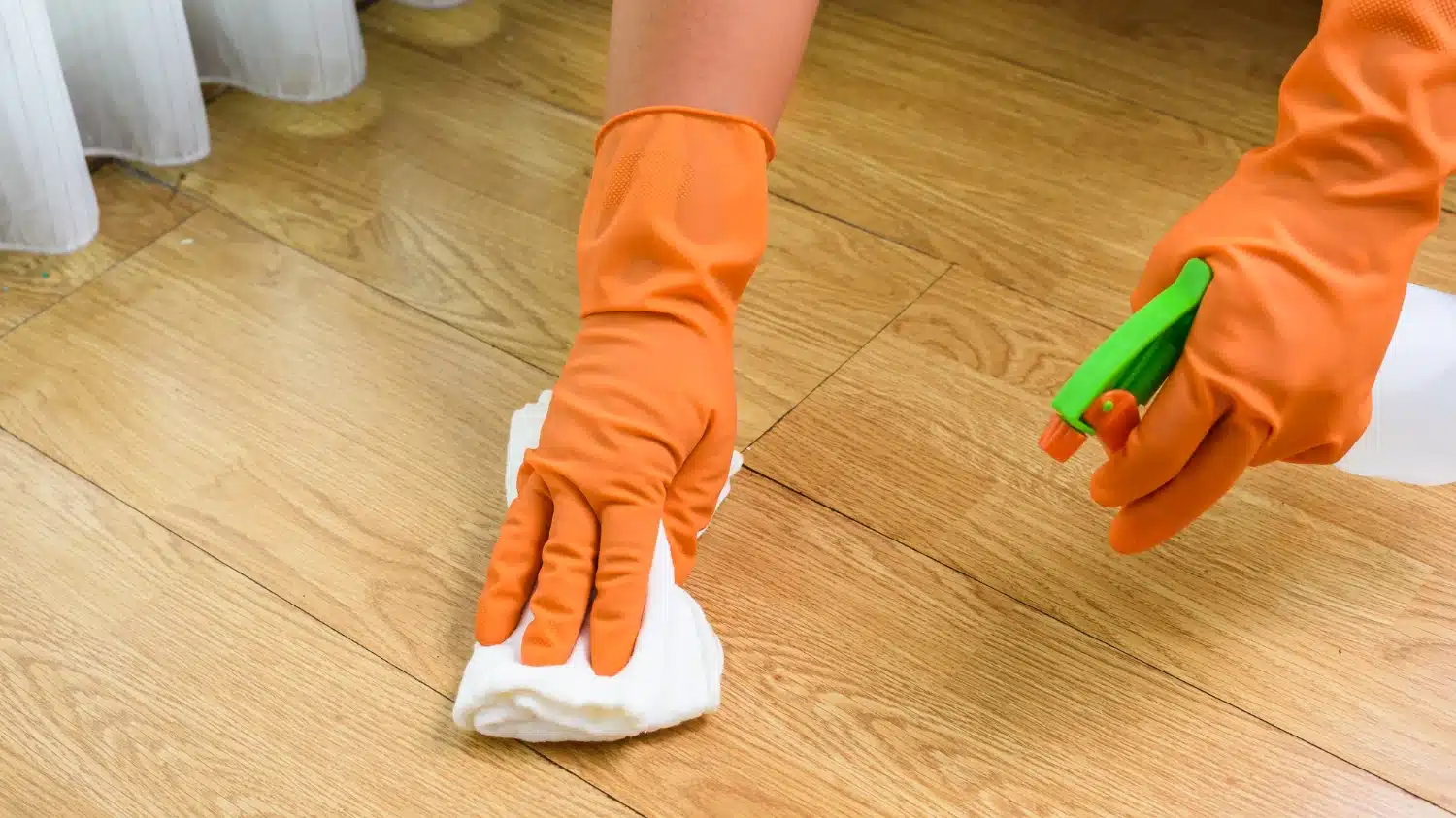
For routine mopping, use a well-wrung, barely damp microfiber mop. The mop should feel almost dry to the touch before it contacts the floor. Any visible pooling of water on the surface means the mop is too wet.
Mop in the direction of the wood grain. This follows the natural pattern of the planks and reduces the chance of pushing moisture into the seams between boards.
Choosing the right cleaner
Use a cleaning solution specifically formulated for hardwood floors. Products marketed for tile, vinyl, or general floors often contain alkaline compounds or waxes that damage hardwood finishes over time.
For polyurethane-finished floors, a diluted hardwood floor cleaner (following label instructions) or a pH-neutral wood floor solution works well. A drop of dish soap in a gallon of water is a safe alternative for a quick clean if you’re out of floor cleaner.
For oil-finished floors, use a product specifically designed for that finish type. Standard floor cleaners can lift the oil and leave the wood unprotected.
How to deep clean hardwood floors
Deep cleaning hardwood floors a few times per year removes the buildup of cleaning product residue, foot oils, and dirt that routine mopping leaves behind. This process takes more time but significantly restores the floor’s appearance.
Step 1: clear and sweep the room
Remove all furniture from the area if possible. Sweep or vacuum thoroughly to remove all loose debris. Deep cleaning over grit will cause scratching.
Step 2: identify problem areas
Look for areas with haze, sticky residue, or dull patches. These often indicate cleaning product buildup. Treat these areas with a wood floor cleaning concentrate or a solution of one part white vinegar to ten parts water, applied sparingly with a microfiber cloth.
Step 3: clean in sections
Work in sections of about 100 square feet. Apply a small amount of cleaner with a barely damp microfiber mop. Work in the direction of the grain. Dry each section with a clean, dry microfiber cloth or towel as you go. Never allow the cleaner to sit on the surface.
Step 4: buff to restore shine
After cleaning, buff the floor with a clean dry microfiber cloth to restore its natural luster. This step removes any remaining film and brings out the depth of the finish.
6 hardwood floor cleaning mistakes that damage the finish
1. Using too much water
Water is the most common cause of hardwood floor damage. It seeps into seams between planks, causes swelling and warping, and over time breaks down the adhesive in glue-down installations. Never wet mop hardwood floors, and never leave standing water on the surface.
2. Using steam mops
Steam mops force heated moisture directly into the wood and finish. Even on polyurethane floors, repeated steam cleaning causes finish clouding, warping, and delamination. No hardwood floor manufacturer recommends steam mops, and many explicitly void warranties if steam is used.
3. Using vinegar or ammonia-based cleaners
White vinegar is often recommended as a natural cleaner, and diluted it works on many surfaces. However, used regularly on hardwood floors, its acidity gradually breaks down the polyurethane finish. The same applies to ammonia-based cleaners. Neither should be used as a routine cleaner, though a very diluted vinegar solution can address specific buildup spots occasionally.
4. Using oil soaps on polyurethane floors
Oil soap products, such as Murphy Oil Soap used as a frequent cleaner, leave a residue on polyurethane-finished floors that builds up over time and causes a dull, hazy appearance. Oil soaps are appropriate for oil-finished or unfinished wood, but not for sealed floors.
5. Using abrasive tools
Steel wool, rough scouring pads, or stiff-bristle brushes scratch hardwood finishes. Always use soft microfiber cloths for scrubbing problem areas. For scuff marks, a clean tennis ball rubbed gently across the mark often removes it without any cleaner.
6. Skipping doormats and furniture pads
Most hardwood floor damage comes from daily abrasion, not cleaning mistakes. Place doormats at every entrance to trap grit before it reaches the floor. Apply felt pads to all furniture legs, and replace them when they wear down. Drag marks and pet nail scratches are the most common causes of surface damage over time.
How to address specific issues
Scuff marks: Rub gently with a clean cloth and a small amount of floor cleaner, or use a tennis ball.
Sticky residue: Apply a very small amount of mineral spirits on a cloth, rub gently, then clean the area with floor cleaner and dry immediately.
Dull, hazy areas: These often indicate cleaning product buildup. A wood floor refresher product can restore clarity. In severe cases, professional buffing may be needed.
Deep scratches or gouges: These require a wood filler or touch-up pen matched to your floor color. For extensive damage, a professional refinishing is the appropriate solution.
Hardwood floor cleaning after heavy use or parties
High-traffic events leave behind more than ordinary daily grime. After a party or gathering, hardwood floor cleaning should be done promptly before any spills or foot-tracked debris have a chance to dry and bond to the finish.
Sweep or vacuum immediately after guests leave. Address any spills with a barely damp microfiber cloth and dry the area thoroughly. Then do a full damp mop of the main traffic areas using your standard hardwood floor cleaner.
Waiting until the following day often means dried residue that requires more effort and more moisture to remove, which increases the risk of finish damage. Acting quickly is the most effective strategy.
Hardwood floor cleaning schedule by season
A seasonal hardwood floor cleaning schedule accounts for the fact that different times of year bring different challenges. In spring, pollen and mud track inside more frequently. In summer, humidity can cause slight expansion in the wood. In fall, leaves and outdoor debris increase. In winter, sand and salt from footwear pose an abrasion risk.
Adjust your cleaning frequency accordingly. Spring and fall call for more frequent sweeping and prompt spot cleaning. Summer is a good time for a thorough hardwood floor cleaning including a conditioning treatment if you use an oil-finished floor. Winter requires extra attention to doormats and entry areas where salt and grit accumulate.
A seasonal approach prevents the kind of seasonal buildup that requires aggressive cleaning later and protects the finish year-round.
Hardwood floor cleaning schedule by season
A seasonal hardwood floor cleaning schedule accounts for the fact that different times of year bring different challenges. In spring, pollen and mud track inside more frequently. In summer, humidity can cause slight expansion in the wood. In fall, leaves and outdoor debris increase. In winter, sand and salt from footwear pose an abrasion risk.
Adjust your cleaning frequency accordingly. Spring and fall call for more frequent sweeping and prompt spot cleaning. Summer is a good time for a thorough hardwood floor cleaning including a conditioning treatment if you use an oil-finished floor. Winter requires extra attention to doormats and entry areas where salt and grit accumulate.
A seasonal approach prevents the kind of seasonal buildup that requires aggressive cleaning later and protects the finish year-round.
When professional cleaning makes the difference
For homeowners with extensive hardwood flooring, high-traffic areas, or floors that haven’t been deep cleaned in several years, professional hardwood floor cleaning and buffing restores the finish to a condition that home cleaning routines can’t achieve.
E&R Clean Service provides deep cleaning services across McKinney, Frisco, Plano, Allen, and the Dallas Metroplex. Our team handles hardwood floors with the appropriate tools and products for each finish type, protecting your investment while delivering a genuinely thorough clean.
Floors that last, every step of the way
Hardwood floor cleaning done correctly is straightforward: keep it dry, use the right products, and address small issues before they become permanent. Avoiding the 6 common mistakes in this guide protects your finish and preserves the natural beauty of the wood for years.
Consistent daily habits, a proper deep clean a few times per year, and professional service when needed keep hardwood floors looking their best over the long term.
Keep Reading
Rather hand the work to a team that does this every day? See our deep cleaning service or call (214) 430-4447 for a free quote.
Want Your Home to Look Like This Without the Work?
Tell us about your place and we will send you a price. No walkthrough required, no obligation.
- Free quote with no obligation
- Non toxic and pet friendly products
- Bonded and insured, serving DFW since 2002
- 24 hour guarantee on our service
Prefer to talk? (214) 430-4447
By completing this form I acknowledge that I will receive informational text messages from E&R Cleaning Services. I can opt out at any time by replying STOP. Standard message rates may apply.