Dust mites are invisible to the naked eye, but their impact on your health is very real. Millions of them live in the average home, feeding on shed skin cells and thriving in warm, humid environments. For people with allergies or asthma, they are one of the most significant indoor triggers.
The good news is that you can dramatically reduce dust mite populations with consistent, targeted strategies. This guide explains what actually works to get rid of dust mites, addresses the common myths, and helps you create a home environment where they struggle to survive.
What are dust mites and why do they matter?
Dust mites are microscopic arachnids, related to spiders and ticks, that measure about 0.2 to 0.3 millimeters in length. They don’t bite and they don’t carry diseases. The problem is their waste products and shed body fragments, which become airborne and trigger allergic reactions in sensitive individuals.
According to the American College of Allergy, Asthma & Immunology, dust mite allergies affect millions of Americans and are a leading trigger for year-round allergic rhinitis and asthma. Symptoms include sneezing, runny nose, itchy eyes, and in more severe cases, asthma attacks.
Dust mites thrive in temperatures between 68 and 77 degrees Fahrenheit and in relative humidity above 50 percent. They concentrate most heavily in mattresses, pillows, upholstered furniture, and carpets, because these surfaces hold both warmth and the skin cells they feed on.
7 ways to get rid of dust mites that actually work
1. wash bedding weekly in hot water
Bedding is the primary habitat for dust mites. Washing sheets, pillowcases, and duvet covers weekly in water at or above 130 degrees Fahrenheit kills dust mites effectively. Cold water washing reduces populations but doesn’t eliminate them.
Dry bedding on high heat for at least 15 minutes. The heat, not just the washing, is what kills the mites. If your bedding is labeled cold-wash only, consider placing it in a dryer on high heat for 15 minutes before washing to kill mites before the cold wash removes the debris.
2. use allergen-proof encasements
Cover your mattress, box spring, and pillows with zippered, allergen-proof encasements. These are tightly woven covers that prevent dust mites from colonizing the inner materials of your mattress and pillows, which are impossible to wash regularly.
Look for encasements labeled as “dust mite proof” or “allergen barrier,” with a pore size of 6 microns or less. This is one of the most effective single investments for people with dust mite allergies, as the mattress typically harbors the highest concentration of mites in any room.
3. reduce indoor humidity below 50 percent
Dust mites cannot survive in low humidity. They absorb moisture from the air rather than drinking water. When relative humidity drops below 50 percent, their population declines significantly. Below 35 percent, they cannot survive at all.
Use a dehumidifier in bedrooms and main living areas, especially in humid climates like Texas. A hygrometer (available for under $20) measures your indoor humidity and helps you stay in the target range. Running air conditioning also reduces humidity naturally.
4. vacuum with a HEPA filter regularly
Standard vacuum cleaners can actually redistribute dust mite particles and allergens back into the air through their exhaust. Vacuums with sealed HEPA filtration capture particles as small as 0.3 microns and retain them instead of releasing them.
Vacuum mattresses, sofas, and carpets at least weekly. Use a slow, overlapping technique rather than quick passes. For carpets, a thorough pass takes approximately one minute per 100 square feet. Don’t forget upholstered furniture, which is another major dust mite habitat.
5. consider removing or replacing carpets in bedrooms
Carpet is significantly harder to get rid of dust mites in than hard flooring. It provides a deep, insulated habitat that vacuuming only partially addresses. If allergies are severe, replacing bedroom carpet with hardwood, tile, or laminate flooring is one of the most impactful structural changes you can make.
If replacing flooring isn’t possible, vacuum bedroom carpet daily during allergy season, steam clean it every six months, and use rugs with tight weaves that can be regularly washed rather than wall-to-wall carpet where possible.
6. steam clean upholstered furniture and carpets
Steam cleaning delivers temperatures above 212 degrees Fahrenheit, which kills dust mites on contact. Professional-grade steam cleaners penetrate deep into carpet fibers and upholstery padding, reaching areas where vacuuming can’t.
Steam clean carpets and upholstered sofas at least twice per year, or quarterly if dust mite allergies are a significant concern. Make sure surfaces dry completely after steam cleaning. Residual moisture, if not dried within a few hours, can actually encourage mold growth and create conditions that allow new mite populations to establish.
7. declutter to eliminate dust mite habitats
Every fabric surface in your home is a potential dust mite habitat. Stuffed animals, decorative pillows, fabric wall hangings, and stacked clothing all provide warm, sheltered environments where mites can establish themselves.
Reduce the number of fabric items in bedrooms especially. Store stuffed animals in sealed bags or wash them weekly. Choose bedding with fewer layers. Replace decorative throw pillows with washable covers. A cleaner, less cluttered room is easier to keep mite-free.
How to get rid of dust mites in your bedroom specifically
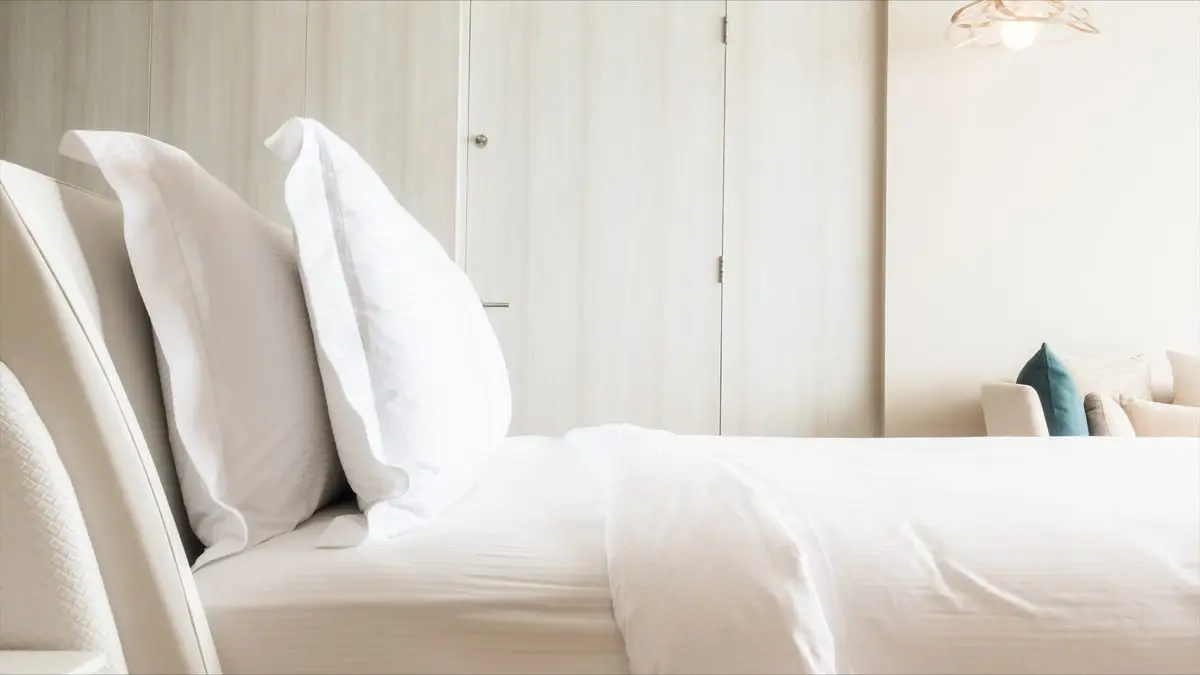
The bedroom requires the most attention when you want to get rid of dust mites effectively. It’s where people spend the most hours, where the highest concentration of skin cells accumulates, and where the mattress and pillow surfaces provide the ideal warm, soft habitat.
Focus your dust mite reduction efforts here first. Mattress encasements, weekly hot washing of bedding, and keeping humidity below 50 percent in the bedroom specifically will produce the most noticeable improvement in symptoms.
How to get rid of dust mites in upholstered furniture
Sofas and upholstered chairs are the second-most significant habitat for dust mites after mattresses. They accumulate skin cells from daily use and provide the same warm, textile environment that mites prefer.
Vacuum upholstered furniture weekly using an upholstery attachment with HEPA filtration. For deep cleaning, rent or hire a professional steam cleaner every three to six months. The heat kills mites throughout the fabric, not just on the surface.
Consider furniture covers that are removable and machine washable. Washing these covers in hot water monthly reduces the mite population in furniture the same way washing bedding does for the mattress.
What doesn’t work as well as people think
Air purifiers alone. Air purifiers with HEPA filters capture airborne dust mite particles effectively. However, most dust mite allergens are not airborne. They rest on surfaces. Air purifiers are useful as a complement to other strategies, not as a standalone solution.
Chemical sprays marketed as mite killers. Many products claim to kill dust mites on contact. The evidence for most of them is limited, and they don’t address the root conditions that allow mite populations to thrive. Addressing humidity and fabric surfaces is more effective.
Freezing items. Placing stuffed animals or pillows in the freezer for 24 hours does kill dust mites, but it doesn’t remove the allergen particles their bodies leave behind. You still need to wash the item afterward to remove the debris.
How to get rid of dust mites when you can’t control humidity
In very humid climates like Texas summers, getting below 50 percent indoor humidity requires continuous air conditioning and dehumidifier use. For households where this isn’t practical around the clock, a targeted approach helps.
Focus humidity reduction in the bedroom specifically, since this is where dust mite exposure most directly affects sleep and health. Keep the bedroom door closed while the dehumidifier runs to concentrate its effect. A room-size dehumidifier can lower a single bedroom’s humidity to the target range even when the rest of the home remains more humid.
Accept that during peak humidity seasons, mite populations may be harder to suppress. Compensate with increased frequency of hot-water bedding washing and more rigorous HEPA vacuuming during these periods.
How to get rid of dust mites when you can’t control humidity
In very humid climates like Texas summers, getting below 50 percent indoor humidity requires continuous air conditioning and dehumidifier use. For households where this isn’t practical around the clock, a targeted approach helps.
Focus humidity reduction in the bedroom specifically, since this is where dust mite exposure most directly affects sleep and health. Keep the bedroom door closed while the dehumidifier runs to concentrate its effect. A room-size dehumidifier can lower a single bedroom’s humidity to the target range even when the rest of the home remains more humid.
Accept that during peak humidity seasons, mite populations may be harder to suppress. Compensate with increased frequency of hot-water bedding washing and more rigorous HEPA vacuuming during these periods.
Symptoms that suggest a dust mite problem
If you experience any of the following symptoms consistently, especially at night or in the morning, dust mites may be a contributing cause:
- Sneezing upon waking
- Itchy or watery eyes in the bedroom
- Nasal congestion that improves when you leave home
- Worsening asthma symptoms at night
- Skin irritation from bedding
These symptoms overlap with other allergens, so a formal allergy test from a physician is the definitive way to confirm dust mite sensitivity.
How professional deep cleaning helps
A professional deep clean addresses many of the surfaces where dust mites concentrate most heavily: mattresses, carpets, upholstered furniture, and hard-to-reach corners.
For households where members have documented dust mite allergies, scheduling a professional deep clean twice per year can significantly reduce the overall allergen burden in the home.
A mite-free home is achievable
Getting rid of dust mites for good requires a combination of strategies applied consistently. Hot water washing, allergen-proof encasements, humidity control, and HEPA vacuuming are the most effective tools. Together, they reduce dust mite populations dramatically and keep them down.
No home will ever be completely free of dust mites. However, reducing their numbers to a level that no longer triggers symptoms is an achievable and worthwhile goal for anyone affected by dust mite allergies.
Keep Reading
Rather hand the work to a team that does this every day? See our deep cleaning service or call (214) 430-4447 for a free quote.
Want Your Home to Look Like This Without the Work?
Tell us about your place and we will send you a price. No walkthrough required, no obligation.
- Free quote with no obligation
- Non toxic and pet friendly products
- Bonded and insured, serving DFW since 2002
- 24 hour guarantee on our service
Prefer to talk? (214) 430-4447
By completing this form I acknowledge that I will receive informational text messages from E&R Cleaning Services. I can opt out at any time by replying STOP. Standard message rates may apply.