
Dusting the shelves and vacuuming the floors are the obvious steps. But if your home still feels dusty shortly after cleaning, hidden sources are to blame. Knowing how to eliminate dust from home requires going beyond the surfaces you can see.
Household dust is a mixture of skin cells, fabric fibers, pet dander, pollen, and microscopic debris from everyday life. It accumulates in predictable locations, but many of those locations are ones most people never think to clean. This guide identifies 10 of the most significant hidden dust sources and explains exactly how to address each one.
Why dust keeps coming back
Dust doesn’t disappear once you clean it. It circulates through your home via air movement, HVAC systems, and foot traffic. Every time a vent blows, dust redistributes. Every time a door opens, outdoor particles enter.
Furthermore, many common cleaning habits inadvertently spread dust instead of removing it. Feather dusters, for example, push particles into the air where they resettle elsewhere. Dry brooms do the same. Understanding dust behavior helps you clean more effectively and keep it under control longer.
10 hidden dust sources and how to eliminate them
1. HVAC vents and return air registers
Your heating and cooling system circulates air throughout your home, and every vent collects dust over time. The particles build up on the vent slats and get pushed back into the room with every cycle.
Remove vent covers and wash them in warm soapy water. Use a vacuum with a brush attachment to clean inside the duct opening as far as you can reach. Change your HVAC filter every 30 to 90 days, depending on your household’s dust level and whether you have pets.
2. ceiling fan blades
Ceiling fan blades are one of the most significant hidden dust sources in any room. The blades collect a thick layer of dust that isn’t visible until you look directly at them from above. When the fan runs, it distributes those particles throughout the room.
Use an old pillowcase to clean fan blades. Slide the case over each blade and pull back slowly, trapping the dust inside the case instead of scattering it. This single technique prevents the dust cloud that comes from wiping blades with a dry cloth.
3. mattresses and box springs
A significant portion of household dust is actually human skin cells. Because people spend six to eight hours in bed every night, mattresses accumulate an enormous amount of this material. Dust mites feed on it, which compounds the allergen problem.
Strip the bed completely and vacuum the mattress on both sides using an upholstery attachment. Sprinkle baking soda, leave it for 15 minutes, then vacuum again to absorb odors. Use a mattress encasement cover to reduce future accumulation.
4. behind and under furniture
Sofas, beds, bookshelves, and dressers create dust traps the moment they are pushed against a wall. The area behind a sofa that sits close to the wall is almost never cleaned and can accumulate years of debris.
Pull furniture away from walls two to four times per year for a thorough clean. Use a vacuum with a crevice tool to reach under low furniture. Consider furniture with legs rather than flat bases, as legs allow easier access for vacuum cleaners.
5. decorative items and books
Books are excellent dust collectors. Their spines and page tops gather particles continuously. Decorative items with complex shapes, such as figurines or vases, accumulate dust in every crevice.
Wipe books with a dry microfiber cloth from spine outward. For decorative items, use a small soft-bristle brush or a microfiber cloth. Store books in closed cabinets when possible to significantly reduce the dusting frequency.
6. window treatments and curtains
Curtains and blinds act as filters, trapping airborne particles every time air moves through the room. Fabric curtains can hold large amounts of dust and allergens without any visible sign.
Wash fabric curtains according to their care label every two to three months. For blinds, use a microfiber cloth to wipe each slat, or use a vacuum brush attachment on the lower suction setting. For heavy fabric drapes, professional cleaning or a run through the dryer on a no-heat cycle with a dryer sheet helps remove dust.
7. electronics and cable clusters
Television backs, computer towers, and entertainment centers with tangled cables are dust magnets. The static charge from electronics actively attracts dust particles, and the heat they generate accelerates accumulation.
Unplug electronics before cleaning. Use compressed air to blow dust out of ports and vents. Wipe surfaces with a slightly damp microfiber cloth, then dry immediately. Organize cables with ties or cable management boxes to reduce the number of surfaces where dust can settle.
8. air purifier and humidifier filters
This is one of the most overlooked sources. If your air purifier or humidifier has a dirty filter, it isn’t cleaning the air, and it may actually be redistributing particles. A clogged humidifier filter can also release mineral dust into the air.
Check filters monthly. Replace HEPA filters on air purifiers according to the manufacturer’s schedule, typically every six to twelve months. Rinse and dry humidifier filters regularly, and replace them at the start of each season.
9. door and window frames and tracks
The horizontal surfaces of door frames collect dust continuously and are rarely wiped. Window tracks accumulate not only dust but also pollen, dead insects, and outdoor debris.
Wipe door frames with a damp microfiber cloth at least monthly. For window tracks, use a vacuum crevice tool, then follow with a damp cotton swab to clean the narrow grooves. This also reduces the amount of outdoor particulate that gets introduced each time you open a window.
10. closets and stored clothing
Closed closets feel like clean spaces, but they are actually significant dust reservoirs. Fabric clothing sheds fibers continuously. Stored items on shelves accumulate particles over months and years.
Vacuum closet shelves and floors during each deep clean. Store off-season clothing in sealed bags or bins rather than open shelves. Keep closet doors closed to contain the dust within that space and prevent it from circulating into the main room.
How to dust more effectively
Even with the right locations identified, dusting technique matters. Use microfiber cloths instead of feather dusters or dry rags. Microfiber traps particles rather than scattering them.
Always dust from top to bottom: ceiling fans first, then high shelves, furniture surfaces, and finally the floor. This way, any particles that fall during dusting land on surfaces you haven’t cleaned yet.
Vacuum after dusting, not before. Dusting inevitably settles some particles onto the floor, and vacuuming last removes what falls.
The best tools to eliminate dust from home efficiently
The right tools make a significant difference when you want to eliminate dust from home without just moving it around. Microfiber cloths trap particles rather than redistributing them. A HEPA-filter vacuum captures fine particles instead of exhausting them back into the air. An extension duster reaches ceiling fixtures and high shelves safely.
The role of air filtration in reducing household dust
A high-quality HVAC filter and a room air purifier significantly reduce the amount of airborne dust in your home. HEPA filters capture particles as small as 0.3 microns, which includes most allergens, dust mite particles, and pet dander.
Look for filters with a MERV rating of 8 to 13 for residential HVAC systems. Higher ratings are more effective but may reduce airflow in older systems. Consult your HVAC provider before upgrading to a very high MERV filter.
Running air purifiers continuously in bedrooms and living areas, where people spend the most time, makes the biggest difference in perceived air quality.
Daily habits that help you eliminate dust from home faster
You don’t need a full cleaning session every day to eliminate dust from home at a sustainable level. A few quick daily habits dramatically reduce how much dust accumulates between deeper cleans.
Remove shoes at the door. Outdoor shoes track in pollen, soil, and particulate matter that becomes household dust within minutes of entering. A shoe rack near the entrance and a clear household rule make a significant difference in primary living areas.
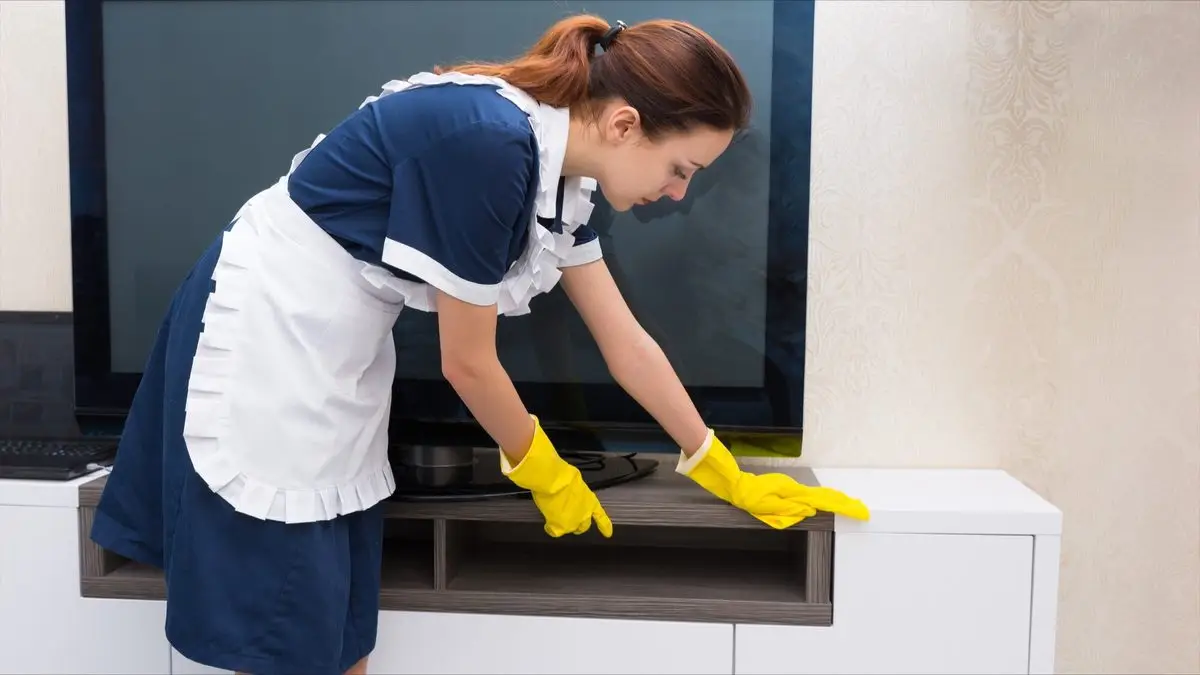
Wipe high-touch surfaces daily with a dry microfiber cloth. Counters, side tables, and TV stands collect visible dust quickly. A 60-second wipe during your morning or evening routine keeps the most visible surfaces clean and reduces the overall dust load in the room.
How to eliminate dust from home with the right vacuum technique
The vacuum you use and how you use it determines how much you actually eliminate dust from home versus redistribute it. Standard upright vacuums without HEPA filters release fine particles back into the air through their exhaust as you clean. This means you’re picking up coarse debris while spreading fine allergens more widely.
A sealed HEPA vacuum captures particles down to 0.3 microns. When vacuuming, use slow, overlapping passes rather than quick back-and-forth strokes. Slow passes give the suction time to lift embedded particles from carpet fibers. Overlap each pass by about 50 percent of the head width to ensure full coverage.
How to eliminate dust from home with the right vacuum technique
The vacuum you use and how you use it determines how much you actually eliminate dust from home versus redistribute it. Standard upright vacuums without HEPA filters release fine particles back into the air through their exhaust as you clean. This means you’re picking up coarse debris while spreading fine allergens more widely.
A sealed HEPA vacuum captures particles down to 0.3 microns. When vacuuming, use slow, overlapping passes rather than quick back-and-forth strokes. Slow passes give the suction time to lift embedded particles from carpet fibers. Overlap each pass by about 50 percent of the head width to ensure full coverage.
Less dust, better air, healthier home
Knowing how to eliminate dust from home is ultimately about identifying and consistently addressing the right sources. The 10 locations in this guide are where dust accumulates most significantly and where most cleaning routines fall short.
Combine proper technique with the right tools, address your HVAC system regularly, and you’ll notice a real difference in how quickly dust returns. A genuinely clean home isn’t just about visible surfaces. It’s about the air you breathe every day.
Ready for a thorough reset? Contact E&R Clean Service for a professional deep clean in McKinney, Frisco, Plano, and surrounding areas.
Keep Reading
Rather hand the work to a team that does this every day? See our deep cleaning service or call (214) 430-4447 for a free quote.
Want Your Home to Look Like This Without the Work?
Tell us about your place and we will send you a price. No walkthrough required, no obligation.
- Free quote with no obligation
- Non toxic and pet friendly products
- Bonded and insured, serving DFW since 2002
- 24 hour guarantee on our service
Prefer to talk? (214) 430-4447
By completing this form I acknowledge that I will receive informational text messages from E&R Cleaning Services. I can opt out at any time by replying STOP. Standard message rates may apply.