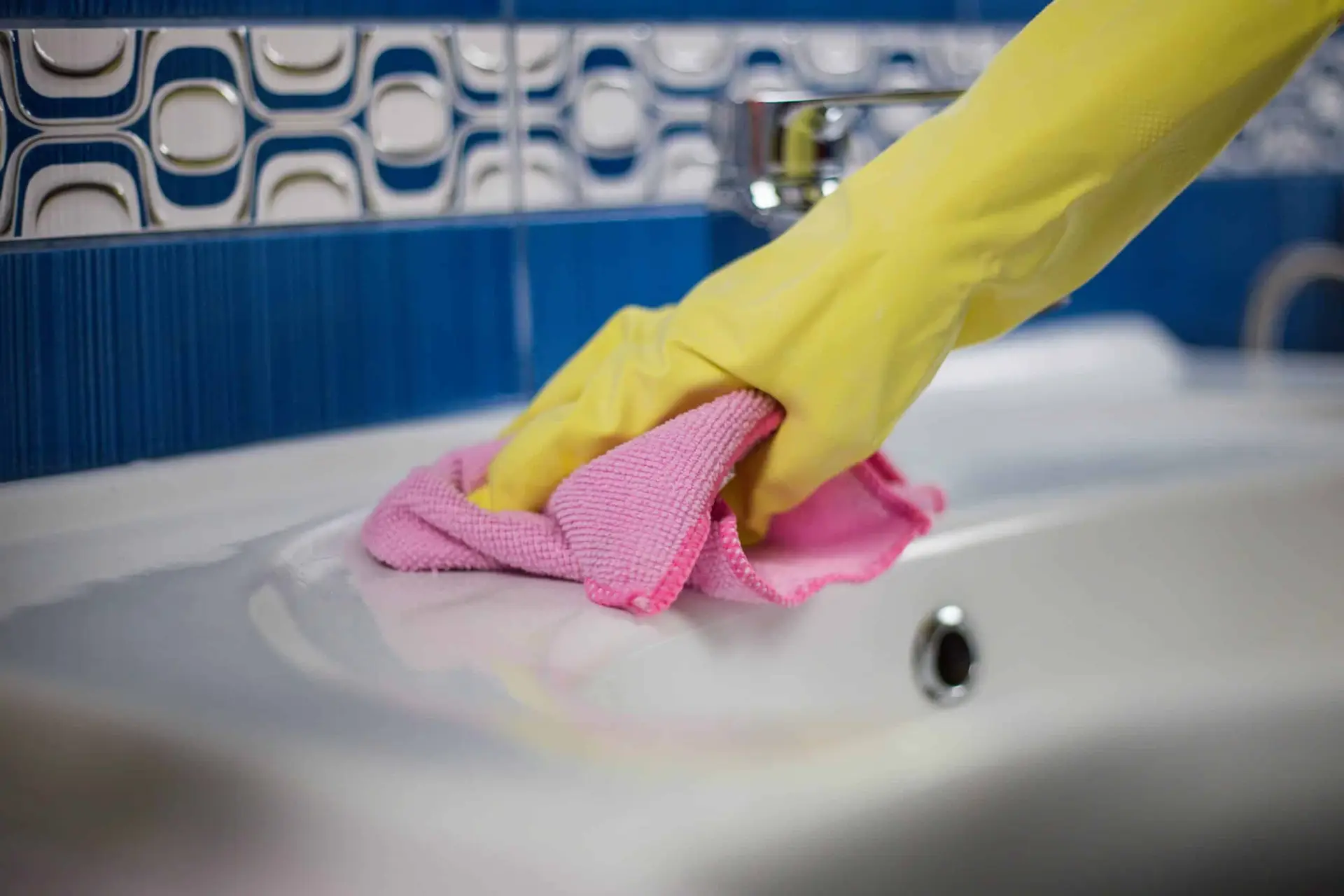
A bathroom sink is the most used fixture in the house and the one that shows the widest variety of problems, because four completely different things build up on it and each needs a different treatment.
Working out which one you have takes ten seconds and saves an hour of scrubbing the wrong way.
Identify What You Are Looking At
A white or chalky crust around the faucet base and in the drain area is mineral scale from hard water. North Texas water is hard, so this is the most common one here. It needs an acidic product and dwell time. Scrubbing does very little.
A cloudy film across the whole basin is soap and toothpaste residue. This is the opposite chemistry: it responds to a mild alkaline cleaner or dish soap and a cloth.
Pink or orange staining in the drain area or where water sits is a bacterial biofilm that thrives in damp bathrooms. It wipes away easily and returns quickly unless the surface is kept dry.
Grey or black around the drain and the overflow is buildup inside the fixture rather than on it, and no amount of surface cleaning reaches it.
The Method for Scale
Apply an acidic bathroom cleaner or white vinegar and let it stay wet for the time on the label, which is usually several minutes. This is the entire technique, and it is what people skip.
For the faucet base and the joint where it meets the counter, soak a paper towel or a cloth in the product and wrap it around the fixture so it stays in contact rather than running off. Leave it, then wipe and rinse. Buildup that would need a scraper releases on its own.
Two cautions. If your counter is marble, travertine or any honed stone, do not let an acidic product touch it, because it etches permanently and etching cannot be cleaned off. And never mix an acidic product with bleach.
The Drain and the Overflow
This is where the smell comes from and almost nobody addresses it.
The pop up stopper lifts or unscrews out on most sinks, and what is on the underside is usually the source. Pull it, clean it, and put it back.
The overflow hole, the small opening near the rim, is a permanently damp cavity that develops biofilm and is never cleaned. A small bottle brush reaches into it. Follow with baking soda into the drain, then vinegar, cover it, wait fifteen minutes, and flush with hot water.
If the smell persists after all of that, it is likely the P trap under the sink or a dry trap in a fixture nobody uses.
Match the Product to the Basin
Porcelain and vitreous china tolerate most things and still should not meet abrasive powders, which dull the glaze over years and then hold stains worse.
Natural stone vessels need a neutral cleaner and nothing acidic. Composite and solid surface basins scratch with abrasives. Copper and brass either want a patina left alone or a dedicated polish, and it is worth deciding which before touching them.
On any finish, skip the melamine foam erasers. They are a fine abrasive and they dull a glossy surface in a patch that becomes more visible than the mark you removed.
The Hardware Around It
Faucet aerators clog with mineral deposits, which is what causes a weak or sideways spray. The tip unscrews, soaks in vinegar, and goes back on, and it takes five minutes.
Brushed and matte black finishes have become common and they need gentle handling: no acid sitting on them, no abrasives, and a dry cloth afterward to prevent spotting.
The Habit That Removes the Problem
Dry the sink after use, or at least at the end of the day. Every one of the four problems above is caused or accelerated by water sitting on the surface.
Thirty seconds with a cloth prevents the scale, the film and the pink biofilm, and it is the reason some households never have to do any of the above.
If the Bathroom Needs More Than the Sink
Whatever is on the sink is on the shower glass, the fixtures and the grout, usually worse, because those surfaces stay wet longer. And the floor around the toilet base is where the smell in a heavily used bathroom actually comes from, which a mop never reaches into.
Call (214) 430-4447 or request a free quote online. We give products their full contact time rather than wiping them off immediately, we match the chemistry to the surface, and we will tell you honestly when something has etched and will not come back.
Keep Reading
- How to Clean a Mirror without Glass Cleaner
- How to Clean Glass Shower Doors
- How to Clean a Shower Drain
Rather hand the work to a team that does this every day? See our deep cleaning service or call (214) 430-4447 for a free quote.
Want Your Home to Look Like This Without the Work?
Tell us about your place and we will send you a price. No walkthrough required, no obligation.
- Free quote with no obligation
- Non toxic and pet friendly products
- Bonded and insured, serving DFW since 2002
- 24 hour guarantee on our service
Prefer to talk? (214) 430-4447
By completing this form I acknowledge that I will receive informational text messages from E&R Cleaning Services. I can opt out at any time by replying STOP. Standard message rates may apply.