
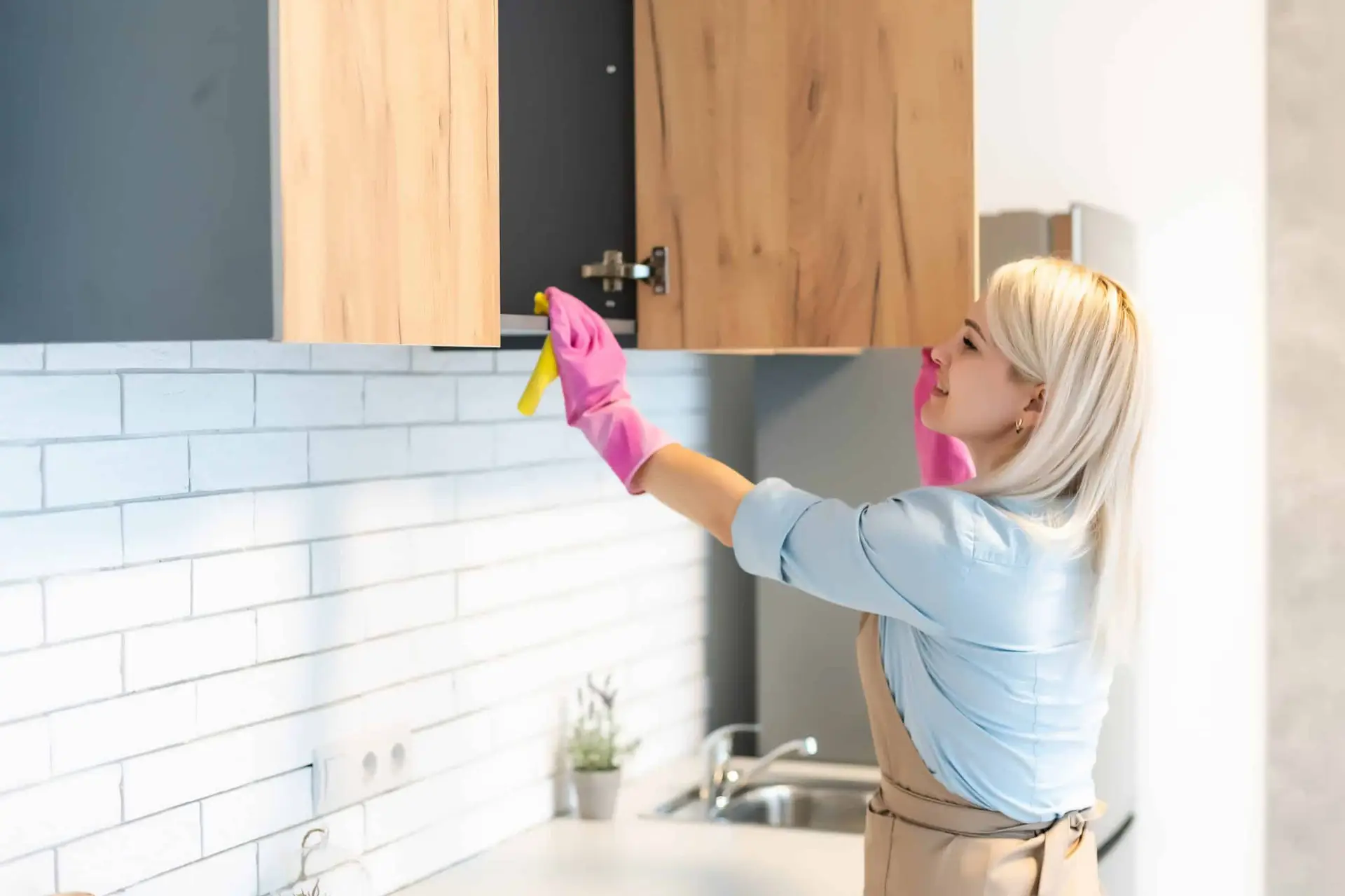
Kitchen cabinets are the most expensive surface in the room and the one most commonly damaged by cleaning. The damage is rarely dramatic. It shows up as a cloudy patch, a dull door among glossy ones, or a sticky film that never quite comes off, and by then it is a refinishing conversation.
The right product depends entirely on what your cabinets actually are.
Identify the Finish First
Painted cabinets, which dominate newer North Texas kitchens, are usually a conversion varnish or lacquer over MDF or wood. Durable on the face, and vulnerable at the edges and seams where moisture gets in.
Stained and sealed wood has a clear topcoat, and the cleaning is really about protecting that coat rather than the wood.
Thermofoil is a vinyl layer heat wrapped over MDF. It looks like paint and it delaminates with heat and moisture, particularly next to the dishwasher and above the range.
Glazed, distressed or hand painted finishes are the most fragile of all, because the glaze is a surface layer that a degreaser will lift.
If you do not know which you have, treat them as the most fragile option until you have tested somewhere invisible.
What to Use, and It Is Boring
For routine cleaning, the answer for every finish above is the same: a barely damp microfiber cloth with warm water, followed immediately by a dry cloth.
For anything greasy, add a small amount of mild dish soap, meaning a few drops in a bowl of water rather than a squirt on the cloth. Then wipe with a cloth dampened in plain water to remove the soap, and dry.
That is genuinely it, and the two details that matter are that the cloth is damp rather than wet, and that you dry immediately. Water sitting on a seam or an edge is what causes swelling and delamination over time.
For Built Up Grease Above the Range
This is where cabinets actually get ruined, because people escalate.
The right approach is a dedicated cabinet degreaser or a mild degreasing spray applied to the cloth rather than sprayed on the door, with dwell time doing the work instead of pressure. Let it sit a minute, wipe with the grain, then rinse the surface with a plain damp cloth and dry.
Repeat a second pass rather than pressing harder. Heavy buildup comes off in layers, and patience beats abrasion every time.
What Will Damage Them
Do not use melamine foam erasers, the white sponge type. They are a fine abrasive and on a painted or glossy cabinet they remove the sheen, leaving a permanently dull patch that is more visible than the mark you were removing.
Do not use ammonia based cleaners or all purpose sprays containing ammonia, which cloud clear coats over time.
Do not use vinegar. The acid dulls and eventually damages most cabinet finishes, and it is one of the most common pieces of bad advice on the subject.
Do not use abrasive powders, scouring pads or anything that says it scrubs. Do not use oil soaps as a routine, since they build a film that has to be stripped before the cabinets can ever be refinished. And do not steam them.
The Polish Question
Cabinet polishes and conditioners are fine occasionally on stained wood and they are not a cleaner. Applied over grease they seal it in. Applied too often they build a film that attracts dust and eventually looks worse than bare wood.
Clean first, dry fully, then polish if you want to, a few times a year at most.
The Places Everyone Misses
The underside of the upper cabinet doors, which is at eye level when you are sitting and never gets wiped. The top edge of every door. The area around the handles, where hand oil concentrates. The toe kick at the bottom. And the tops of the upper cabinets or the crown, which in most kitchens carry a sticky layer of grease and dust that has been accumulating since the house was built.
That last one is the single most dramatic before and after in any kitchen deep clean, and it is invisible from standing height, which is exactly why it accumulates for years.
Keep It Simple and It Lasts
Wipe spills and splatter while they are warm, because grease that has not cooled comes off with water. Wipe around the handles weekly. And do the grease pass properly a few times a year rather than waiting until it has yellowed the finish, which is not reversible.
Call (214) 430-4447 or request a free quote online and ask about a kitchen deep clean. Tell us what your cabinets are, and we will match the product to the finish rather than carrying one bottle for everything.
Keep Reading
Rather hand the work to a team that does this every day? See our deep cleaning service or call (214) 430-4447 for a free quote.
Want Your Home to Look Like This Without the Work?
Tell us about your place and we will send you a price. No walkthrough required, no obligation.
- Free quote with no obligation
- Non toxic and pet friendly products
- Bonded and insured, serving DFW since 2002
- 24 hour guarantee on our service
Prefer to talk? (214) 430-4447
By completing this form I acknowledge that I will receive informational text messages from E&R Cleaning Services. I can opt out at any time by replying STOP. Standard message rates may apply.