A wood table takes more abuse than any other piece of furniture in a house, and it is also the piece most commonly damaged by the products sold to care for it. Getting this right is mostly about knowing what is on top of the wood, because you are almost never cleaning wood. You are cleaning a finish.
Work Out What the Finish Is
Most modern tables are sealed with polyurethane or a catalyzed lacquer. These are durable, tolerate a damp cloth, and are what the standard advice assumes.
Older and antique pieces are often shellac or French polish. These are beautiful, repairable, and destroyed by alcohol and by water. If a piece is pre war, assume it is one of these until proven otherwise.
Oiled and waxed finishes, common on some Scandinavian and handmade furniture, feel matte and slightly soft. They need oil or wax rather than cleaner, and they mark easily.
The test: put a drop of water on an inconspicuous spot and wait a few minutes. If it beads and wipes away with no mark, the finish is sound and film forming. If it soaks in or leaves a cloudy spot, be careful with anything wet.
Routine Cleaning Is Almost Nothing
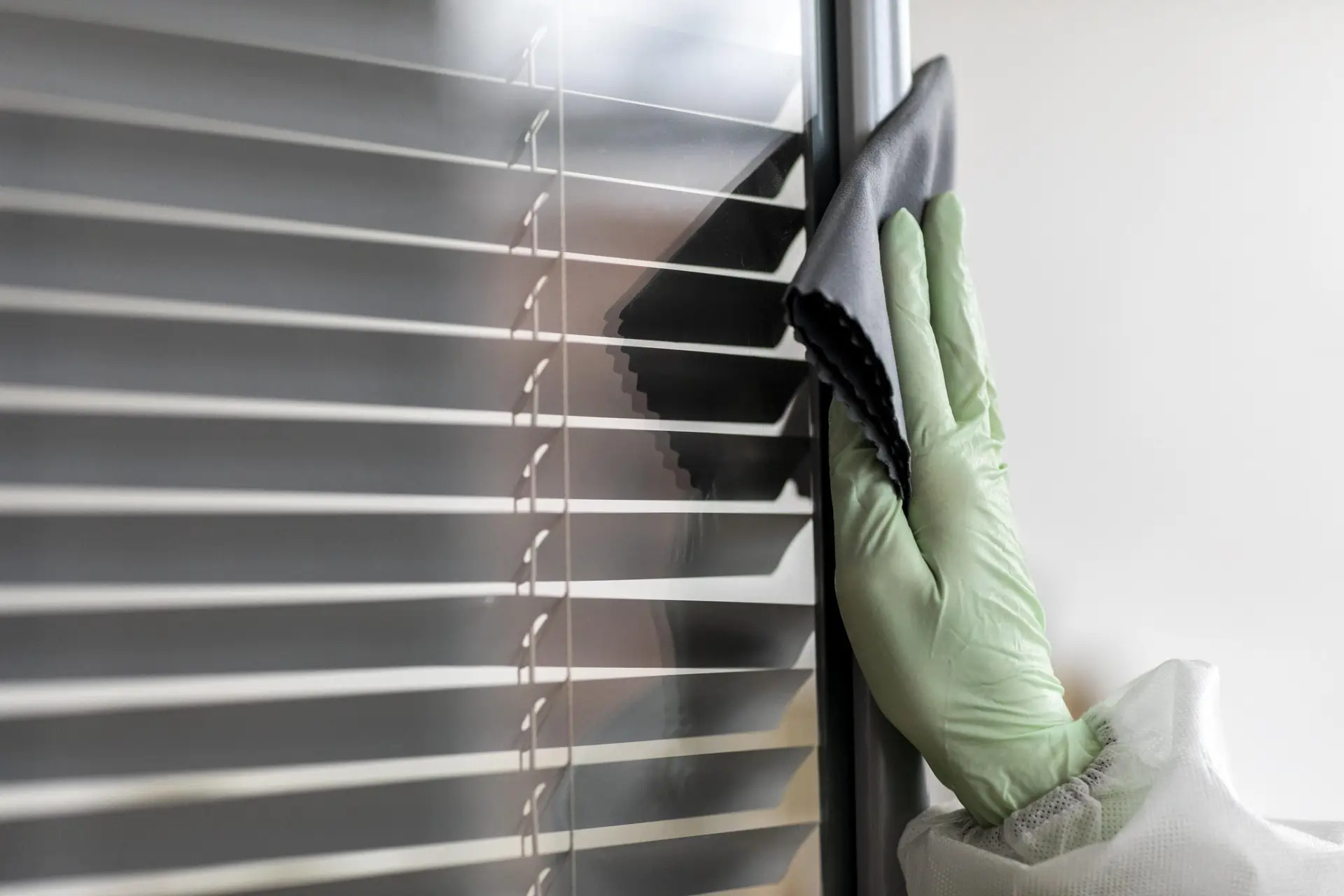
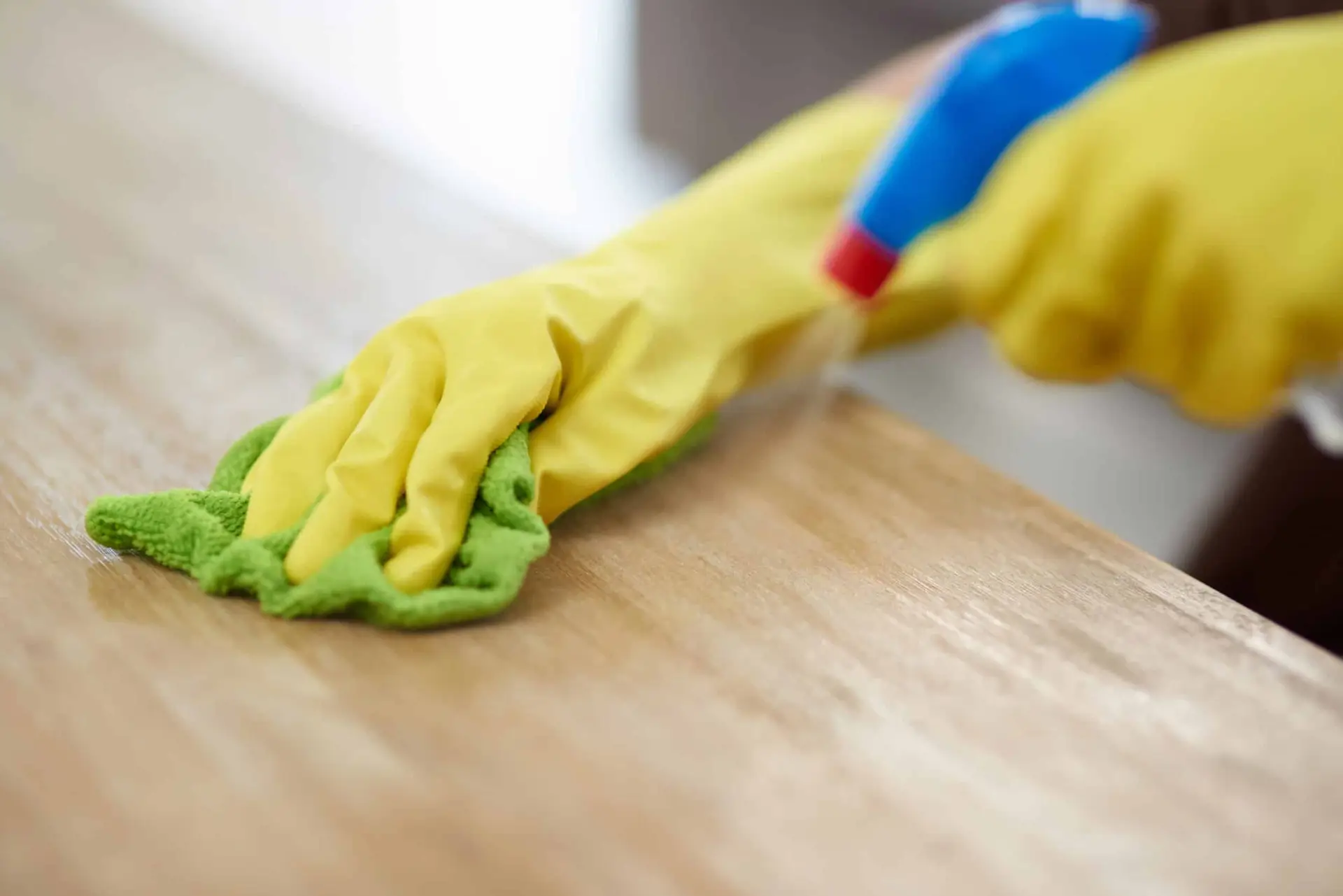
Dust with a dry or barely damp microfiber cloth, always with the grain. Follow immediately with a dry cloth.
For anything sticky, a drop of mild dish soap in warm water on a well wrung cloth, then a plain damp cloth, then dry. Do not let water sit anywhere, particularly along seams, around the edge and where a leaf joins.
That handles ninety percent of what a table needs. The rest is damage repair.
Water Rings, and Reading the Color
A white or cloudy ring means moisture is trapped in the finish, not in the wood. It comes out.
Try a dry cotton cloth with a warm iron passed over it on low with no steam, a few seconds at a time, checking constantly. Or non gel white toothpaste rubbed very lightly with the grain. Or petroleum jelly or mayonnaise left on it for several hours, which displaces the trapped moisture. Finish with a wax or polish so the sheen matches.
A dark or black mark means water went through the finish and into the wood. Nothing you wipe on will remove that, because the stain is not on the surface you are wiping. It requires stripping, bleaching with oxalic acid, sanding and refinishing that area, which on a piece you care about belongs with a restorer.
Heat Marks and Scratches
A white heat mark from a hot dish behaves like a water ring and responds to the same heat or oil methods.
Fine surface scratches often disappear with a scratch repair marker or a wax stick in a matching tone, applied and buffed. Deep scratches that expose bare wood need filling and touching up, which is a different job.
What Not to Do
No alcohol on shellac or French polish. Alcohol dissolves shellac, which is how a small ring becomes a bare patch in seconds.
No vinegar. The acid dulls finishes over time and it is one of the most common pieces of bad advice about wood.
No melamine foam erasers, which are a fine abrasive and will dull the finish in a visible patch.
No aerosol silicone polishes as a routine. They build a film that attracts dust and that has to be stripped before the piece can ever be refinished properly. Furniture restorers dislike them for exactly this reason.
And no steam, and no soaking, ever.
Wax Versus Polish
Paste wax, applied thinly a couple of times a year and buffed, gives real protection and a depth of sheen that sprays do not. It is more work and it lasts.
Spray polishes are mostly about appearance and they need reapplying constantly. If you use one, use it sparingly and choose one without silicone.
Either way, clean the surface first. Polish applied over grime seals it in.
Protect It and You Will Not Need Any of This
Coasters and placemats, obviously. Felt pads under anything that sits on the table permanently, including lamps and decorative pieces, which trap condensation underneath. Trivets under anything hot. Wipe spills within minutes rather than at the end of the meal, since the damage happens in the first hour.
And keep the table out of direct sun and away from a vent. In a Texas house, the swing between sealed air conditioning and winter heat is what opens joints and stresses finishes over years.
If the Table Came Up Because Company Is Coming
Call (214) 430-4447 or request a free quote online. We clean and care for wood surfaces correctly, we do not refinish, and we will tell you when a mark needs a restorer rather than experimenting on your table.
Keep Reading
- How to Clean Urine from a Mattress
- How to Clean a Mattress
- How to Care for Microfiber Cleaning Cloths
Rather hand the work to a team that does this every day? See our deep cleaning service or call (214) 430-4447 for a free quote.
Want Your Home to Look Like This Without the Work?
Tell us about your place and we will send you a price. No walkthrough required, no obligation.
- Free quote with no obligation
- Non toxic and pet friendly products
- Bonded and insured, serving DFW since 2002
- 24 hour guarantee on our service
Prefer to talk? (214) 430-4447
By completing this form I acknowledge that I will receive informational text messages from E&R Cleaning Services. I can opt out at any time by replying STOP. Standard message rates may apply.