
Every kitchen has three completely different kinds of door, they collect three different kinds of grime, and treating them the same is why kitchens look tired before they are.
Cabinet Doors
These are the largest surface in the room and the most commonly damaged by cleaning.
The grime is cooking grease, and it is heaviest on the doors above and beside the range, on the hood, and on the wall behind the cooktop. Wiped while warm it comes off with water. Left for months it needs a degreaser and dwell time. Left for years it yellows the finish permanently, and that is not reversible.
Use a mild degreaser applied to the cloth rather than sprayed on the door, let it sit a minute, wipe with the grain, then wipe again with plain water and dry immediately. Water sitting at an edge or a seam is what causes swelling and delamination over time, particularly on thermofoil.
Keep abrasives, ammonia, vinegar and melamine foam erasers away from cabinet doors entirely. All four damage the finish rather than the dirt.
The parts everyone misses: the underside of the upper doors, which is at eye level when you are sitting; the top edge of every door; the area around the handles where hand oil concentrates; and the back of the doors under the sink, which is the dirtiest cabinet interior in any house.
Appliance Doors
Each one has a specific weak point and none of them are the front panel everyone wipes.
The refrigerator door gasket. The rubber seal collects a black film in its folds. That matters beyond hygiene: a gasket that is dirty or stiff does not seal, and a fridge that does not seal runs constantly. Wipe the folds and check that the seal grips a piece of paper closed in the door.
The oven door glass. On many models the door comes apart, because grease gets trapped between the panes and no amount of cleaning the inside surface touches it. Worth checking before assuming the door is permanently cloudy.
The dishwasher door. Two places: the gasket, which grows the same film as the fridge, and the bottom edge of the door below the gasket, which never gets sprayed during a cycle and is often the dirtiest surface in the kitchen.
The microwave door. The seal and the inside lip of the frame, which never gets sprayed by anything.
On stainless fronts, work with the grain, which runs horizontally on most doors, and finish with a dry cloth. Skip the aerosol stainless polishes as a routine, since they build a film that shows every fingerprint more than the bare metal did.
The Exterior Door in the Kitchen
Most North Texas kitchens open to a patio, a garage or a mudroom, and that door is the highest traffic object in the house.
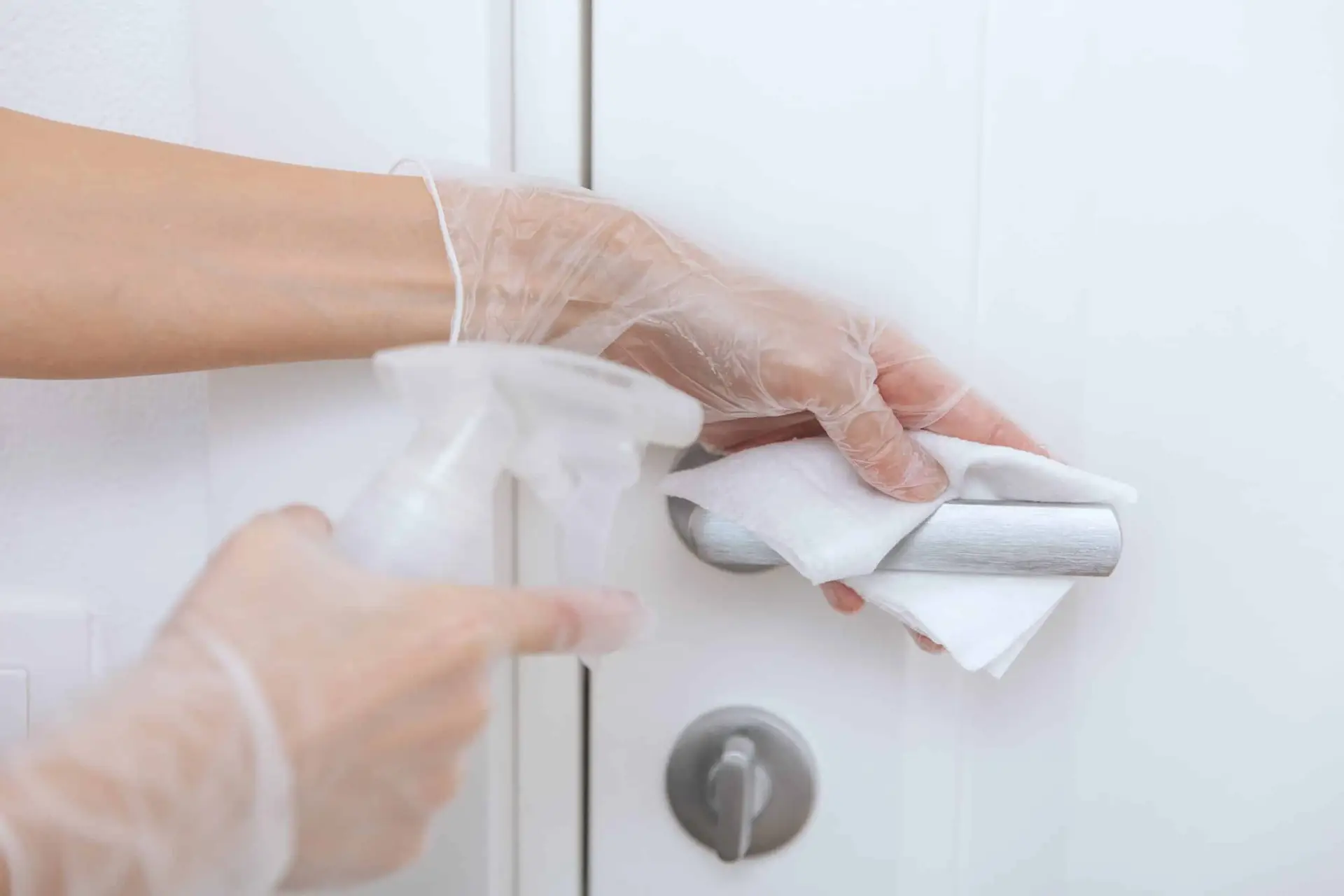
The handle on both sides, the push plate area where hands land, the frame at hand height and the kick area at the bottom all take more contact than anything else in the room and are almost never on a cleaning list.
The threshold and the track underneath collect grit that is abrasive, and that grit is what gets tracked across your floor. Vacuum the track before wiping it.
And this is the door where the matting matters, since almost everything that ends up on your kitchen floor came through it.
Hardware and Glass Inserts
Cabinet hardware collects hand oil in the crevices where a cloth cannot reach. A soft brush gets into a knurled or detailed pull far better than wiping does.
Glass fronted cabinet doors need the glass done last, after the frame, so drips do not land on finished glass. Use a cloth rather than spraying, because spray runs into the joint between glass and frame and sits there.
The Order That Saves Time
Top of the room first, then cabinet doors, then appliance fronts, then counters, then the exterior door and threshold, then the floor on the way out.
Doing appliance fronts before the cabinets above them means doing them twice, because everything you disturb comes down.
The Habit Worth Keeping
Thirty seconds after cooking, wipe the doors nearest the range while the grease is still warm. That single habit prevents the buildup that eventually yellows a cabinet finish and it saves the degreaser work entirely.
Call (214) 430-4447 or request a free quote online and ask about a kitchen deep clean. Tell us what your cabinets are, and we will match the product to the finish rather than carrying one bottle for the whole room.
Keep Reading
Rather hand the work to a team that does this every day? See our deep cleaning service or call (214) 430-4447 for a free quote.
Want Your Home to Look Like This Without the Work?
Tell us about your place and we will send you a price. No walkthrough required, no obligation.
- Free quote with no obligation
- Non toxic and pet friendly products
- Bonded and insured, serving DFW since 2002
- 24 hour guarantee on our service
Prefer to talk? (214) 430-4447
By completing this form I acknowledge that I will receive informational text messages from E&R Cleaning Services. I can opt out at any time by replying STOP. Standard message rates may apply.