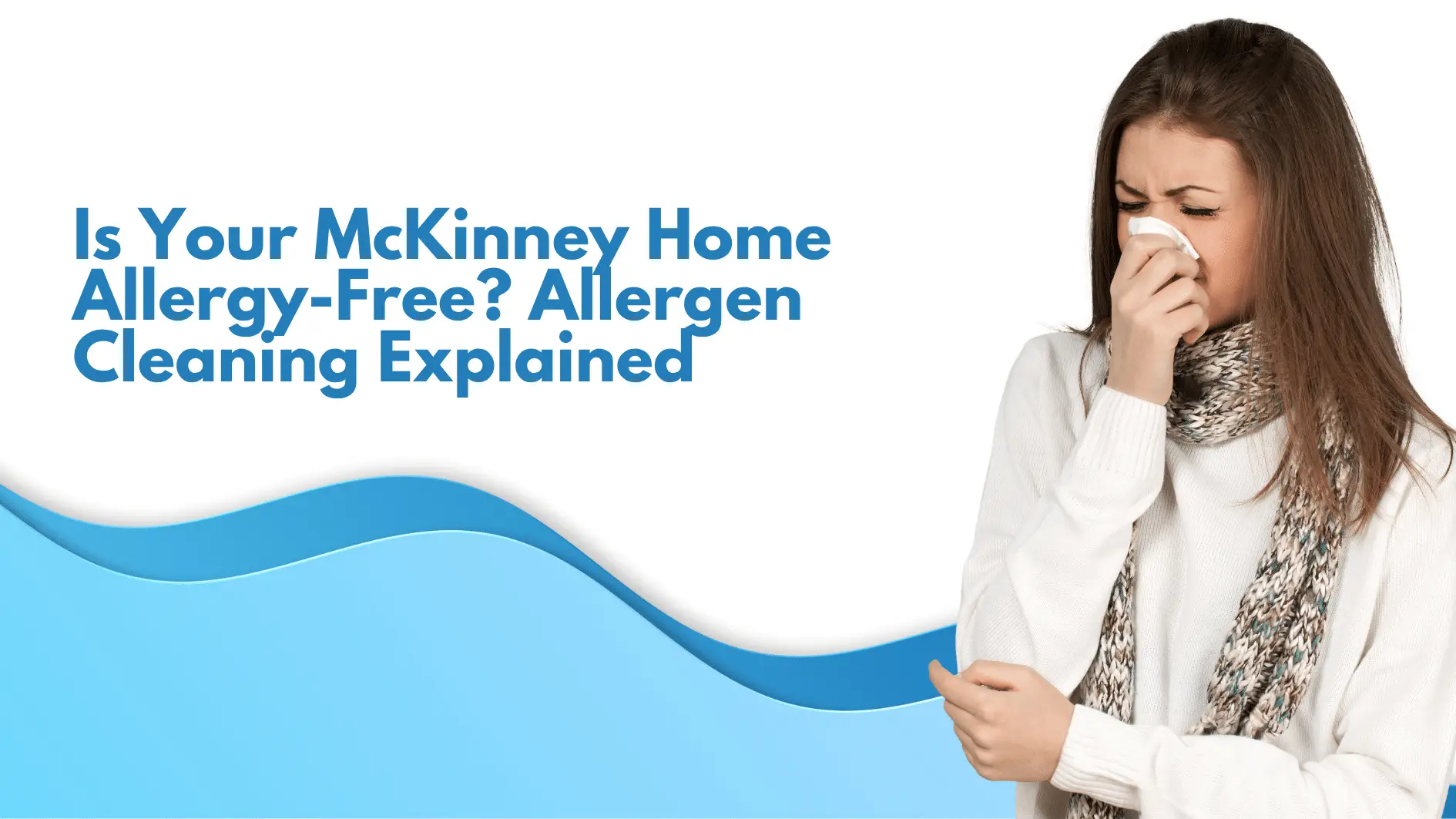
Someone in the house has just been told they are allergic to dust mites, or pollen, or the dog. The allergist gave you a list, and somewhere on it was the phrase reduce allergen exposure at home, with no instructions attached.
This is what that actually means in a McKinney house, in the order that matters. And the order matters a great deal, because most people start in the wrong room and conclude that none of it works.
Start With the Bedroom and Nothing Else
If you do one thing, do this. The person spends eight uninterrupted hours in that room with their face inches from the largest allergen reservoir in the house, and no other room comes close in exposure per day.
The bedroom protocol is short and it is the highest value work available.
Allergen proof encasements on the mattress and the pillows. This puts a barrier between the sleeper and the reservoir, permanently, and allergy specialists consistently rank it above cleaning for exactly that reason.
Wash all bedding weekly in hot water. Temperature is the variable that matters for dust mites, so as hot as the fabric allows.
Reduce the fabric in the room. Fewer decorative pillows, fewer stuffed animals on the bed, and any that stay should be washable and washed. Heavy drapes are a reservoir; washable blinds or lighter curtains are not.
Vacuum with genuine HEPA filtration, including under the bed, which is the single most skipped square footage in any house. A vacuum without HEPA moves fine allergen from the floor into the air you sleep in.
Keep the door closed and consider a portable air cleaner sized for the room. In a bedroom it runs while the person is in it, which is when it counts.
Humidity Is the Lever Nobody Uses
Dust mites need moisture from the air to survive. Below roughly fifty percent relative humidity they struggle, and mold needs moisture too.
North Texas summers are humid and houses here run air conditioning constantly, which does dehumidify, but bathrooms and closed rooms still hold moisture. A cheap humidity gauge in the bedroom tells you more about the problem than any amount of guessing, and the target range is roughly thirty to fifty percent.
Run bathroom exhaust fans for a full twenty minutes after showers rather than switching them off on the way out. That single habit affects both mite populations and mildew.
The Reservoirs in the Rest of the House
Outside the bedroom, allergen accumulates in the places nobody can see from standing height, and it gets redistributed every time the air handler cycles.
Ceiling fan blades, which are shelves. The tops of door casings and cabinet crowns. Blind slats and window sills. Closet shelving. Vent covers and register faces. And the perimeter of every room, because settled particles collect at the edges rather than in the middle.
How you clean these matters as much as whether you do. Wipe baseboards damp rather than dusting dry, since dry dusting puts the allergen into the air you are breathing. Vacuum before you mop, always. And pull vent covers to wash them rather than wiping them in place.
Pollen: The McKinney Calendar
Allergy season here starts earlier than newcomers expect. Mountain cedar drifts in through January and February, oak, elm and ash take over from March into April, grass pollen carries into May, and ragweed runs through the fall.
During those stretches, change the HVAC filter monthly rather than quarterly, keep windows closed on high pollen days, and have whoever is affected change clothes and ideally shower after being outside for a long stretch, because pollen comes in on hair and fabric and then goes onto the pillow.
Late winter, just before cedar and oak get going, is the single best moment in the North Texas year for a thorough deep clean.
Pets, Honestly
If the allergy is to a pet that lives in the house, cleaning reduces the load and does not solve the problem. The realistic measures are keeping the animal out of the bedroom entirely, which is the highest impact change available, HEPA vacuuming of soft surfaces frequently, and washing pet bedding often.
It is also worth knowing that pet allergen persists in a home for months after an animal is gone, because it works into carpet padding, ductwork and soft furnishings. Anyone buying a house from a pet owner should plan around that rather than assume it left with the dog.
What Cleaning Will Not Fix
Mold behind a wall, carpet padding saturated with pet urine, and a ductwork system heavily loaded from construction are not cleaning problems. They are remediation, replacement and specialist work, and we will tell you when we find one rather than taking a booking that cannot succeed.
Build the Visit Around the Bedrooms
Call (214) 430-4447 or request a free quote online. Tell us who is affected, what they react to, and which rooms they spend the most time in. We use low fragrance products by default, we vacuum with HEPA filtration, and we will structure the visit around the reservoirs rather than the surfaces that merely look dusty.
We serve McKinney, Frisco, Allen, Prosper, Celina and the surrounding communities.
Keep Reading
- House Cleaning Mansfield TX
- Estate Cleaning Argyle TX
- House Cleaning Lucas TX
- Pet Friendly Cleaning Tips and Tricks
Rather hand the work to a team that does this every day? See recurring home cleaning in McKinney or call (214) 430-4447 for a free quote.
Want Your Home to Look Like This Without the Work?
Tell us about your place and we will send you a price. No walkthrough required, no obligation.
- Free quote with no obligation
- Non toxic and pet friendly products
- Bonded and insured, serving DFW since 2002
- 24 hour guarantee on our service
Prefer to talk? (214) 430-4447
By completing this form I acknowledge that I will receive informational text messages from E&R Cleaning Services. I can opt out at any time by replying STOP. Standard message rates may apply.