Deep cleaning gets sold as a bigger version of regular cleaning. It is not. It is a different job with a different scope, and the reason it matters has less to do with how the house looks and more to do with what is actually in the air you breathe at home.
Americans spend the large majority of their time indoors, and the EPA has long noted that indoor air can carry higher concentrations of some pollutants than outdoor air. In a sealed North Texas house running air conditioning from May through September, that is not a theoretical concern. Here is what a deep clean actually addresses, and when it is worth it.
It Removes the Reservoirs, Not the Surfaces
A regular clean handles what you touch and see. A deep clean goes after the places where dust, allergen and residue accumulate and then get redistributed every time the air handler cycles.
Those places are consistent in every house we work in: the tops of door casings, cabinet crowns, ceiling fan blades, light fixtures, vent covers, closet shelving, the perimeter of every room where settled particles collect, behind and under appliances, and inside cabinets and drawers. None of it is visible from standing height, which is exactly why it accumulates for years.
Dust Is Not Just Dust
Household dust is a mix of skin cells, textile fibers, soil tracked in from outside, pollen, pet dander and dust mite waste. Dust mites are the relevant part for anyone in the house with allergies or asthma: they live in bedding, upholstery and carpet, they feed on shed skin, and the allergen is in their waste rather than the mites themselves.
You cannot eliminate them and you can substantially reduce the load. That means vacuuming with genuine HEPA filtration rather than a vacuum that pushes fine particles back into the room, washing bedding in hot water, and getting into the reservoirs listed above rather than only the visible surfaces.
Bathrooms and Kitchens Are the Two Rooms That Actually Matter
Everywhere else in the house, cleaning is mostly about appearance and comfort. In these two rooms it is about hygiene, and the difference between cleaning and disinfecting becomes real.
Cleaning removes soil. Disinfecting kills pathogens, and it only works if the product stays visibly wet on the surface for the contact time printed on its label, which for many household disinfectants runs several minutes. Spray and wipe within ten seconds and you have cleaned, not disinfected. That single detail is the most consequential thing most households get wrong.
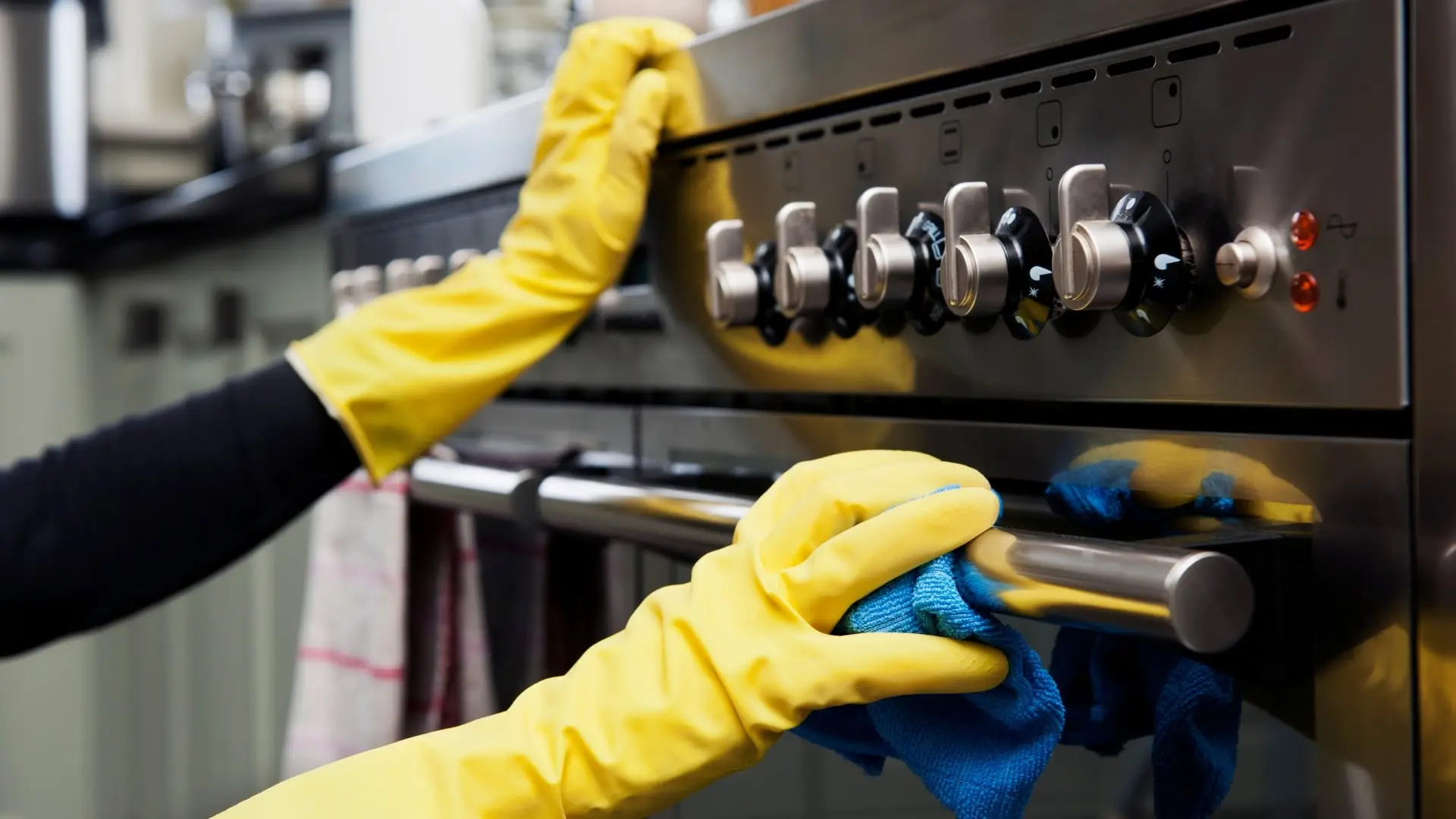
In the kitchen the specific risk points are the sink and its drain, cutting boards, the refrigerator interior, and the handles and knobs everyone touches with dirty hands. In the bathroom it is the toilet base and the surrounding floor, the toothbrush area, and the shower where humidity keeps everything alive longer.
Mold, Humidity and Why Texas Bathrooms Are Difficult
Mold needs moisture, and North Texas humidity means bathrooms here dry slowly. Once it establishes in grout and caulk it is genuinely hard to remove, and surface treatment on failed caulk is a temporary result at best.
Prevention is almost entirely mechanical: run the exhaust fan for a full twenty minutes after a shower rather than switching it off on the way out, squeegee the glass, and keep the grout sealed. A deep clean resets what has already grown and buys the time for those habits to matter.
Hard Water Is Working Against the House Constantly
North Texas water is hard. Mineral scale builds on shower glass, fixtures, faucets and inside appliances, and it behaves in a way people misjudge.
Caught early, scale comes off completely with an acidic product and enough dwell time. Left for a year or more it pits and etches the surface underneath, and at that point the glass or the finish is permanently changed. Etched shower glass cannot be restored. A deep clean on a reasonable cycle is what keeps that line from being crossed, and it is the most common thing we get asked to fix that we honestly cannot.
The Practical Reasons, Stated Plainly
Beyond air quality, a deep clean earns its cost in three concrete ways. It extends the life of finishes, because grit left on a floor is an abrasive and scale left on glass becomes etching. It resets the house so that ongoing maintenance actually works, since a routine visit was never designed to catch up on three years. And it is the difference between a house that photographs well for a listing and one that does not, which is money rather than aesthetics.
When You Actually Need One
Be honest about the timing rather than buying one on a schedule. A deep clean makes sense before starting recurring service, so maintenance begins from a real baseline. Before or after a move, while the house is empty. After construction or renovation, when fine dust is everywhere including the ductwork. In late winter, before allergy season starts, which is the single best moment in the North Texas year. And after illness in the household, or when someone’s allergies have clearly worsened at home.
If none of those apply and the house is on a consistent schedule, you probably do not need one right now, and we will tell you that on the phone.
Get an Honest Assessment
Call (214) 430-4447 or request a free quote online. Tell us the square footage, the bedroom and bathroom count, how long since the last thorough clean, and whether anyone in the house has allergies or asthma. We will tell you what a deep clean will resolve, what belongs to a different trade, and what the ongoing schedule should be afterward.
Keep Reading
- The Deep Cleaning Checklist
- Allergen Cleaning in McKinney TX
- Hidden Spots Where Dust Collects
- Regular Cleaning Compared to Deep Cleaning
- Why the Order You Clean In Matters Most
Want Your Home to Look Like This Without the Work?
Tell us about your place and we will send you a price. No walkthrough required, no obligation.
- Free quote with no obligation
- Non toxic and pet friendly products
- Bonded and insured, serving DFW since 2002
- 24 hour guarantee on our service
Prefer to talk? (214) 430-4447
By completing this form I acknowledge that I will receive informational text messages from E&R Cleaning Services. I can opt out at any time by replying STOP. Standard message rates may apply.